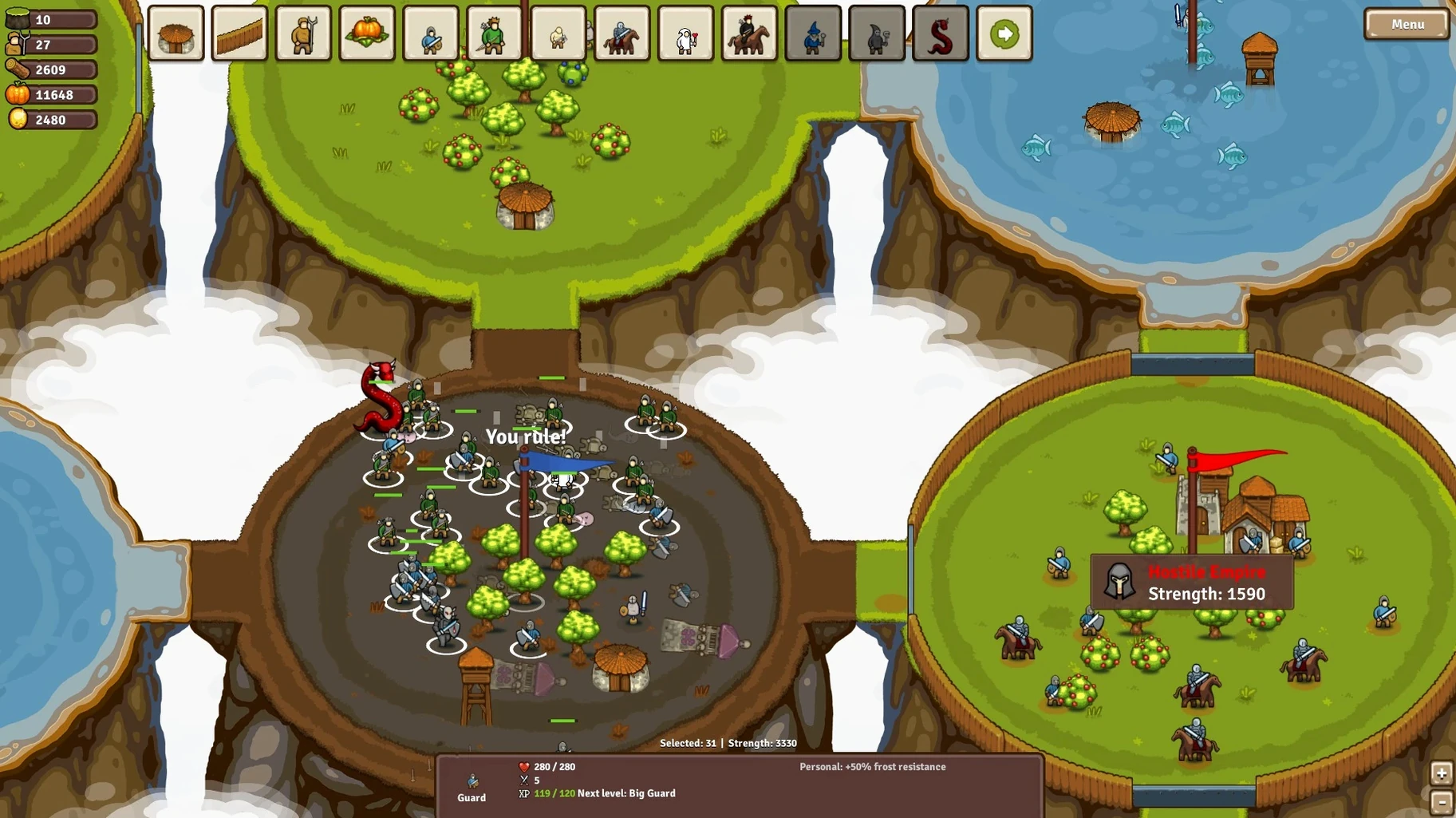
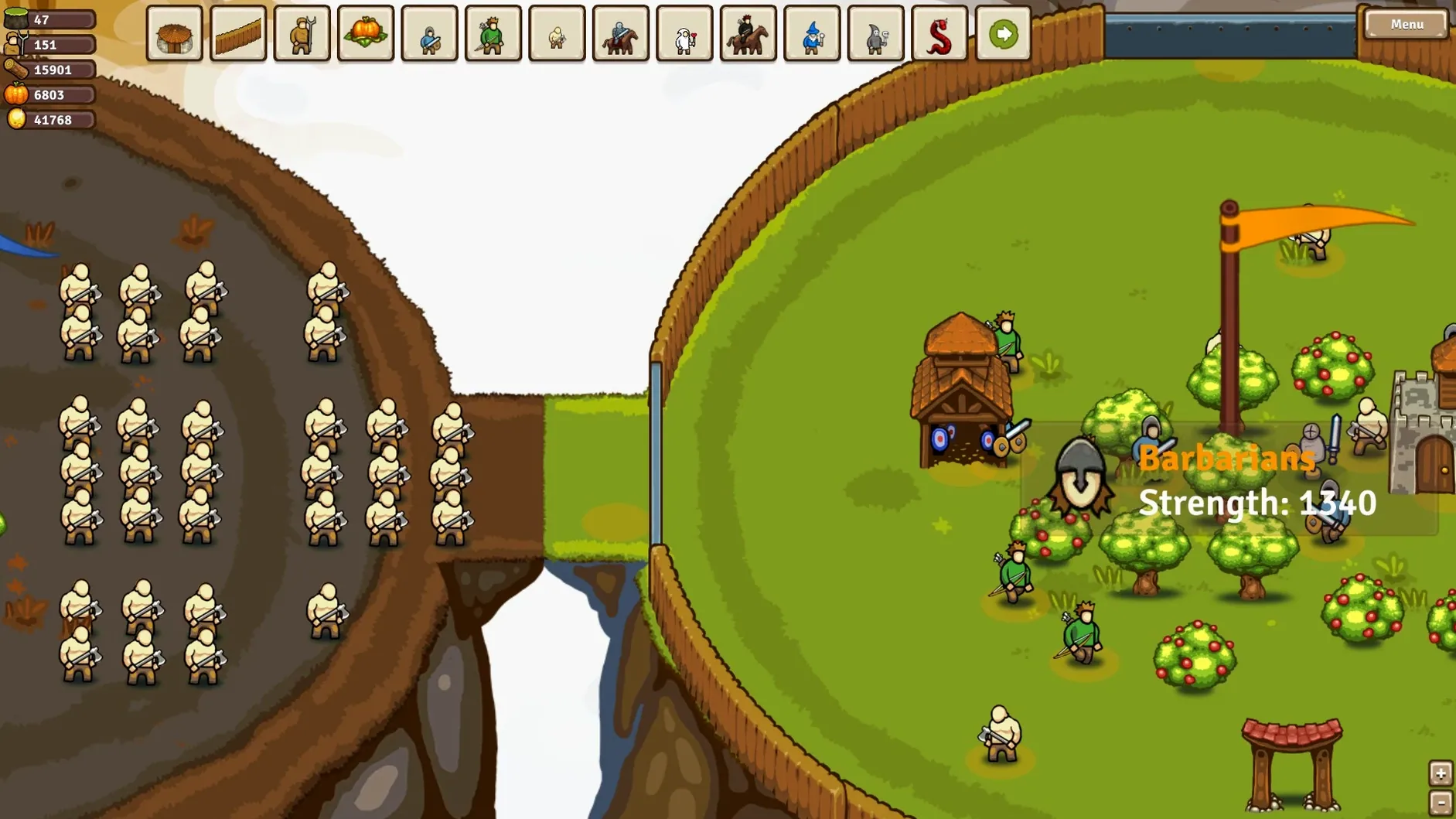
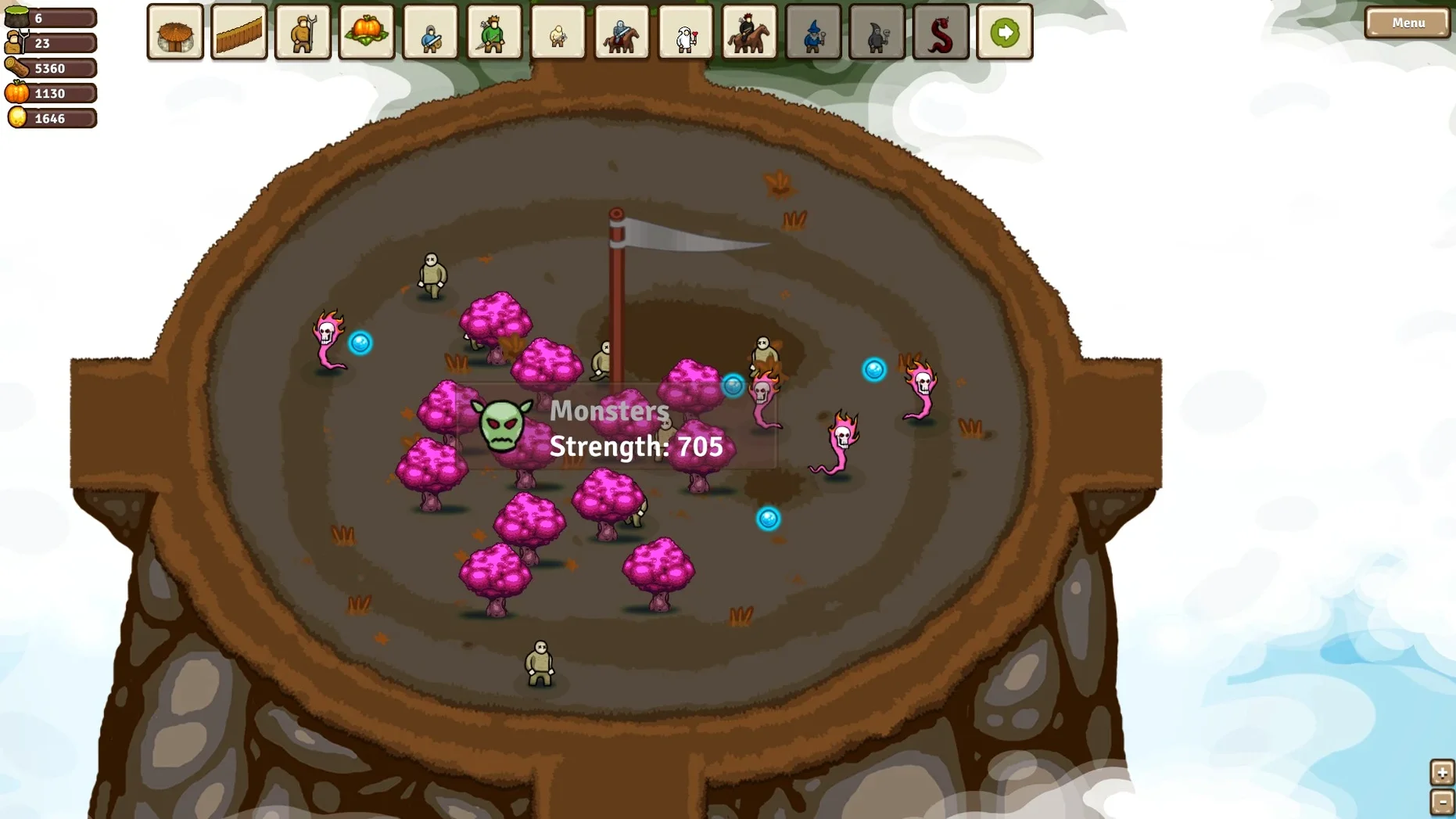
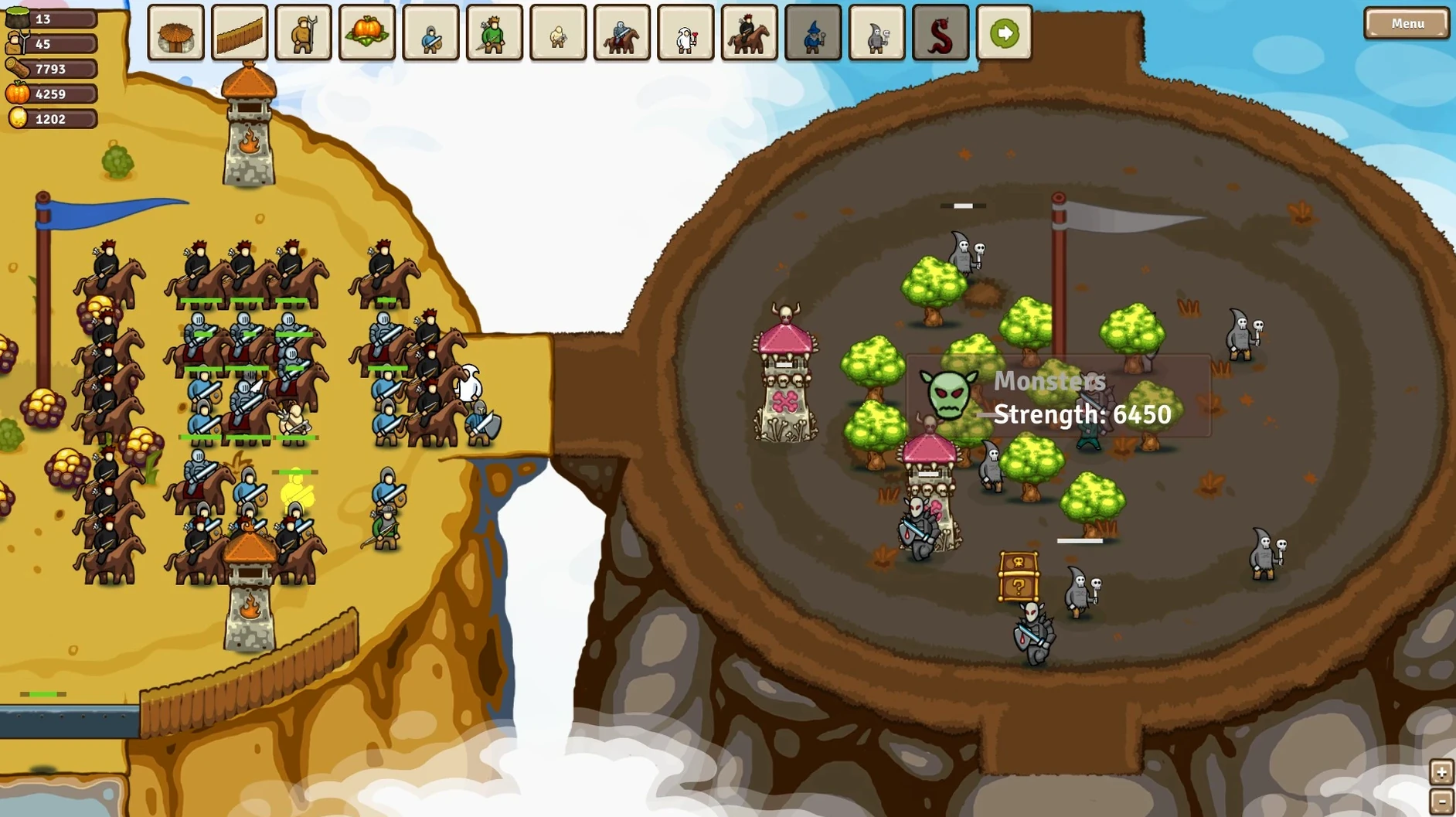
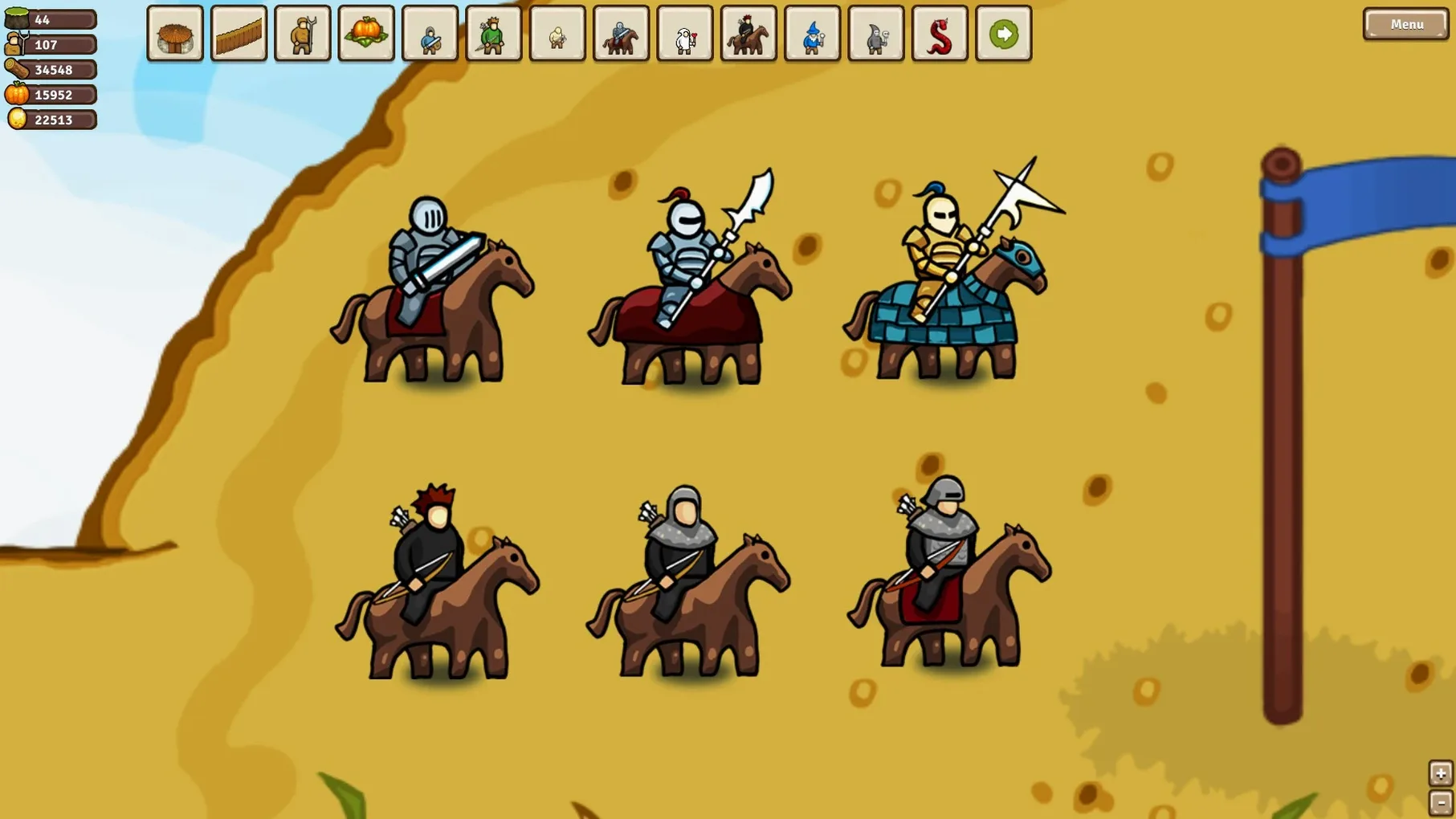
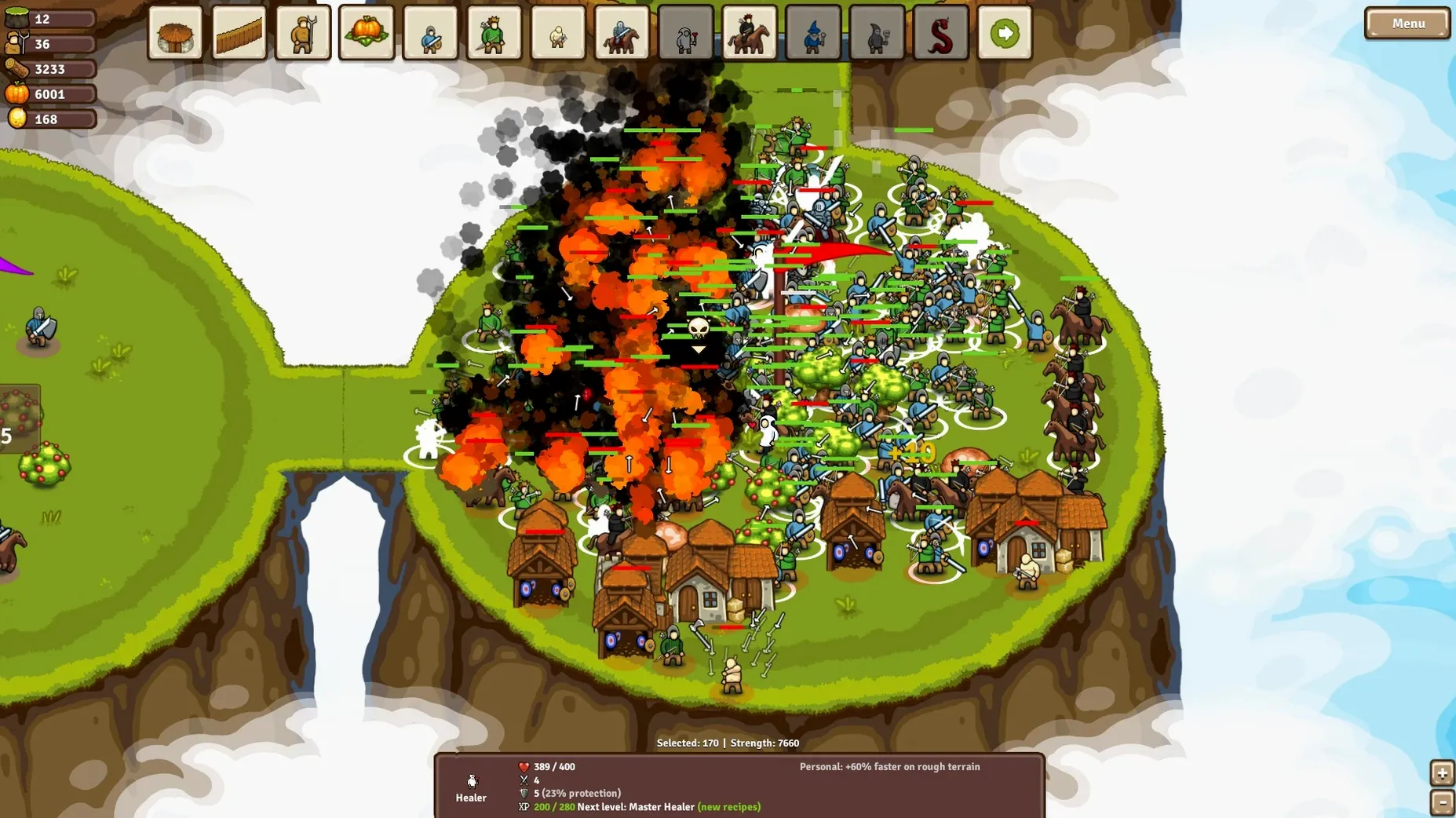
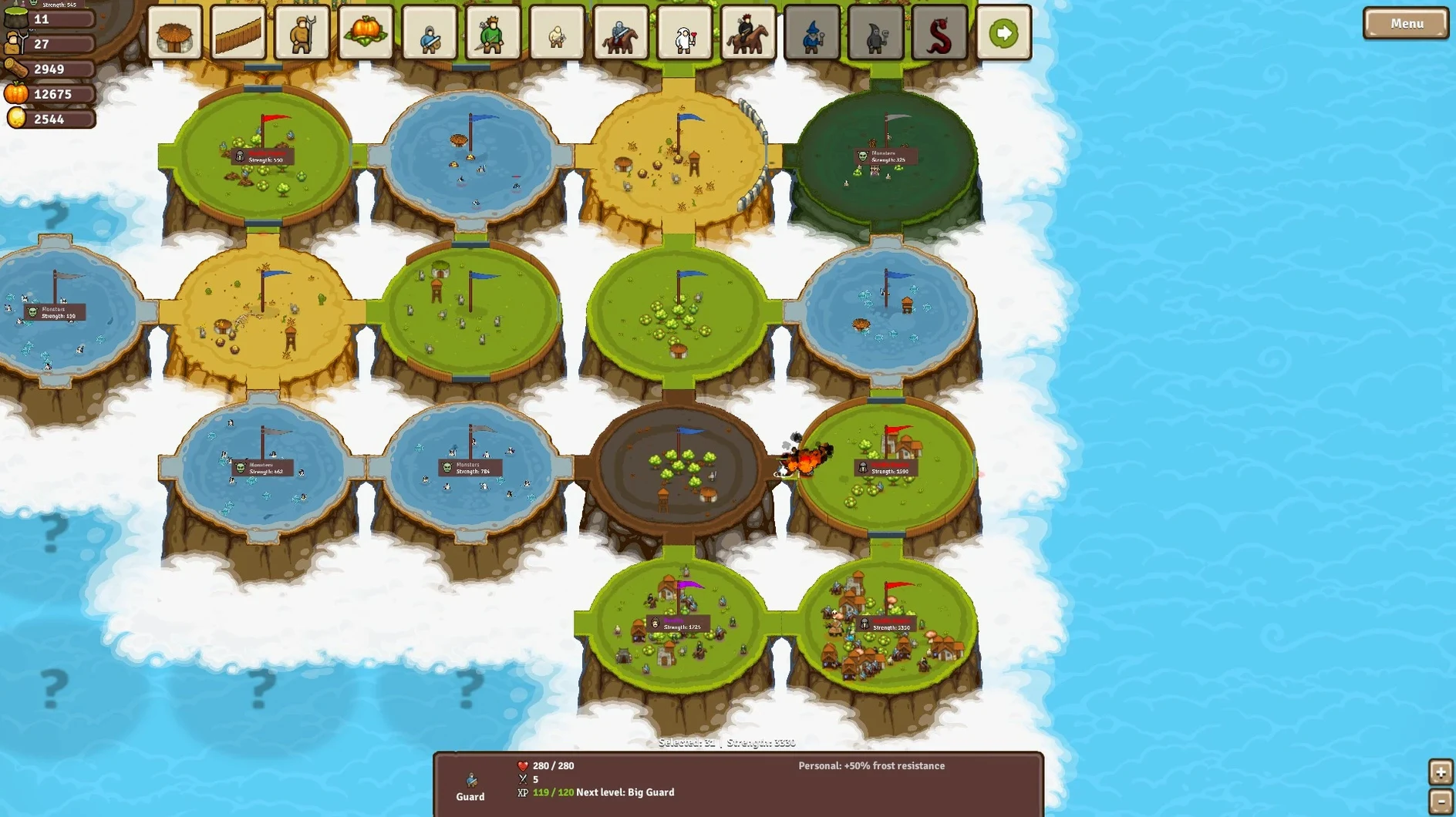
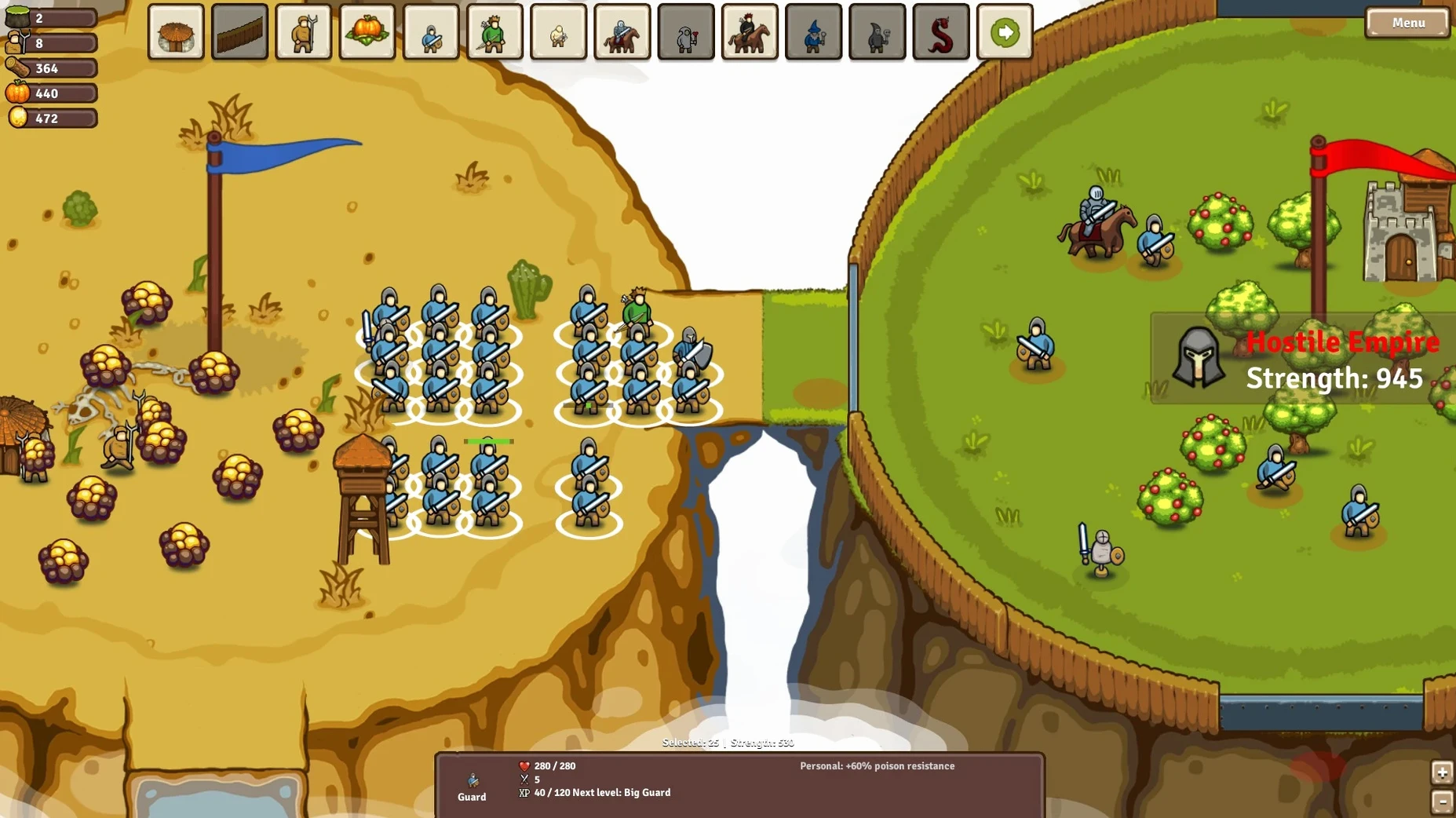
Treasure Spawning is the mechanic that keeps me clicking. After every scrap, loot scatters across your territory, pulling you into the next skirmish just to see what drops. That rhythm — fight, collect, upgrade, expand — is what Circle Empires runs on, and it either clicks with you or it doesn't.
Who Gets Hooked
- The lunch-break strategist. Maps generate gradually with unique animals and plants, so each round feels self-contained. You're not signing up for a 40-hour campaign; you're in, you conquer a few circles, and you're out.
- Collectors and tinkerers. Eighteen faction leaders mean you can swap playstyles constantly. One run you're a defensive turtle hoarding treasure, the next you're swarming with cheap units just to see how far the circle chain goes.
- People who love seeing territory fill in. Expanding circle by circle scratches a very specific, almost board-game itch. If you liked filling provinces in Risk, this delivers that same little dopamine hit.
- Anyone with an older Mac. The Intel Core i3 and Radeon HD 6970M minimums are practically a welcome mat for aging hardware, and Apple Silicon machines run it without a hiccup.
Who Should Scroll Past
If you need deep tech trees or base-building granularity, this isn't your game. The large-scale battles look chaotic, but the strategy layer stays light — you're managing unit blobs more than executing precise micro. And while the treasure system adds a nice carrot-on-a-stick, the loop can feel repetitive by the third session if you're not into score-chasing. Circle Empires thrives as a palette cleanser between heavier titles, not as the main course.
Barely 600 MB of RAM and a silent fan on an M4 mini
I’ve been launching Circle Empires between renders on an M4 Mac mini, and it barely registers. Memory hovers around 600 MB, the fan never thinks about spinning up, and load times off an external SSD are under ten seconds. That’s the real argument for a game like this on a work machine — it doesn’t demand you quit everything else first.
Late-game maps with 50-plus circles and hundreds of units do push the engine. I’ve seen occasional frame dips when a boss monster dies and the treasure fountain sprays loot across three territories at once, but it’s a split-second stutter, not a crash. Stability has been rock-solid; not one quit-to-desktop in two weeks of daily sessions. The Wineskin wrapper on this build is well-tuned — no audio glitching, no resolution weirdness waking from sleep, none of the skittish window behavior some wrapped titles suffer from.
Battery-wise on a MacBook, expect roughly four hours of play. It sips power compared to anything 3D, making it a genuine travel option.
Run the patcher in the disk image to fix that first-launch error
The most common headache is the first-launch error. Double-click, get a cryptic message, stare at the screen. The fix is mounted right in the disk image: run the included Fix file, and it patches the wrapper permissions. Five seconds, done.
Another one: fullscreen mode can sometimes lock to the wrong display on a dual-monitor setup. Switch to windowed in the game settings, drag the window to the correct screen, then toggle fullscreen back on. The setting usually sticks after that.
If unit pathing feels sluggish on huge maps, bump the game speed toggle (the little clock icon top-right) up one notch. It’s not a performance fix — it just makes the AI think faster, which unsticks circling troops faster.
Rarely, the treasure system appears to not trigger after a boss kill. Zoom out fully. Loot sometimes spawns on a circle edge that’s barely visible at default zoom, especially on procedurally generated maps with odd terrain shapes.
A growing blob that swallows ground, not a tiny squad holding it
Compared to Bad North, Circle Empires leans into aggression. Bad North is about holding ground with a tiny squad; this is about swallowing ground with a growing blob. Bad North punishes overextension brutally — Circle Empires encourages it, then throws a boss monster in your face as a reality check. Different tension, same pick-up-and-play pace.
Against Rymdkapsel, the difference is scope. Rymdkapsel is minimalist to the bone — four room types, tetromino base layout, meditative pacing. Circle Empires is maximalist by comparison: 150 creatures, treasures spilling everywhere, faction abilities that change the win condition. Rymdkapsel calms; Circle Empires prods you toward the next fight.
Kingdom: Two Crowns shares the side-scrolling kingdom-expansion loop, but its economy is tighter and its threat comes in timed waves. Circle Empires is looser, more sandbox-like — you set the tempo, you pick the fights. Kingdom: Two Crowns feels like a clock; Circle Empires feels like a petri dish. If you bounced off Kingdom’s relentless Greed waves, the circle-by-circle pacing here lands softer.
- macOS 10.9 or later
- Apple Silicon or Intel Core i3 2100 3.1 GHz
- 4 GB RAM
- AMD Radeon HD 6970M 1 GB or equivalent
- 1 GB available storage
Questions I actually get
Does Circle Empires run on Apple Silicon Macs?
Yes. The game supports macOS 10.9 and up, and it runs on Apple Silicon Macs without Rosetta issues — just launch it after dragging the app into Applications.
How long does a typical session last?
Since worlds are generated procedurally and you expand circle by circle, a full match can wrap in 20 to 40 minutes. It's built for short, repeatable runs rather than marathon campaigns.
Notes from the edit bay · 0
Sign in or get an edit-bay pass to leave a note.
No notes from the edit bay yet. They go up after I read them.