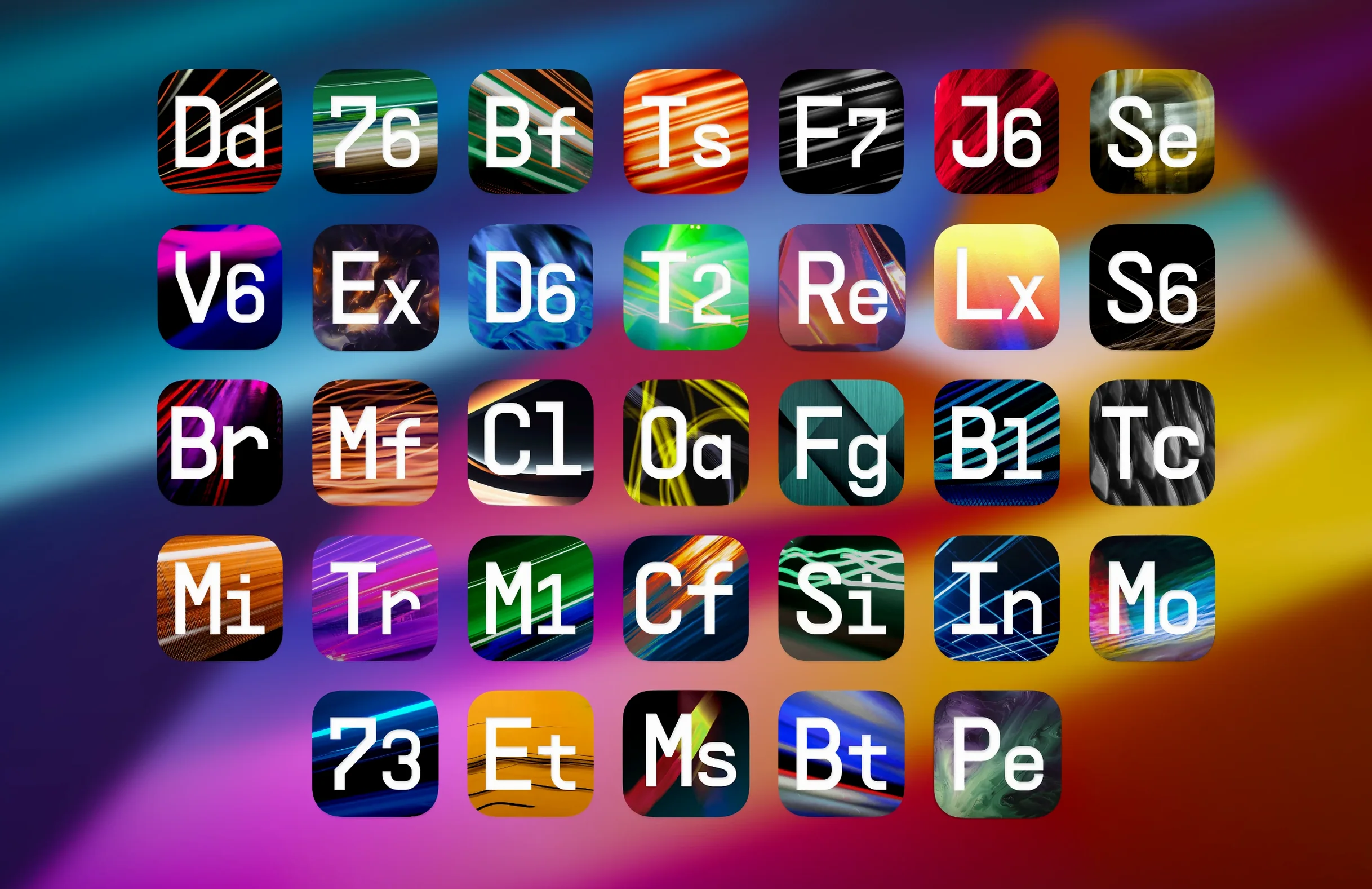
Producers and sound designers who reach for a knob instead of a preset will find their home here. The Arturia FX Collection is a deep bench of studio processing, modeled on classic hardware and stretched into modern workflows.
Parallel Processing — A dedicated mix knob on nearly every plugin. You don't just slap an effect on a channel; you blend the wet signal against the dry to keep transients intact while the effect works underneath. Essential for drum buses and vocal chains where full-wet would bury the source.
Tape J-37 — A Studer-inspired machine that goes beyond warmth. Push the input gain and the saturation folds in gradually, then pull back the stability control to let the pitch wander. It's the glue that makes a sterile digital mix breathe.
Pitch Shifter-910 — Harmonizer-style pitch shifting with a vintage feedback path. Dial in a few cents of detune for width, or send a snare through a rising fifth for a transition that cuts through a dense arrangement.
Efx Ambient — A reverb and delay hybrid built for texture. The diffusion network creates spaces that feel less like a room and more like a cloud around the source. Useful for turning a dry synth stab into a pad.
Mix Drums — A channel strip tuned for kick, snare, and overheads. The compressor grabs fast and releases musically, while the EQ curves are voiced for drum frequencies right out of the gate. It's the quickest path from raw tracks to a punchy kit sound.
Mix Drums and the Rethink of a First Hour
The FX Collection 6 drop landed February 2026 and it wasn't a quiet one. Five new plugins joined the rack, and three of them immediately reshaped how sessions run around here.
Mix Drums alone changes the first hour of a mix. Before, a drum bus meant stacking a compressor, an EQ, maybe a transient shaper, and tweaking each until they stopped fighting. Now you load one plugin, grab the kick fader, nudge the compressor threshold, and the kit snaps into place. The EQ bands are pre-voiced — no hunting for the boxiness in a floor tom or the stick attack on a snare. It's not subtle, and that's the point. When a deadline hits and the drums still sound like cardboard, this is the fix that ships the track.
Tape J-37 crept into every project within a week. It sits on the mix bus not for obvious saturation but for what happens when you back the input gain to tickle the needles and leave the stability at three-quarters. The stereo image softens at the edges, transients round by a hair, and the low end gains a thickness that a pure EQ boost never achieves. On individual tracks, it's become the go-to for bass and vocals where digital clarity feels too sterile.
Pitch Shifter-910 and Efx Ambient fill the gaps that sends and returns usually handle. The 910 does the micro-shift widening trick without the phase issues that plague some doubling plugins. Efx Ambient turned a 30-second synth drone into a two-minute evolving bed for a film cue — the diffusion tail doesn't ring, it blooms.
Also fixed: the AU validation hiccup that stalled some Logic scans on Apple Silicon is gone. Plugins load faster across the board, and the preset browser no longer stutters when scrolling through banks with heavy previews.
Drive, Space, and the Three Plugins That Land First
Does this version actually work on an M-series Mac?
Yes, natively. The package runs ARM code on Apple Silicon and 64-bit x86 on Intel. No Rosetta gymnastics required. AU and VST3 formats load without translation layers, and the plugins sit comfortably in Logic, Ableton Live, and Reaper on macOS 11 through the latest release. AAX is the one format that doesn't function in this build — Pro Tools users should plan around AU or VST3 hosts.
Tape J-37 Cranked and the Eight-Second Diffusion Cliff
Individual instances are surprisingly lean. Tape J-37 eats a bit more when you crank the stability model, and Efx Ambient can spike if you extend the diffusion tail past eight seconds. But stacking five or six instances across a session runs cooler than most convolution reverbs. The older emulations — the compressors and EQs — barely register on modern chips. If your machine handles a few instances of a dense synth, it'll handle a dozen of these.
Can I grab just one plugin or is it all-or-nothing?
The full installer packs all 39 effects, but you can cherry-pick during setup. Uncheck the ones you won't reach for and the package respects it. Some producers grab the new five and leave the rest for later; others load the whole rack because hard drive space is cheap and scrolling through presets on a late night leads to happy accidents.
The 48-Hour Window Where the Rack Earns a Slot
Installation and activation instructions are included in the package. Run the included components, follow the activation steps, and let the plugin scanner do its work. Once everything lights up, the first 48 hours determine whether the collection becomes a daily driver or a folder you forget about.
Start with a dry drum loop. Drop Mix Drums on the channel and ignore the presets for ten minutes. Move the kick fader, tighten the compressor release, sweep the high shelf on the overheads. Hear what each control does to a source you know cold. Then bypass it and insert a chain of the Bus Transient shaper, an EQ from the collection, and Tape J-37 last. Compare. The single-plugin approach wins for speed; the chain wins for character. Knowing both paths saves hours later.
Map the wet/dry knob to a fader. Nearly every plugin in the suite includes parallel processing built in. Assign it to a physical fader or a MIDI knob and ride it during playback. On a vocal reverb send, pushing Efx Ambient from 30% to 70% over a chorus feels more musical than automating the send level in the DAW.
Build a template with the heavy hitters. Tape J-37 on the mix bus at unity, Mix Drums on the drum bus, Pitch Shifter-910 on a return track set to +9 cents left and -9 cents right. Save it as a session template. The next time you start a mix, you're already three decisions ahead instead of staring at an empty insert rack.
Audition presets with intention. Over 1,400 presets can turn into a time sink. Filter by type and pick three. Listen on the source, tweak one parameter that bothers you, save it as a user preset, and move on. The goal is to learn what the algorithms do, not to find a magic setting that works on everything — it doesn't exist.
Soundtoys, Waves Horizon, and Where the Workflow Splits
The Mac plugin landscape has no shortage of effects bundles, but three names come up alongside Arturia FX Collection in project discussions: Soundtoys, Waves Horizon, and the stock Logic Pro suite. Each fits a different workflow headspace.
Arturia FX Collection versus Soundtoys. Soundtoys packs fewer plugins — around 22 — but each one is tweakable to a fault. Decapitator and EchoBoy are genre-defining tools, and the rack format lets you chain effects inside a single instance. Where Arturia pulls ahead is breadth and the modeled-hardware philosophy. Soundtoys builds creative effects that nod to analog without copying it; Arturia models the console, the tape machine, the specific compressor circuit. If a mix calls for surgical precision with vintage flavor, Arturia fits. If it calls for wild, Soundtoys leads. The two complement more than they compete — many producers run both.
Arturia FX Collection versus Waves Horizon. Waves offers sheer volume: over 80 plugins covering every category imaginable. But the quality varies, and the licensing model frustrates some users. Arturia's 39 effects feel curated rather than amassed. A Waves CLA-76 and an Arturia FET compressor both nail the 1176 sound, but Arturia's preset system and interface consistency across the whole suite make swapping between a delay and a preamp feel like one unified toolbox. Waves rewards engineers who already know exactly what they want; Arturia rewards those who want to explore without menu-diving.
Arturia FX Collection versus Logic Pro stock plugins. Logic's built-in suite is the benchmark for "free with the DAW" — the Compressor models, ChromaVerb, and the pedalboard are solid. But they lack the modeling depth Arturia brings. Logic's tape delay doesn't drift; Arturia's Tape J-37 does, and that drift is the difference between a clean mix and one with motion. The stock EQ is transparent and efficient; Arturia's emulations add weight when you push them. For a producer who works entirely in Logic and never mixes third-party projects, the stock suite covers the basics. The moment you need a compressor that breathes like hardware or a reverb that doesn't sound like a digital algorithm, Arturia fills the gap.
The 2026.02 release brings the collection to version 6, adding three new plugins. Tape J-37 delivers modeled tape saturation and instability, Efx Ambient offers a hybrid reverb-delay texture engine, and Pitch Shifter-910 recreates a vintage harmonizer workflow. Mix Drums joins the lineup as a dedicated drum channel strip. Also fixed: general stability improvements across the suite.
- macOS 11 or later
- Apple Silicon or Intel processor (64-bit)
- AAX format not supported in this release
Questions I actually get
Does the Arturia FX Collection work on Apple Silicon Macs?
Yes, it runs natively on both ARM (Apple Silicon) and 64-bit x86 processors under macOS 11 and later.
Notes from the edit bay · 0
Sign in or get an edit-bay pass to leave a note.
No notes from the edit bay yet. They go up after I read them.