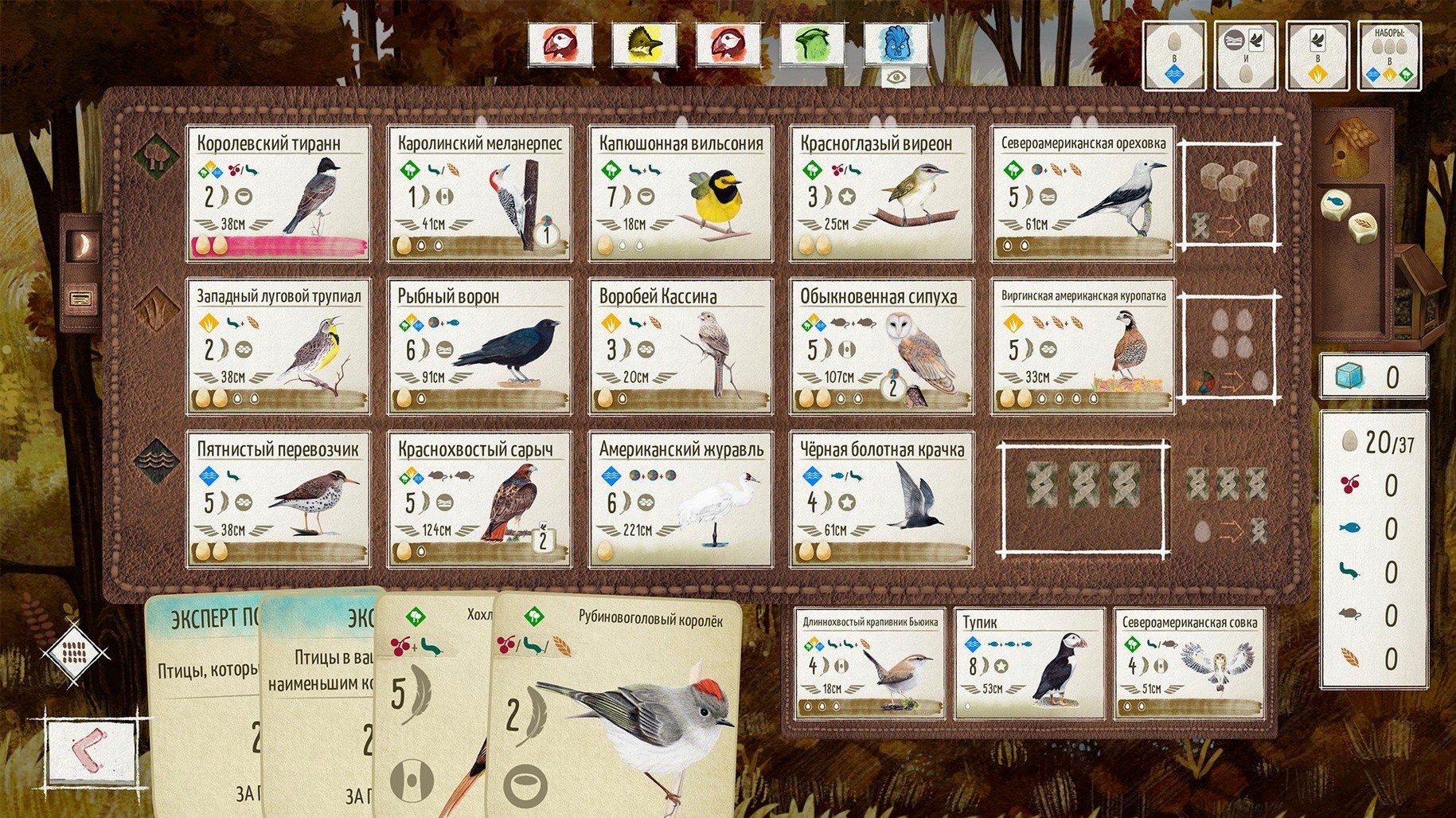
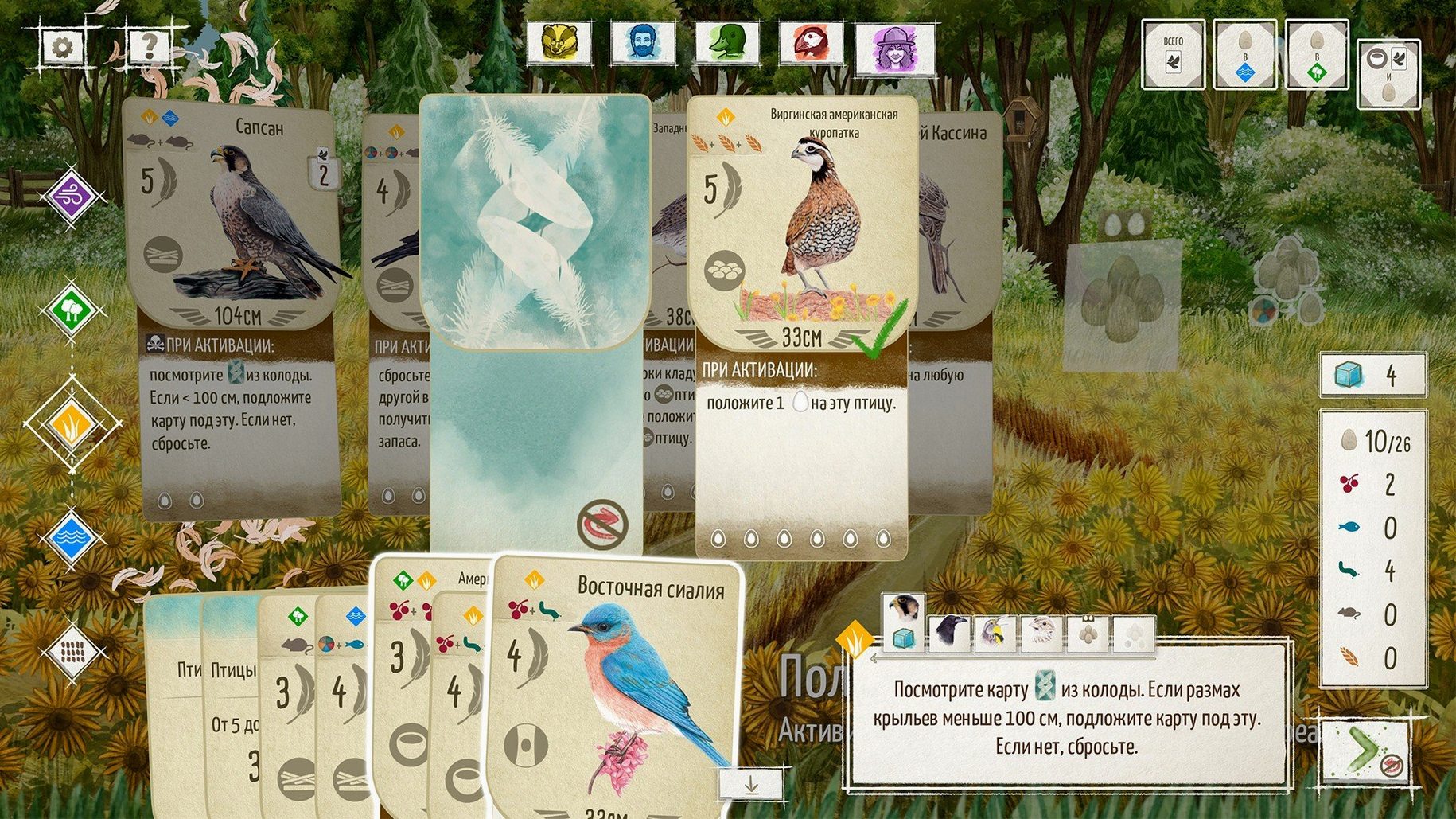
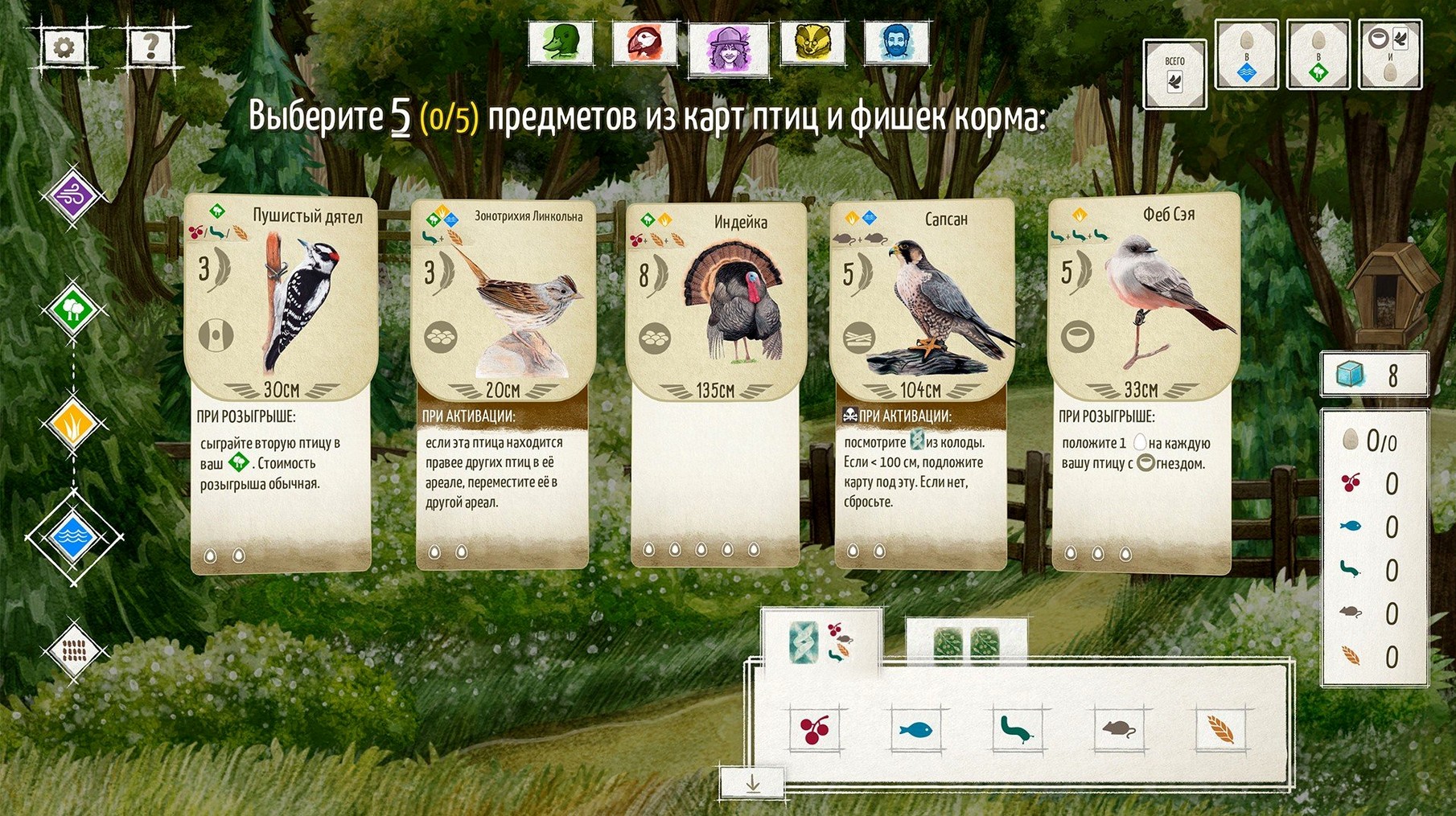
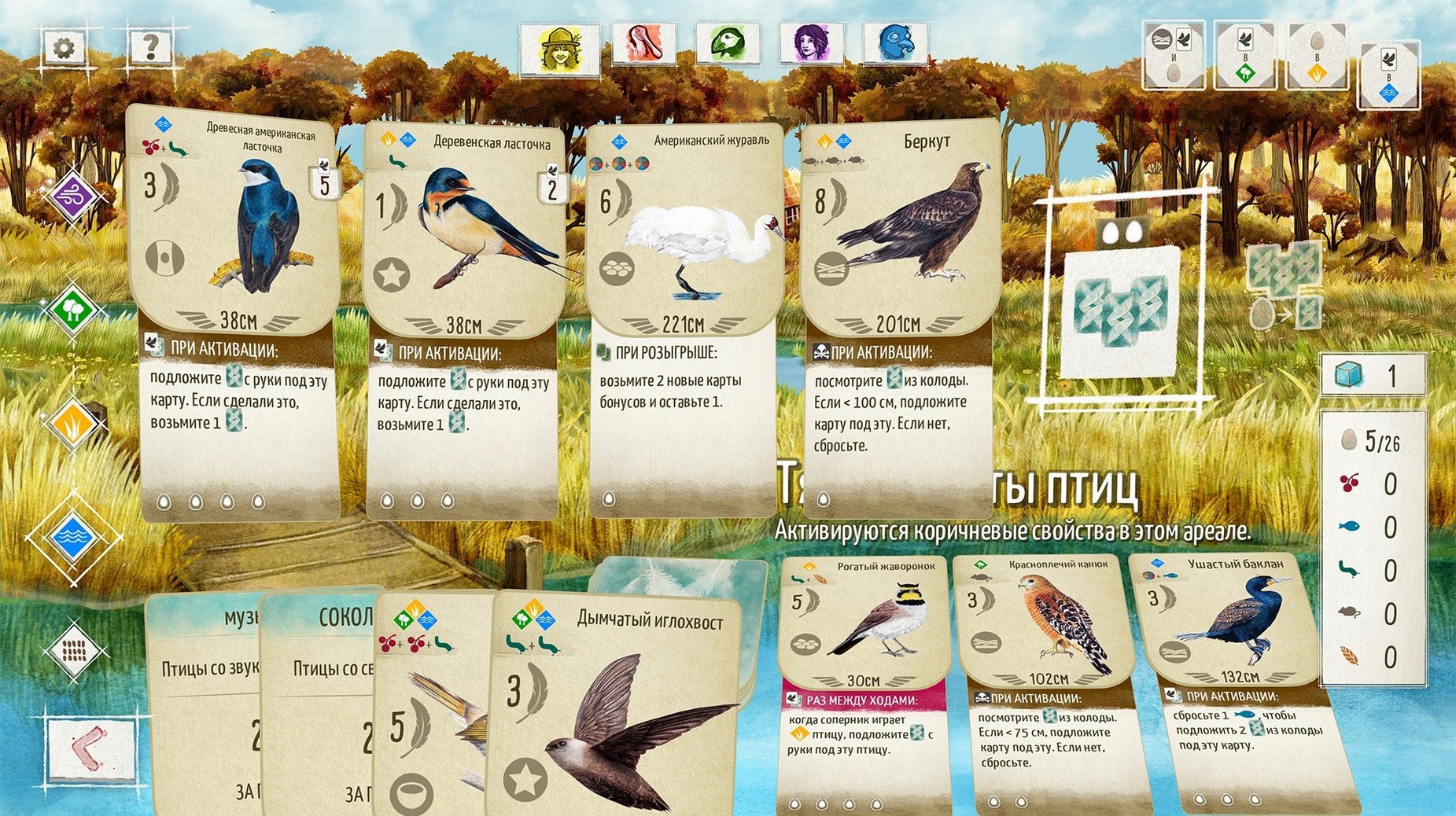
The “Play a Bird” button doesn’t just drop a card onto the mat. It triggers a cascade: cache a seed here, tuck a card there, draw two more because your wood duck’s wetland power just fired. This is the quiet machinery of Wingspan—a game where your board hums with layered reactions, not clash-of-armies noise.
For Engine Builders Who Prefer Birds Over Battles
- Players who enjoy building an engine over time, not rushing a single win condition.
- Anyone who finds pure aggression exhausting. You’re competing for round-end goals, not attacking opponents directly.
- Birders and nature fans. The art and recorded calls are the real deal, and the facts on each card reward curiosity.
- Solo players. The AI opponent, the Automa, runs its own tight game without feeling like a placeholder.
Where the Friction Lives
If you want a fast, take-that card game, this isn’t it. Pacing leans deliberate, and between-turn downtime in a four- or five-player online match can test your patience. The tutorial explains the rules, but grasping why a raven is powerful takes a few sessions. Come for the birds, stay because the interlocking systems click—but only if you’re okay with a game that asks you to slow down and read the board.
Why Filling Every Slot Drains Your Egg Supply
The biggest trap new players walk into is treating Wingspan like a collection game—filling every habitat slot with any bird that fits, just to see the board light up. A stuffed wetland looks productive until you realize you’re drawing cards you can’t afford to play because your forest generates zero food. I see it constantly: someone wins the “most birds” goal and loses the match by 30 points because their engine never turned over.
Another classic: ignoring the round-end goal until round three. The teal tracker doesn’t care about your long-term plan; it rewards whoever placed second in the grassland tuck-a-thon, and those points compound. Even one bird dropped in at the last minute can flip a scoring tier. Also, don’t hoard bonus cards. Drawing three early and keeping all of them sounds smart until your hand is clogged with objectives you’ll never hit. Toss the one that doesn’t match the birds you’re actually seeing.
Small Moves the Tutorial Never Mentions
Hold Tab during a match. That’s the one. It pulls up a clean overlay of every player’s board, which matters far more in online play than the game lets on. Knowing whether the person to your left just filled their forest column changes what you pick from the feeder. On the subject of the feeder, you can reroll it by spending an action, but only if all dice show the same face. I’ve watched players sit through three turns waiting for a worm when they could’ve forced a fresh toss.
The bird tray has its own hidden rhythm. If a card in the tray triggers a “draw and discard” effect, you can use it to cycle the market without burning a turn. Pair that with a sandhill crane or anything that tucks cards from your hand, and you’re thinning your deck while the other players are still reading flavor text. Also, the Automa’s difficulty slider isn’t just a win-rate toggle—playing against the hard AI with a Wingspan Mac torrent build running locally is the fastest way to internalize which bird powers chain together, because the AI punishes slow decisions without the social pressure of a timed online lobby.
The Solo Ritual Player’s 20-Minute Escape
Mac users who treat games as a wind-down ritual, not a leaderboard grind. The solo mode is built for someone who wants a 20-minute match on a laptop with no matchmaking wait, and the hand-drawn art holds up on any display size. If you’re the type who reads every bird fact aloud to whoever’s nearby, this is your thing.
It also clicks with remote groups who need a shared table that won’t dissolve into chaos. The asynchronous turn structure means someone can pour a coffee mid-round without derailing the flow, but the strategic ceiling stays high enough that four people who’ve learned the egg-laying meta will still surprise each other. Less obvious: teachers and parents run it as a gentle intro to resource management. The theme disarms the math, and the meadow-row engine teaches opportunity cost better than most tutorials I’ve seen.
- macOS (runs natively on both Intel and Apple Silicon Macs)
- Tested on macOS Tahoe with an M4 chip
Notes from the edit bay · 0
Sign in or get an edit-bay pass to leave a note.
No notes from the edit bay yet. They go up after I read them.