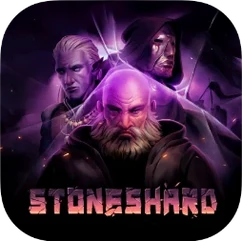
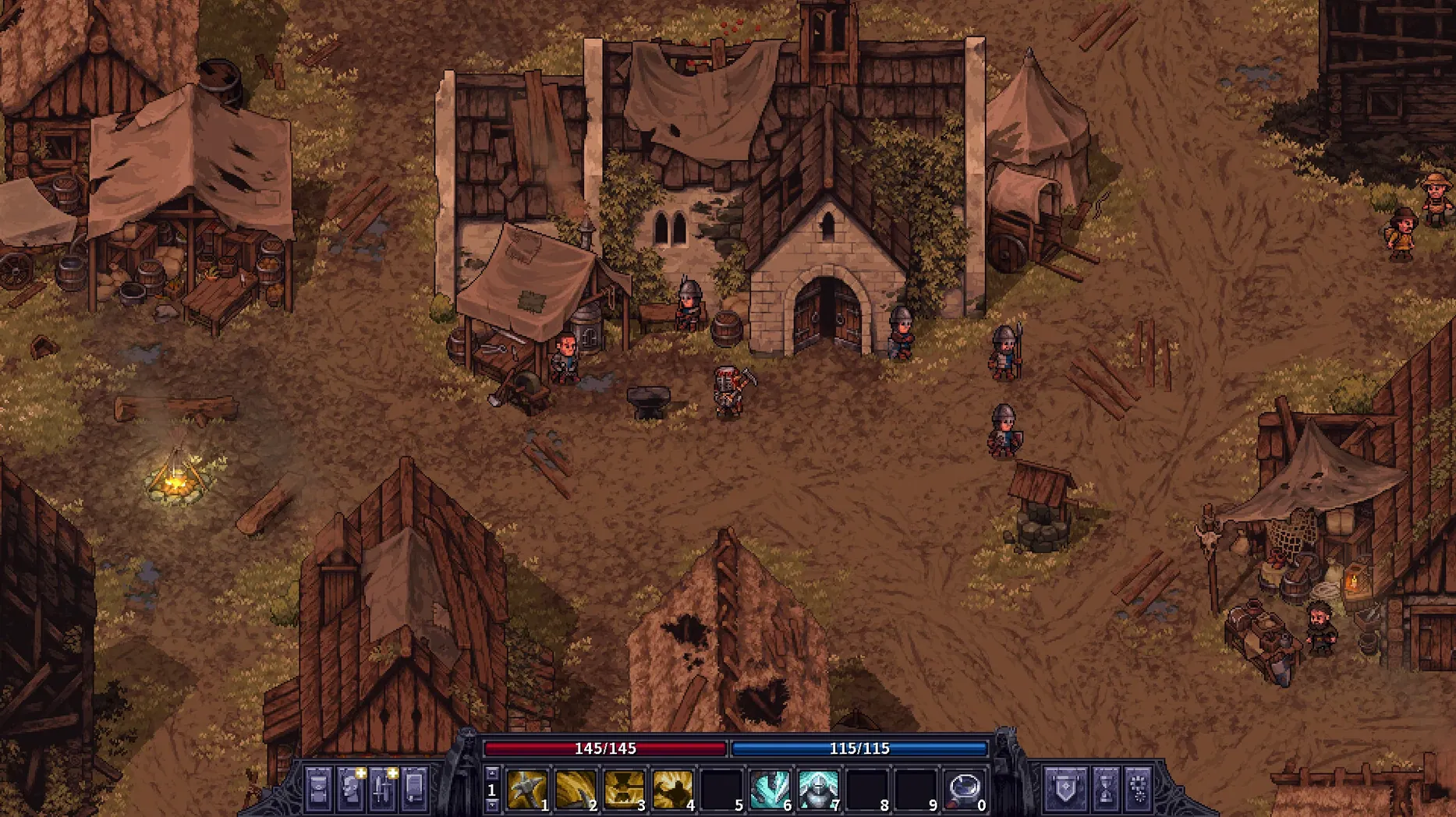
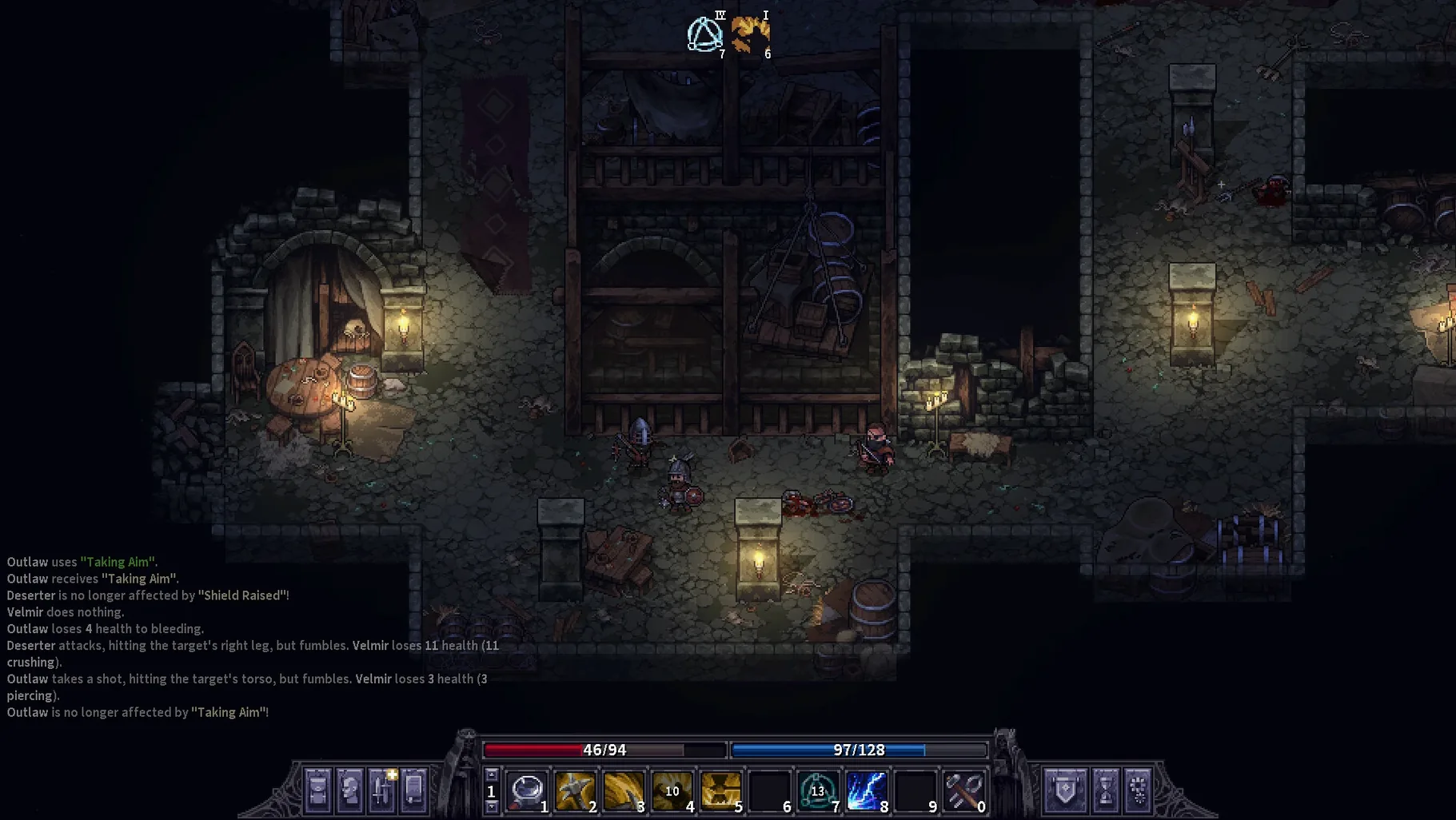
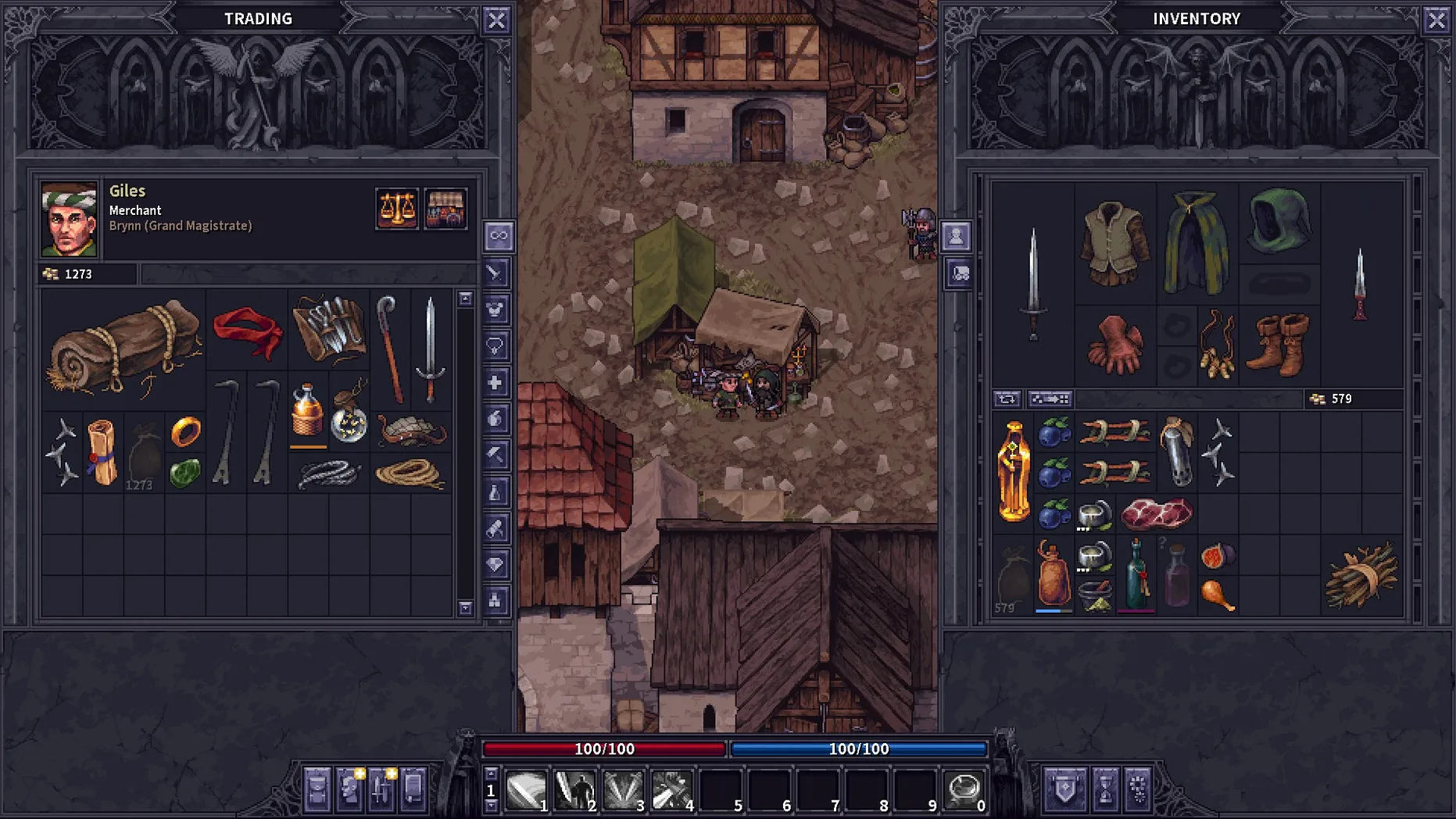
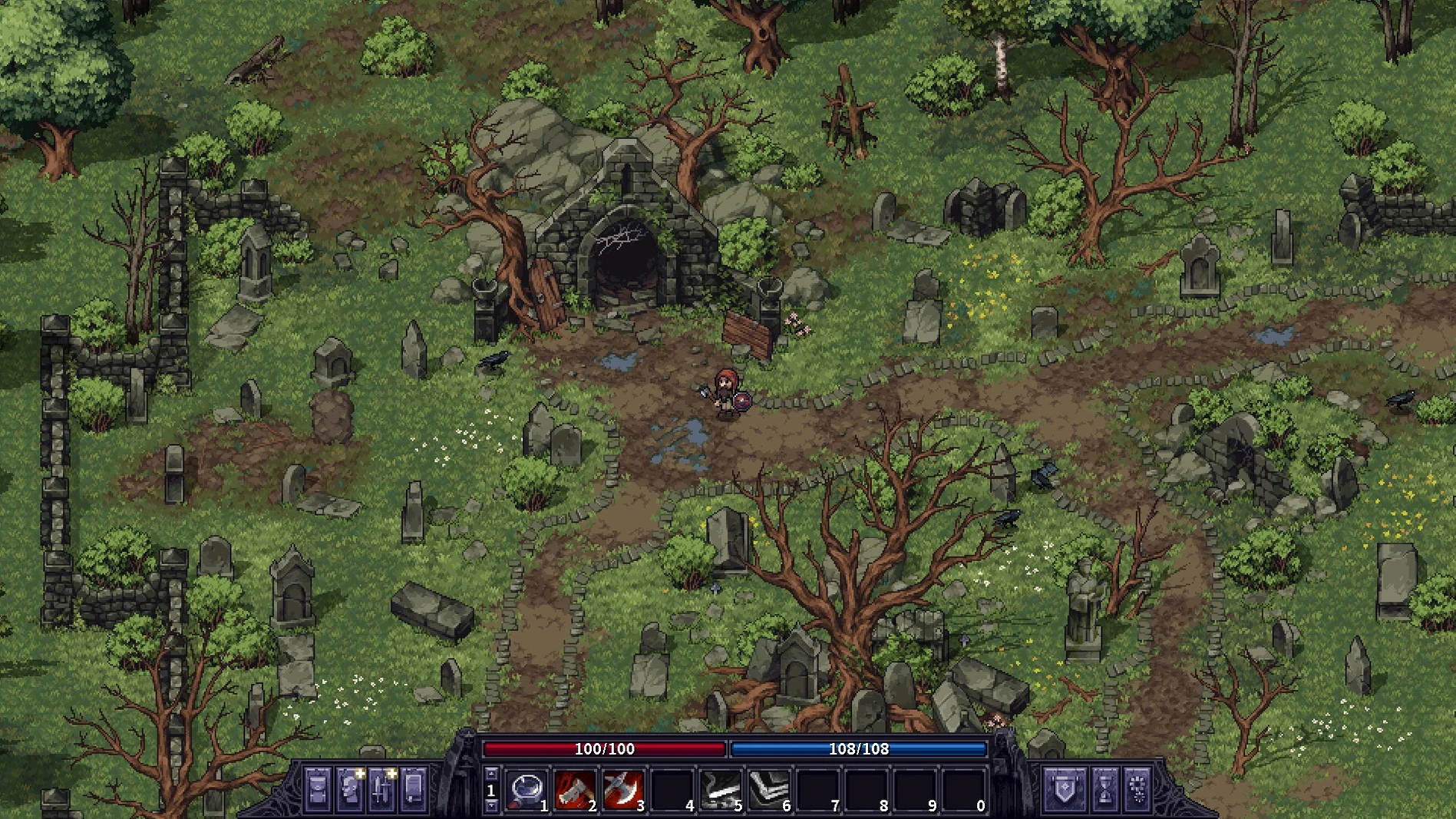
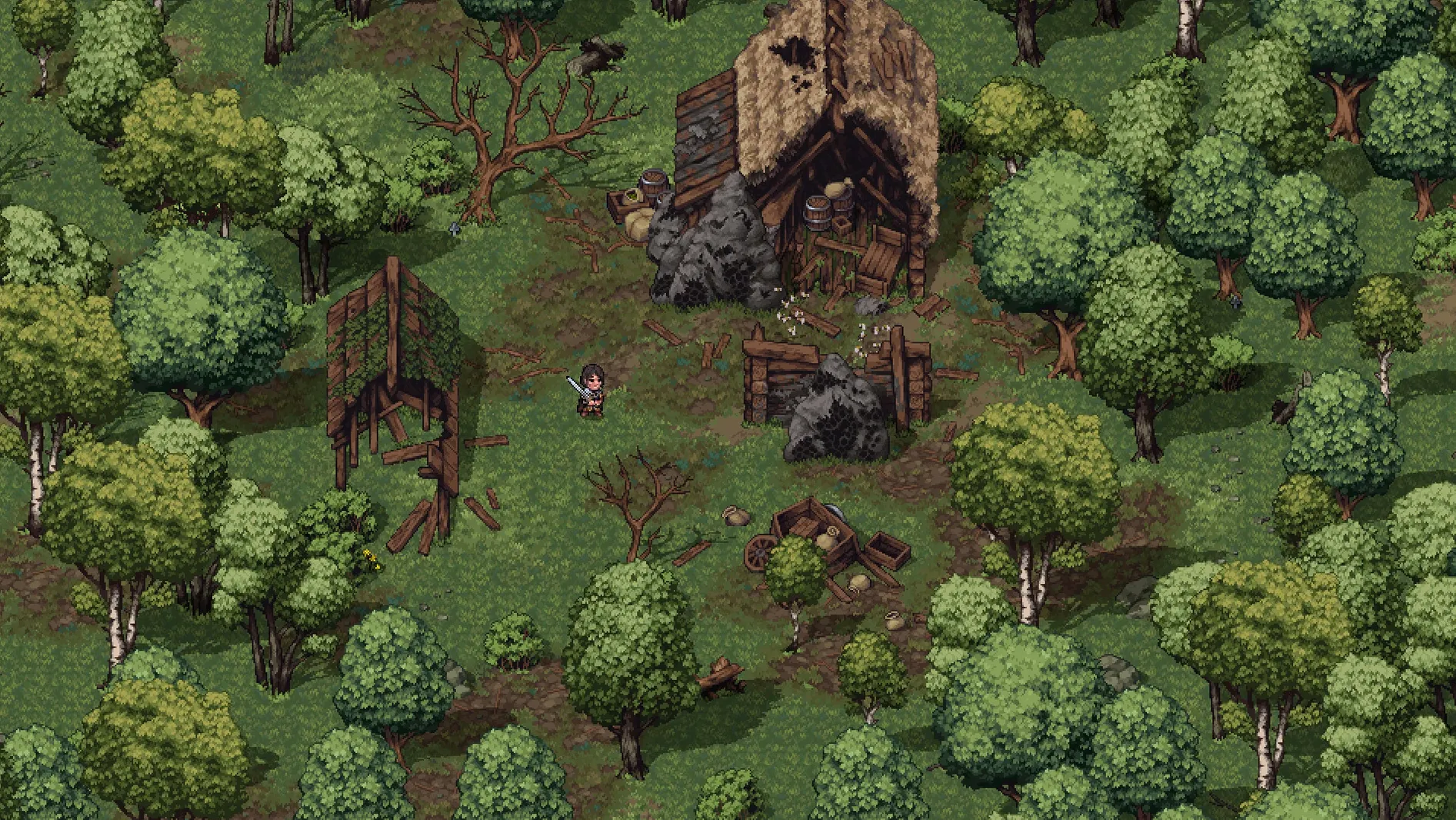
Most RPGs treat the journey between towns as a loading screen. Stoneshard treats it as the main event, and the problem you’re constantly solving is simply staying alive. You’re a mercenary with no plot armor, traveling a war-torn kingdom where a single infected wound can end a run. The minute-to-minute loop isn’t about saving the world — it’s about reading the room before you bleed out.
- Read every contract twice. You grab jobs from village elders — clear a dungeon, find a lost artifact — but the pay barely covers the bandages you’ll burn through. Overconfidence gets you killed faster than any boss.
- Walk everywhere, and I mean everywhere. The map isn’t a menu. You physically trek between ruined villages, abandoned roads, and monster dens, managing hunger, thirst, and a fatigue bar that makes your aim shaky.
- Treat your body like a broken machine. The health system is granular. You’ll inspect individual limbs for bleeding wounds, splint fractures, relieve pain with remedies, and even perform bloodletting. Ignore a cough and it develops into something worse.
- Watch your mercenary’s mental state. Morale isn’t flavor text. Low spirits lead to panic attacks in the middle of a fight. High pain levels trigger paranoia. You’re managing a person, not a stat block, and a mental break at the wrong moment means a reload from your last save point.
- Commit to your fight. Combat is strictly turn-based and tactical. Positioning, line of sight, and which of the 200+ abilities you’ve specced into determine whether you walk away or become dungeon decoration. There’s no pause-and-heal safety net.
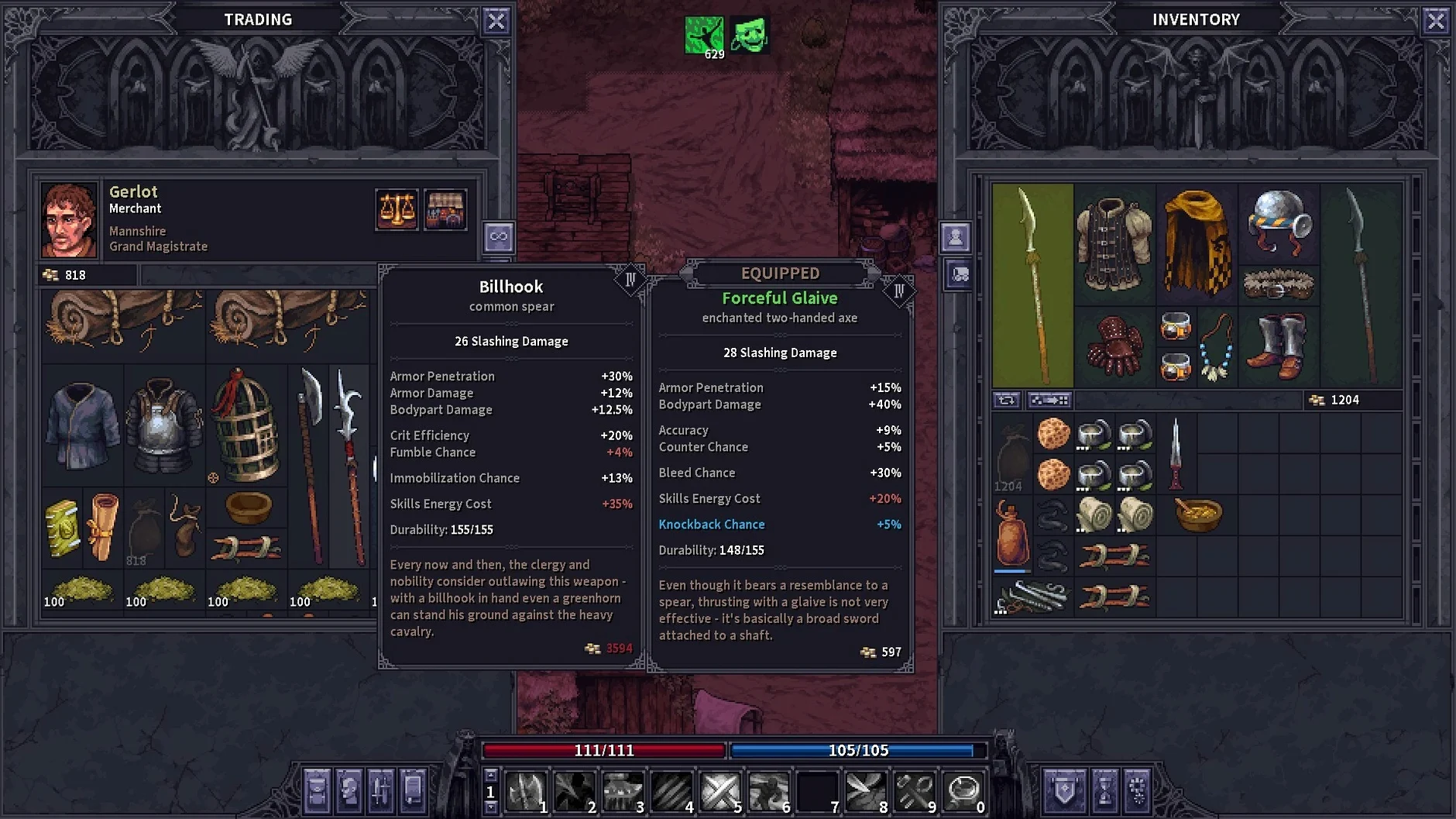
Between jobs, you’re trading scavenged goods, swapping out pieces from a pool of 400+ equipment items, and shaping a build that might lean into heavy armor or swift archery. The world doesn’t scale to you, and the save system only triggers at certain points, so every decision carries weight. Stoneshard is a slow, punishing crawl where the real victory is making it back to town with all your fingers attached.
The "Render Queue Is Full" Ritual Game
Stoneshard doesn’t play well with multitasking. It’s the app you launch when the render queue is full and the phone is on Do Not Disturb. Because it’s a Wineskin-wrapped build, it sidesteps the usual Mac gaming ecosystem — no Game Center integration, no iCloud sync, and no handoff to an iPad. That isolation is actually a strength. It means the game isn’t phoning home or running background services that compete with your Final Cut Pro background exports.
One thing I noticed: the game respects Apple’s focus modes natively. If you’ve set up a Gaming focus that silences notifications, Stoneshard inherits it without complaint. No pop-ups breaking the tension when you’re three turns from bleeding out in a dungeon corridor. The trade-off is that you won’t get Discord pings either, which might matter if you’re coordinating a co-op session — except this isn’t a multiplayer title, so nothing’s lost.
For streamers and capture-card users, Stoneshard plays nicely with OBS via display capture, though you’ll want to disable macOS’s built-in screen recording permission prompts ahead of time. The window doesn’t fight for resolution priority the way some fullscreen Wineskin titles do, so switching between the game and a reference window — a build planner, a shrine map — is less of a wrestling match.
Fanless M1 Air Stays Cool Through Hour Two
On an M1 MacBook Air, the game loads areas in under ten seconds and runs at a capped 60 fps without stutter. The fanless chassis stays cool through two-hour sessions — no thermal throttling that I could provoke, even during heavy weather effects on the overworld map. Turn-based combat means frame pacing isn’t critical, but the smoothness matters when you’re scrolling across fog-of-war territory and the game is calculating line-of-sight for twenty tiles at once.
Stability has been uneventful in the best way. No crashes across a dozen hours of play, no corrupted save states, and the Wineskin wrapper doesn’t leak memory the way some ports do. I’ve quit the game mid-dungeon and returned hours later with the exact state intact — a small miracle for an Early Access title running through a compatibility layer. The Fix script included in the disk image handled the one launch quirk I ran into, which was a permissions flag tripping on first boot.
If you’re hunting for a stoneshard macos free experience that doesn’t punish your hardware, this build delivers. It’s lean, it loads fast from an external SSD, and it leaves enough headroom that you can keep a browser tab open with a wiki page without swapping to compressed memory. For a game where a single bad decision erases an hour of progress, the last thing you need is the system adding its own instability to the mix.
- macOS Sequoia
- Apple Silicon (tested on M1 MacBook Air, 2020)
Questions I actually get
Does a character's mental state actually affect gameplay in Stoneshard?
Yes, morale, pain, and sanity directly impact combat. A mercenary with low morale can panic, losing control, while high pain and paranoia can debuff your stats in the middle of a dungeon crawl.
Notes from the edit bay · 0
Sign in or get an edit-bay pass to leave a note.
No notes from the edit bay yet. They go up after I read them.