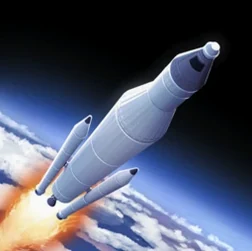
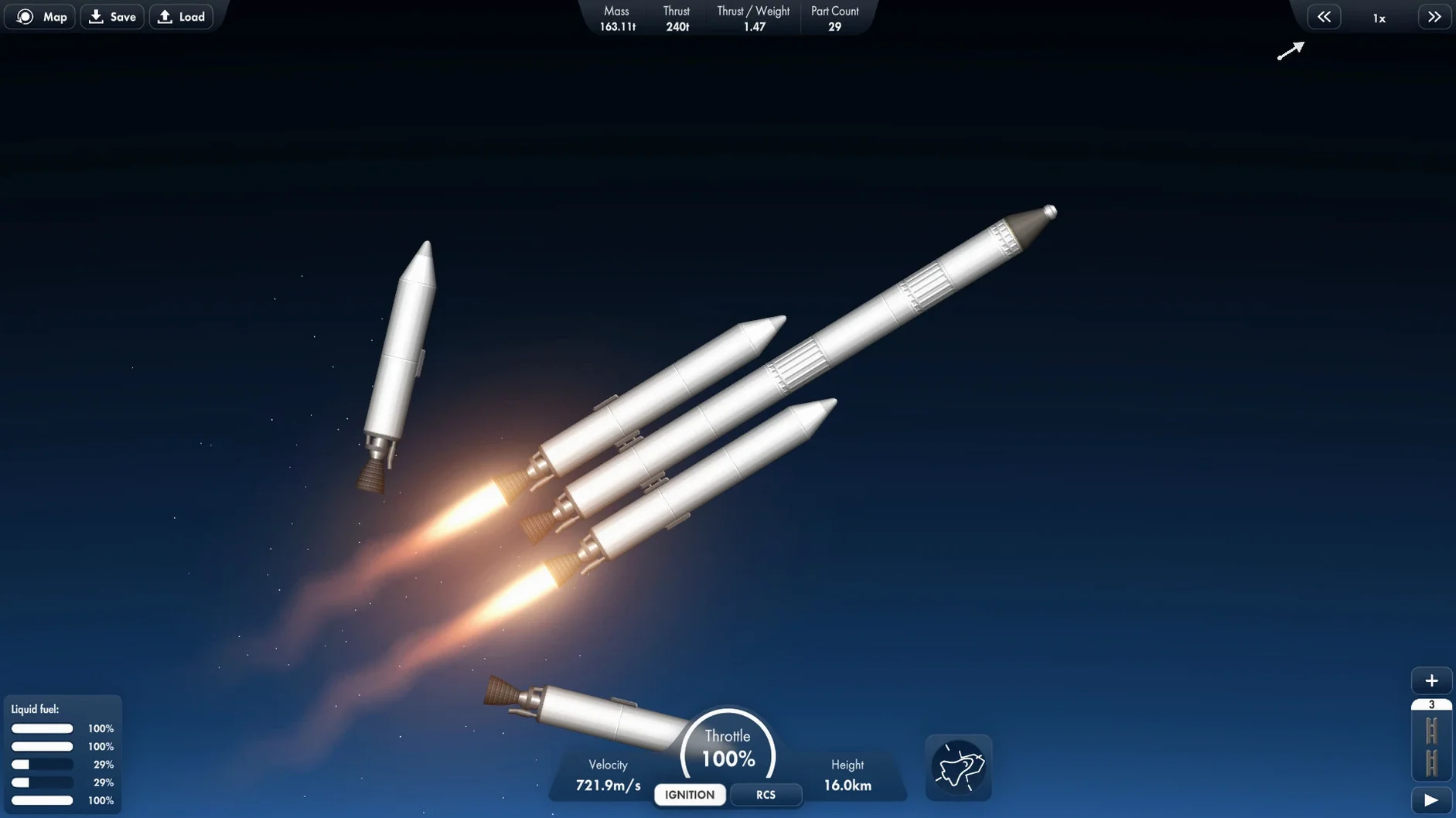
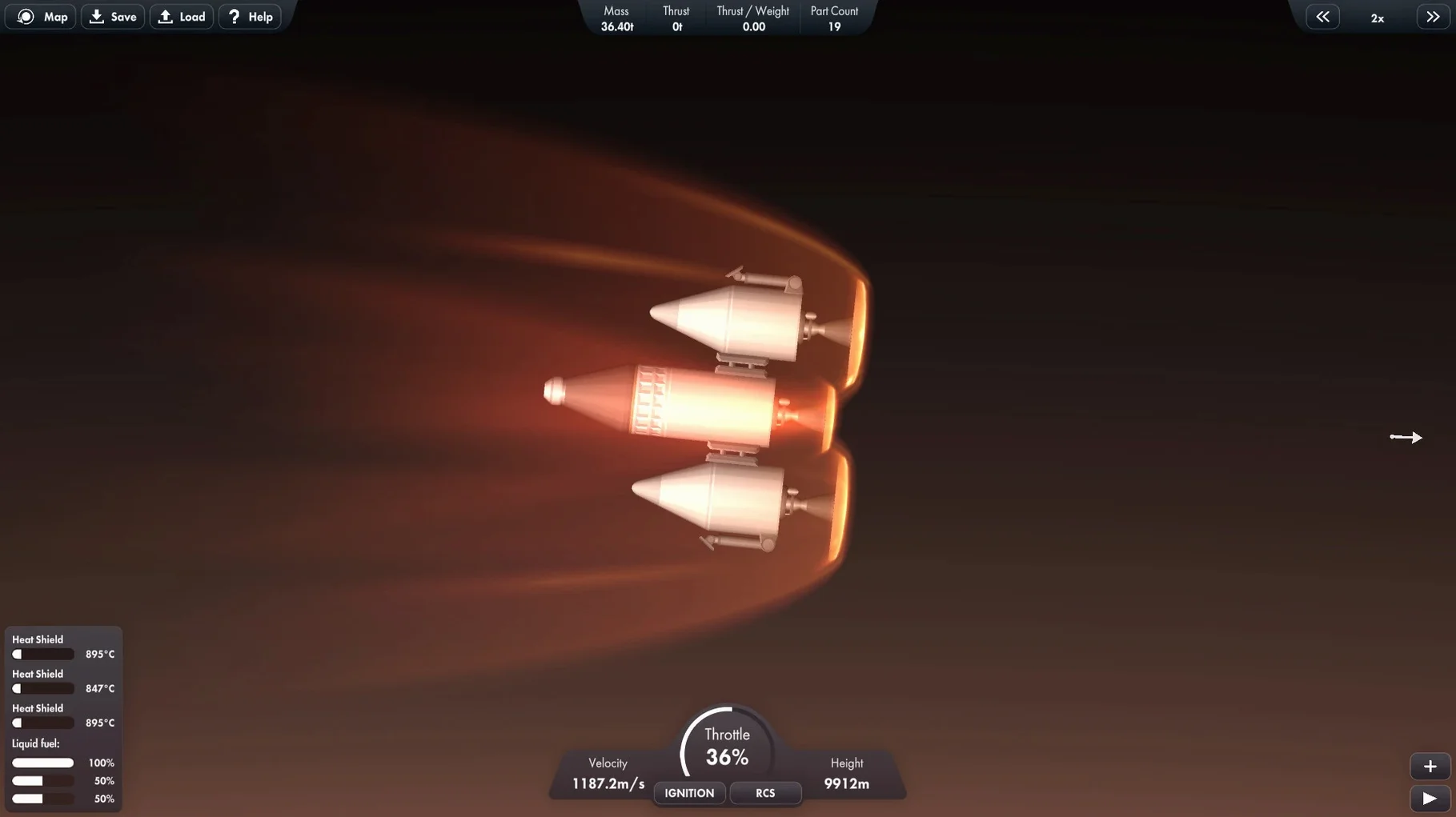
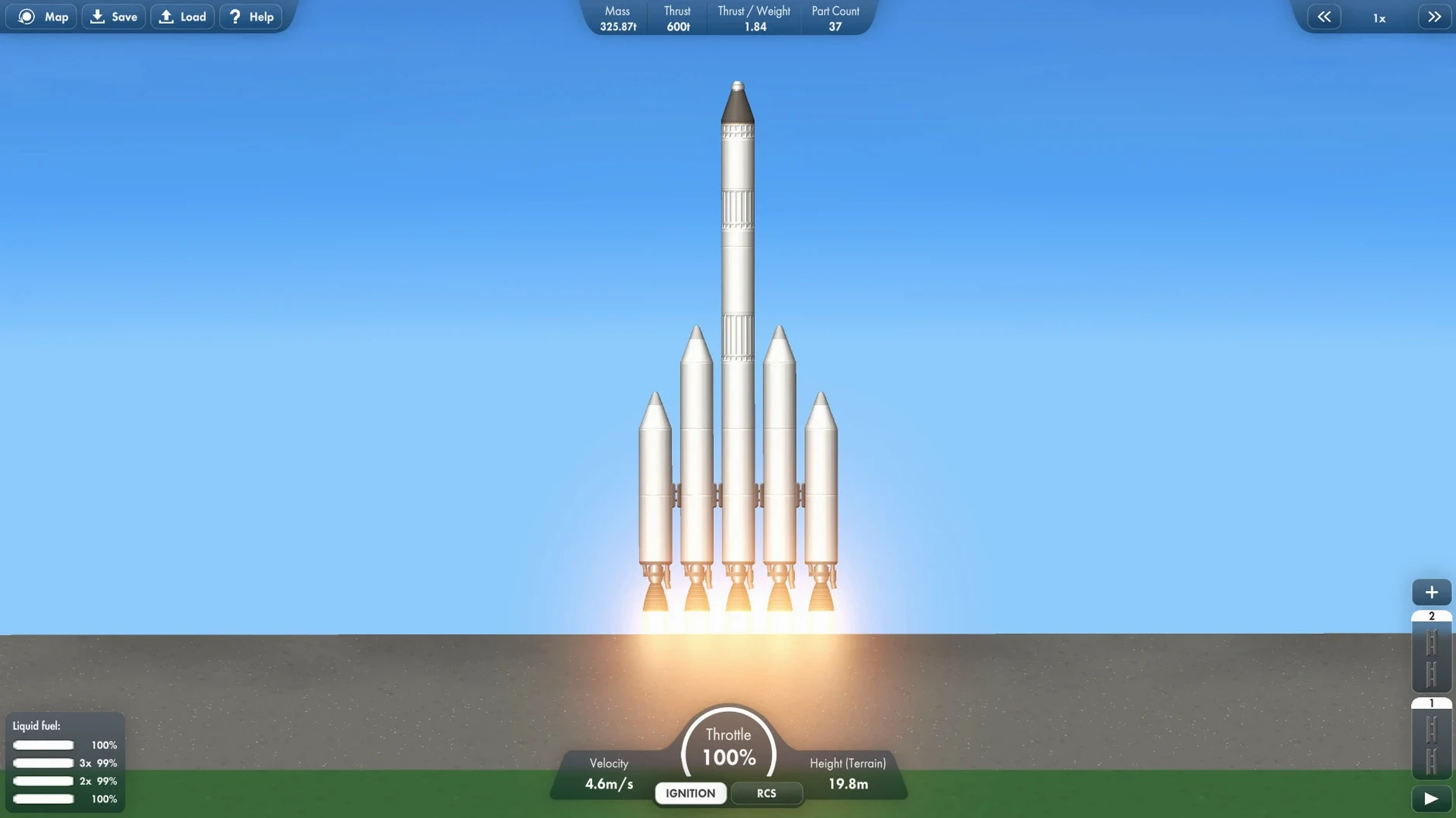
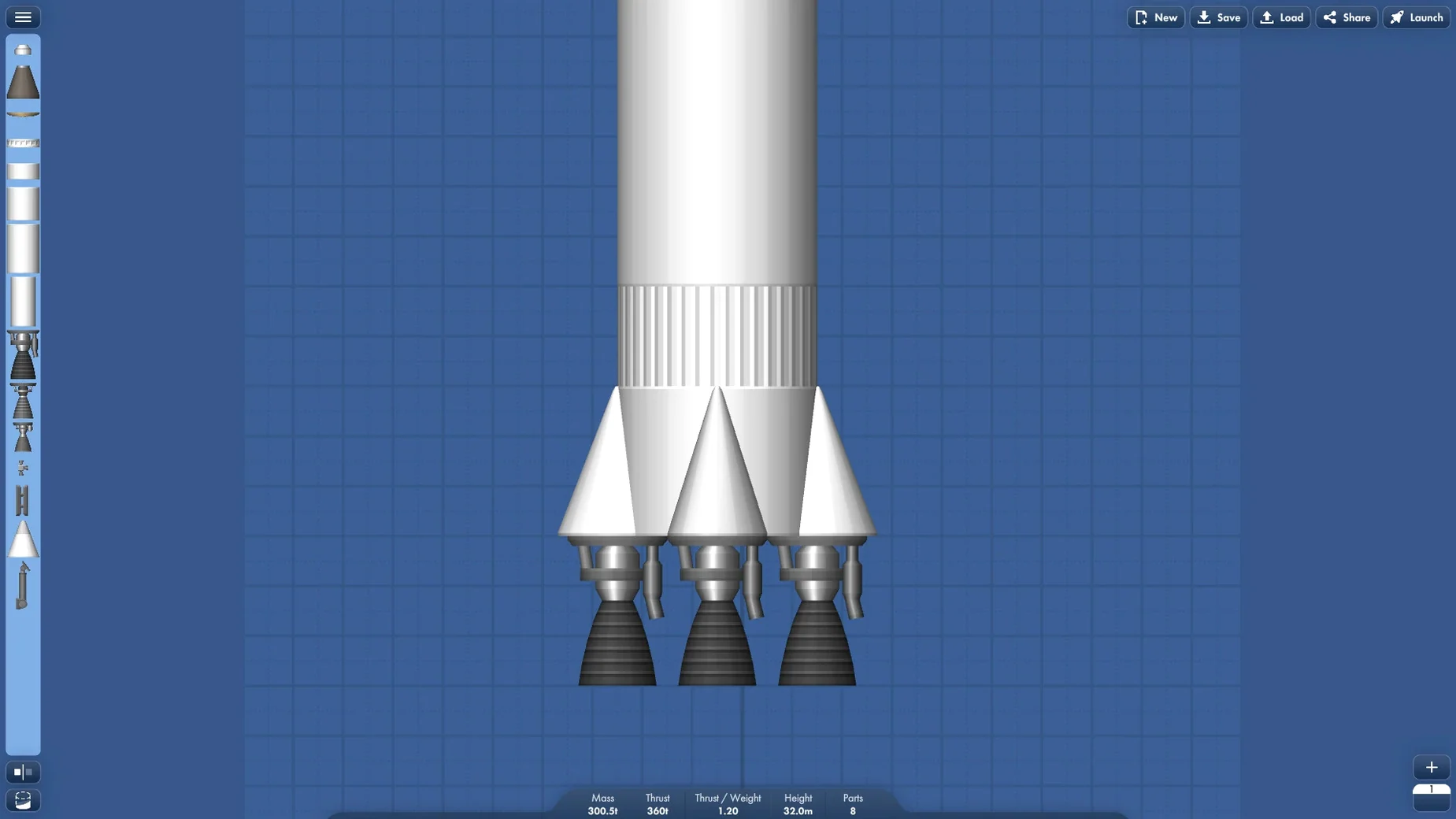
Spaceflight Simulator is a rocket science sandbox that hands you a bin of parts and lets you figure out the rest. You snap together fuel tanks, engines, capsules and landing legs on a 2D grid, tweak staging in a simple flow chart, then hit launch and see if your creation gets off the pad or shakes itself apart at 10 kilometers.
Design Rockets Under Realistic Weight and Thrust Limits
- Designing rockets from scratch, part by part, with realistic-ish weight and thrust constraints
- Orbital mechanics that make you think about transfer windows and delta-v, not just point-and-shoot
- Building space stations by docking modules across multiple launches
- Crafting research rovers and landers to touch down on other planets
- A mission structure that gives you concrete goals when you want direction
- A soundtrack that keeps the mood from getting too cold and vacuum-quiet
2D Physics Means No Yaw Axis and Persistent Rocket Wobble
- The 2D plane simplifies things — no yaw axis to worry about, but also no true 3D construction
- Rocket wobble under heavy loads is part of the physics; sometimes a strut is the answer, sometimes a complete redesign
- You're managing fuel lines and staging sequences manually, so a mis-click can strand a perfectly good capsule
Ignoring Center of Mass Destroys Your Rocket
You'll blow up a lot of rockets. That's the game. But some failures repeat enough that they're worth naming.
The biggest one is ignoring the center of mass. Slap a heavy payload on top of a skinny booster and your rocket will flip the moment you try to steer. The game doesn't draw a big arrow showing you the problem — you feel it in the controls. Move heavy stages lower, or add fins at the base, and suddenly the same design flies straight.
Another classic: overbuilding the first stage. More engines means more thrust, sure, but also more fuel to lift those engines, which means more engines again. Beginners chase this loop until they're launching a skyscraper to deliver a 200-kilogram satellite. Sometimes a smaller, lighter rocket with better staging gets you further than a brute-force monster.
Then there's staging order chaos. The staging chart sits there looking simple, but misplace a decoupler by one slot and you'll jettison your capsule while the booster is still firing. Or you'll fire an upper stage inside a fairing and shred everything above it. Before every launch, walk the staging sequence slowly. Every click matters.
Atmospheric drag catches people off guard too. Going full throttle through the thick lower atmosphere burns fuel fighting resistance you could avoid by throttling back until the air thins out. The game won't tell you this — your fuel gauge will.
Launch a Probe Core Satellite into a 120 km Circular Orbit
You open the game with a contract in mind: place a small satellite into a circular orbit at 120 kilometers. The vehicle assembly screen loads with a clean slate.
You start with a probe core — no capsule, this is an unmanned payload — and snap a small fuel tank beneath it. A tiny engine, the most efficient one in the catalog, goes at the bottom. That's your upper stage. You test the staging panel: decouple from the booster, fire this engine. Good.
Now the booster. A medium fuel tank, a higher-thrust engine, and a decoupler linking the two stages. You add two side boosters with radial decouplers and run fuel lines so the center tank draws from them first. Crossfeed isn't automatic; you drag the arrows yourself. A nose cone on each side booster, fins at the base for stability, and a fairing shell over the payload. The fairing builder is finicky — you rotate pieces until the satellite is fully enclosed.
On the pad, you throttle to full and stage. The side boosters light first, carrying the weight through the dense lower atmosphere. At 8,000 meters you stage again — side boosters peel away, center engine takes over. At 30 kilometers the fairing deploys. The air is thin enough now.
You watch the apoapsis marker on the orbital map. When it hits 120 kilometers you cut throttle and coast. A maneuver node appears as a dotted circle; you drag it until the projected orbit forms a neat loop. At the node, you burn the upper stage for eleven seconds. Circular orbit. Contract complete. You start sketching a rover for Duna.
Place Radial Parts with Blueprint Symmetry
- Blueprint symmetry — tap the symmetry button before placing radial parts and the game mirrors everything around the centerline. Two fins, four boosters, eight struts. Way faster than placing each one manually.
- Part clipping — hold a modifier key while placing a part and it ignores collision with nearby pieces. Useful for tucking batteries or reaction wheels inside structural gaps where they'd normally snap to the outside.
- Time-warp in the assembly screen — sounds odd, but you can fast-forward on the pad to align a launch window. Interplanetary transfers are painful without this.
- Rename your craft — double-click the vessel name at the top of the assembly screen. When you have five saved rockets called "Untitled," you'll thank yourself.
- Orbit info panel — tap the little circle icon in map view and you get exact altitude, velocity and inclination numbers. The game doesn't shove this in your face, but it's essential for precise maneuvers.
- Quicksave — it's there, tucked in the pause menu. Use it before a docking attempt or a landing burn. Rovers on low-gravity moons have a way of bouncing into deep space.
- macOS 10.13 or later
- Intel Macs; tested on Apple Silicon (M1) under macOS Ventura
Questions I actually get
What kind of missions can you fly in Spaceflight Simulator?
The game includes goals ranging from simple suborbital hops to moon landings, rover deployments on distant planets, and assembling multi-module space stations in orbit.
Notes from the edit bay · 0
Sign in or get an edit-bay pass to leave a note.
No notes from the edit bay yet. They go up after I read them.