
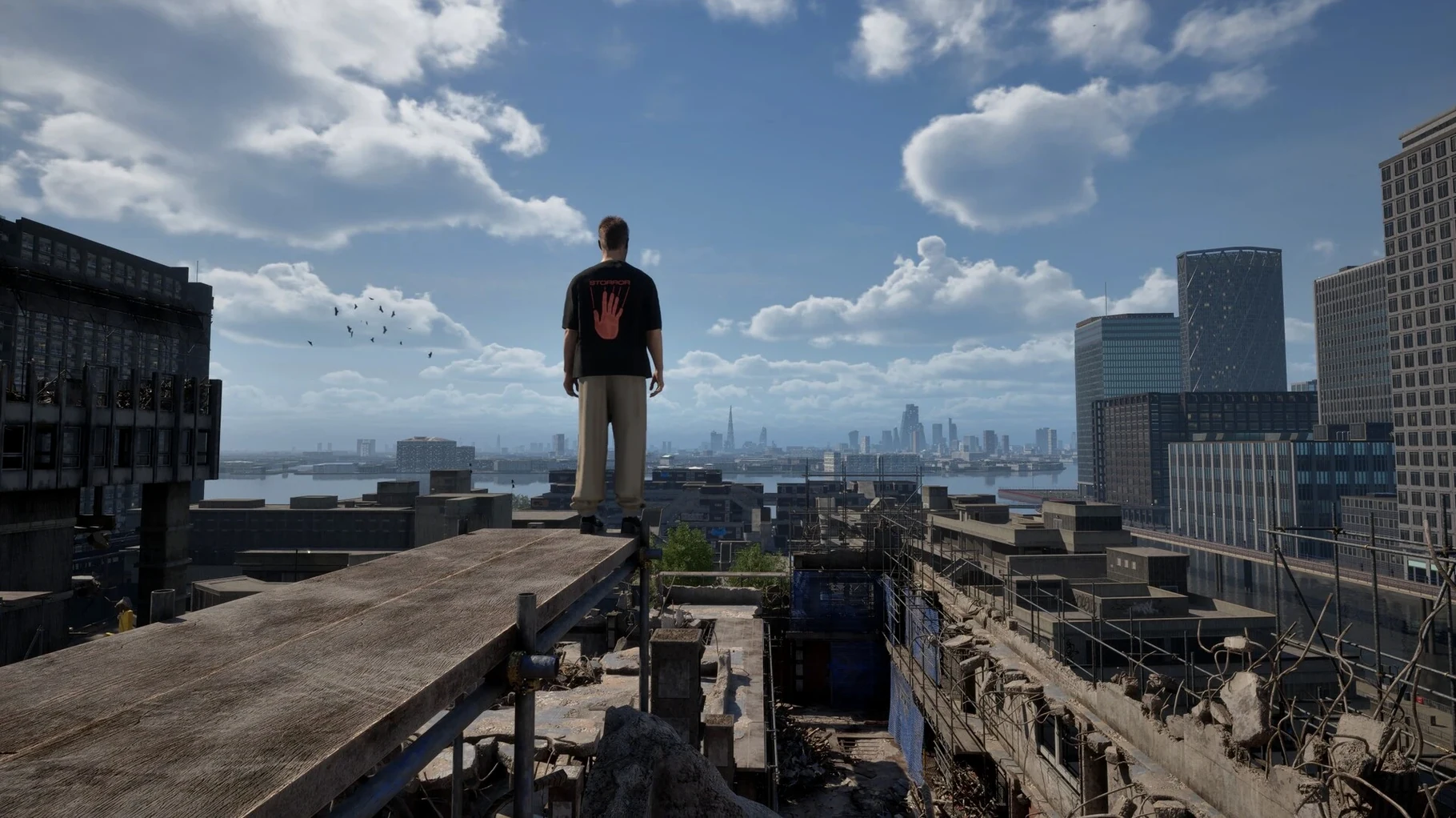
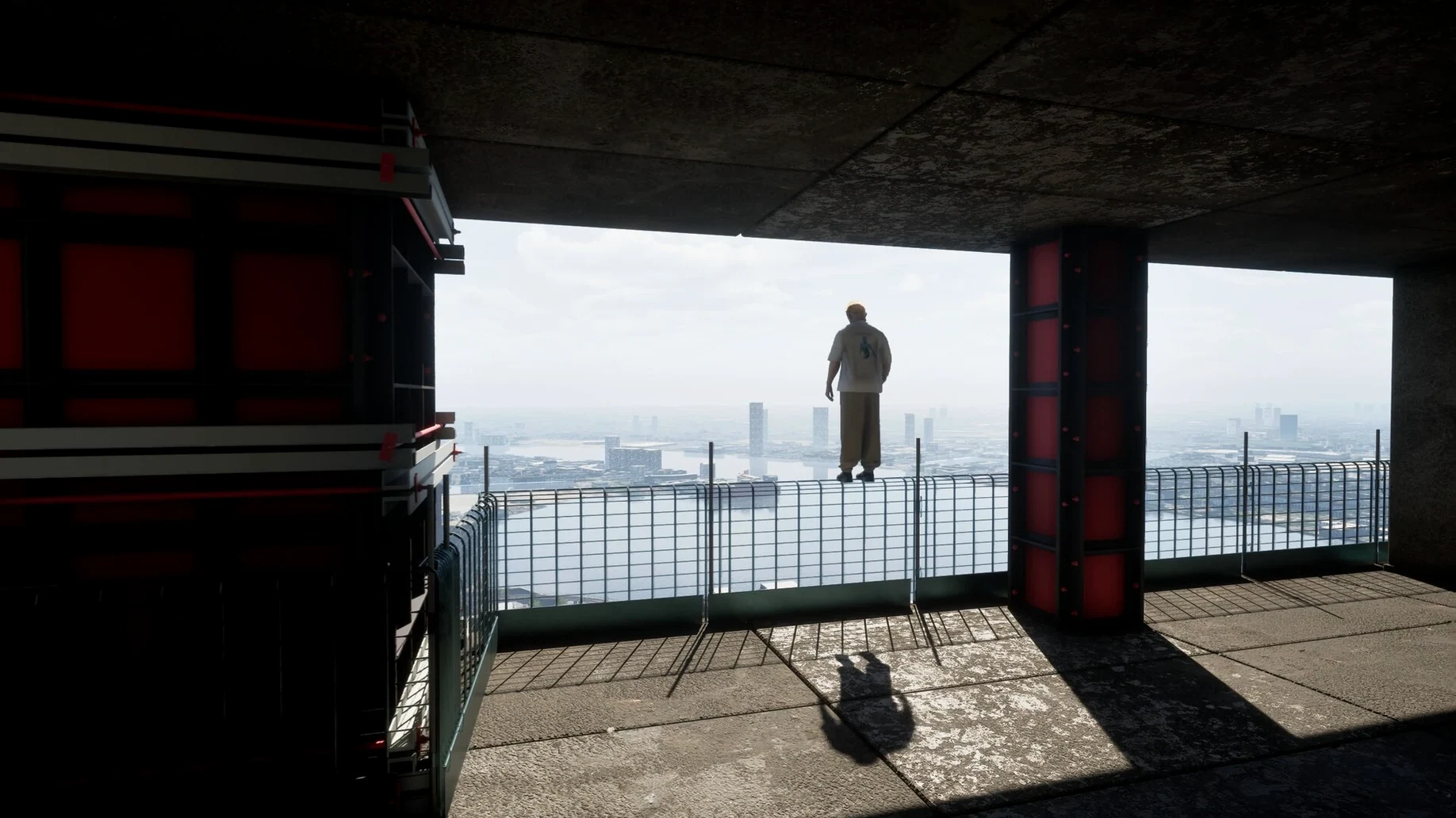
0.39.0. That's the version number you'll see, a clear signal this is an Early Access build still being shaped. STORROR Parkour Pro drops you into a stylized London where streets and rooftops are your playground.
Who Gets Hooked?
Movement purists who obsess over flow. The game throws hundreds of parkour animations at you, so stringing a clean line from a rooftop to a moving train feels earned, not scripted. If you replay a level ten times just to nail the rhythm, this is your sandbox.
No Story, No Finish Line: Who Bounces Off the Open Sandbox
Players who need a tight narrative or a defined ending. This isn't a story-driven platformer. You're given an urban jungle and a moveset, then left to explore Line Challenges or mess around with friends in Chase and Escape mode. The structure is what you bring to it.
Where Does the Multiplayer Fit?
Chase and Escape is the social glue. One player runs, others hunt. It turns the open map into a high-speed game of tag, and the helicopter avoidance mechanic adds a sharp edge when you're trying to buy a few extra seconds.
What's the Early Access Reality?
The core movement feels great, but expect rough edges. You'll find the English voice-overs functional rather than cinematic, and some systems are clearly still warming up. The Apple Silicon requirement means it runs smoothly on modern Macs, but you're signing up for the journey, not a finished product.
Movement-First Mac Players Who Felt Ignored by Console Ports
Mac gamers who've been craving a movement-first title that doesn't feel ported as an afterthought. The Apple Silicon requirement isn't a checkbox — it means the physics simulation actually breathes on an M-series chip. Players coming from skateboarding games or Mirror's Edge will recognize the loop: spot a line, botch it, retry, nail it, feel unreasonably good about yourself.
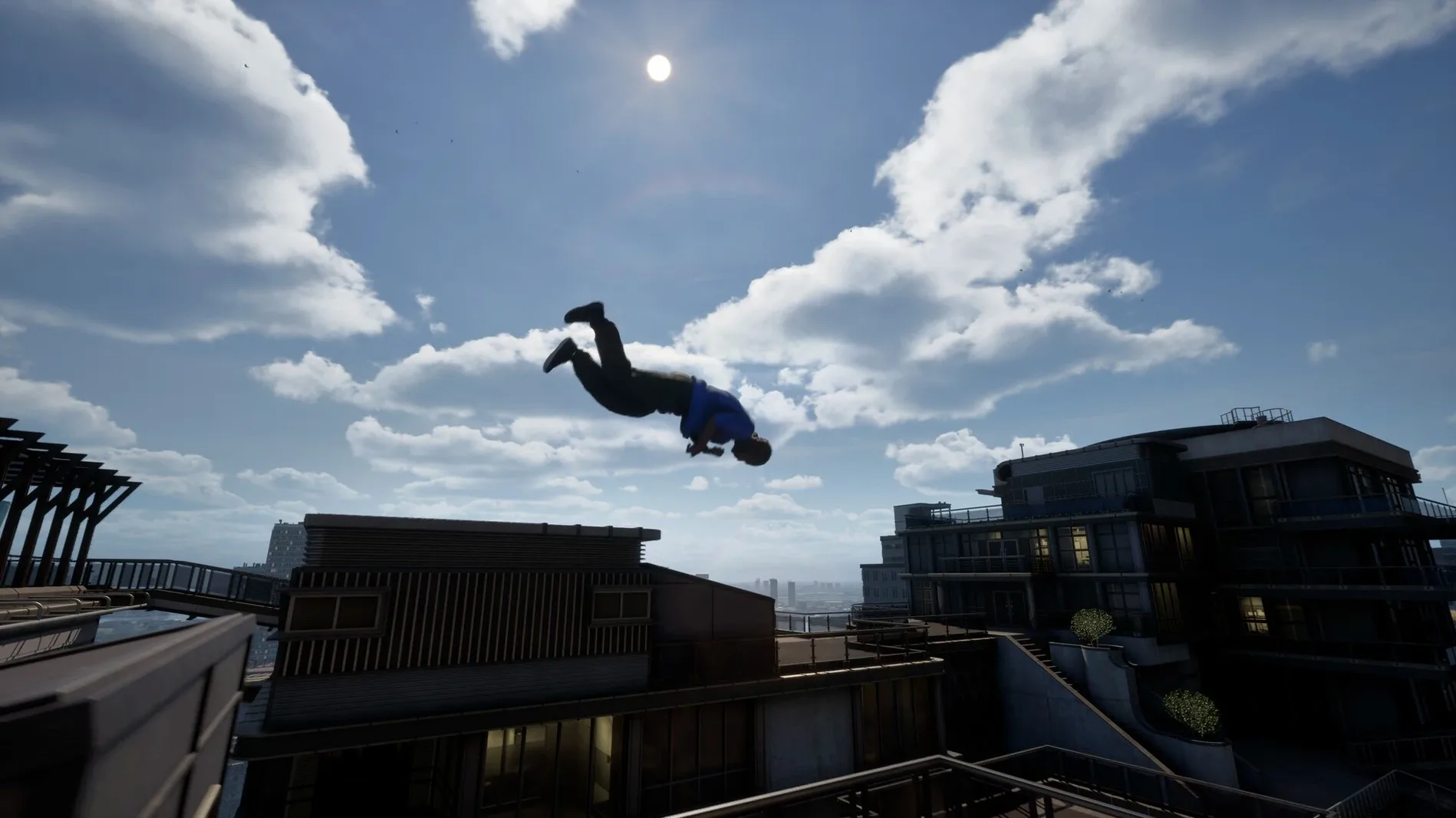
Creative types who film their runs. The replay value jumps when you start treating a Speed Challenge as raw footage for a highlight reel. Motion-captured animations from real parkour athletes mean every wall-run and precision landing reads authentically on screen — no cartoonish exaggeration, just body mechanics that look right.
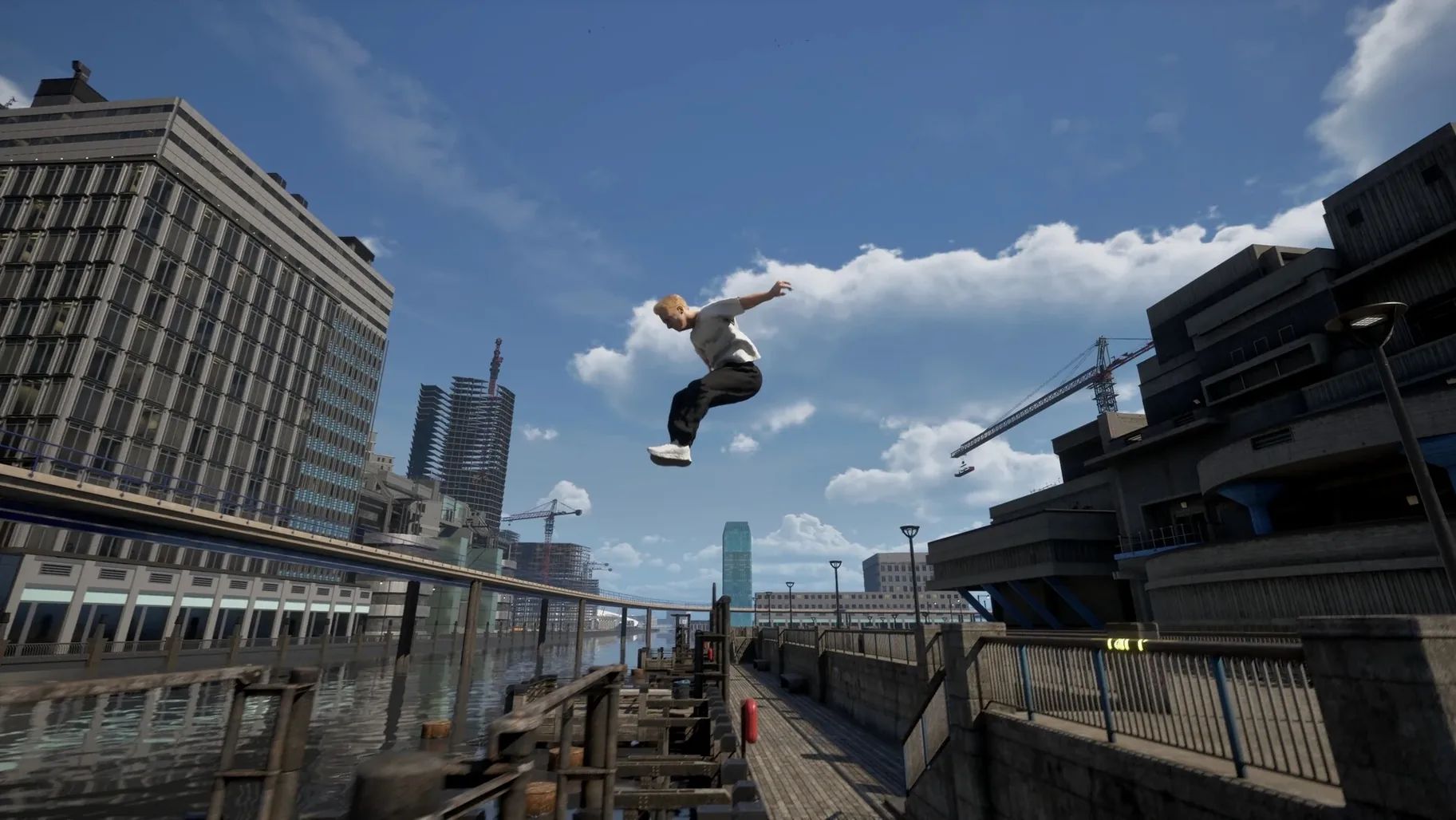
Duos and small groups. Chase and Escape isn't an afterthought bolted onto a single-player game. It reshapes how you read the map. A crane that was just set dressing becomes an escape route when your friend is two rooftops behind you.
Spawning at the Water with a Crane Swing and No Tutorial
You launch the game and spawn near the water. No tutorial pop-ups, no hand-holding — just the skyline and your feet on concrete. You spot a construction crane swinging slowly to your left.
First move: a sprint into a wall-run, catching the ledge with both hands. The animation blends smoothly because the physics system isn't snapping you into canned poses. You mantle up, then immediately flow into a precision jump across a gap. The landing feels heavy. Good.
From here you climb higher. A train horn sounds below. You drop, roll, and sprint toward the tracks, timing your jump to catch the roof of a moving carriage. The train pulls you through the district while you scan for your next line — maybe that billboard scaffolding, maybe the low rooftop coming up fast.
A Speed Challenge icon flashes. You tag it mid-stride. The timer starts, and suddenly every movement choice matters. You abort a flashy kong vault because it's slower than a clean step-up. Three rooftops later, you spot the helicopter's shadow. It's not scripted — the game just decided you were moving too well, and now you're dodging its searchlight while trying to shave half a second off your split time.
The run ends with a jump you mistimed by a frame. You're already restarting.
Hold Roll Before Landing to Keep Your Speed Alive
Hold roll on landing. The game doesn't advertise it loudly, but holding the roll input a split second before impact gives you a faster recovery. It's the difference between a smooth transfer and a dead stop that kills your Speed Challenge.
Camera flick for wall detection. When you're unsure if a surface is climbable, flick the camera toward it. The detection is generous on vertical surfaces but finicky on angled architecture. A quick camera snap tells your hands what's reachable before you commit.
Train timing isn't random. The trains looping through the map follow a pattern. Learn it. A run that starts nine seconds after a train passes the crane will set you up for a perfect rooftop transfer three blocks later.
Chase and Escape roles change your movement priorities. As the runner, tight cornering and vertical escapes beat raw speed. As the chaser, cut off routes instead of following directly. The helicopter mechanic punishes both sides equally, so use it to force your opponent into open ground.
Line Challenges store your ghost. You're racing your own best run, even if the UI doesn't shout about it. Watching your ghost botch a jump you just cleaned is quietly satisfying.
Kong-Vaulting Every Gap Is Slower Than a Clean Step-Up
Overusing the flashy moves. The motion-captured animations are gorgeous, and the temptation to kong-vault every gap is real. But the physics system rewards efficiency. A simple step-up is faster than a wall spin, and in Speed Challenges, style points don't exist. Learn the clean path first, then add flair.
Ignoring the helicopter. It's easy to treat the helicopter as background noise until it pins you in a dead-end alley. The searchlight has a rhythm — wide sweeps with a pause at each end. Move during the pause, freeze during the sweep. Beginners panic and sprint, which is exactly what the AI expects.
Misreading the map verticality. The Isle of Dogs isn't flat, but the game doesn't paint waypoints on walls. New players often stay at street level too long, missing the cranes, scaffolding, and rooftop routes that turn a mediocre line into something fluid. Look up constantly. The architecture is the tutorial.
Treating Early Access like a finished game. Version 0.39.0 has quirks. Some animations will stutter when transitioning between unrelated surfaces. A few challenge markers might not register until you approach from a specific angle. Reporting bugs helps shape the build, but getting frustrated at rough edges misses the point — you're playing a work in progress that already moves better than most finished parkour games.
- macOS 14.0 or later
- Apple Silicon (ARM) Mac
Notes from the edit bay · 0
Sign in or get an edit-bay pass to leave a note.
No notes from the edit bay yet. They go up after I read them.