


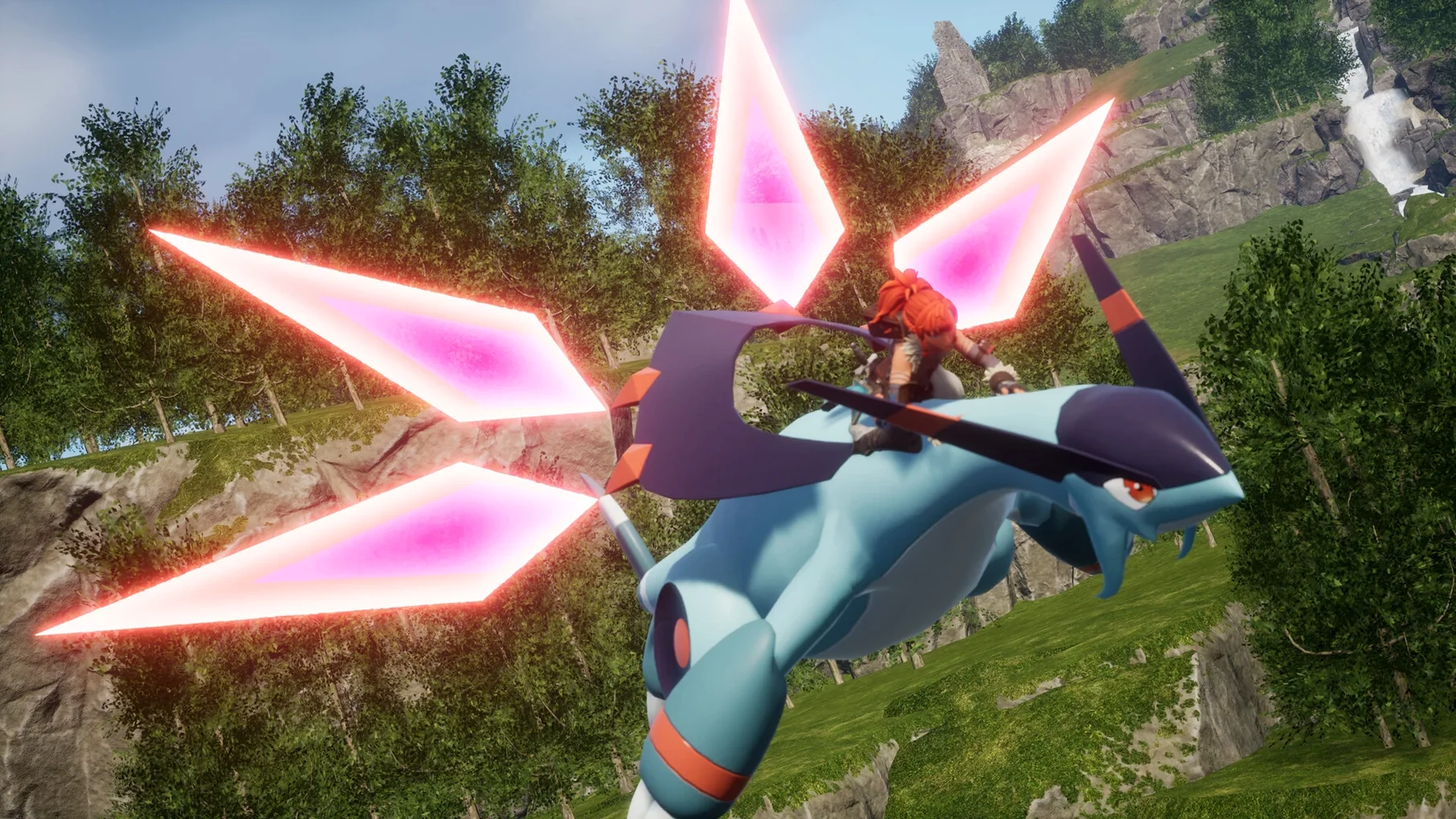
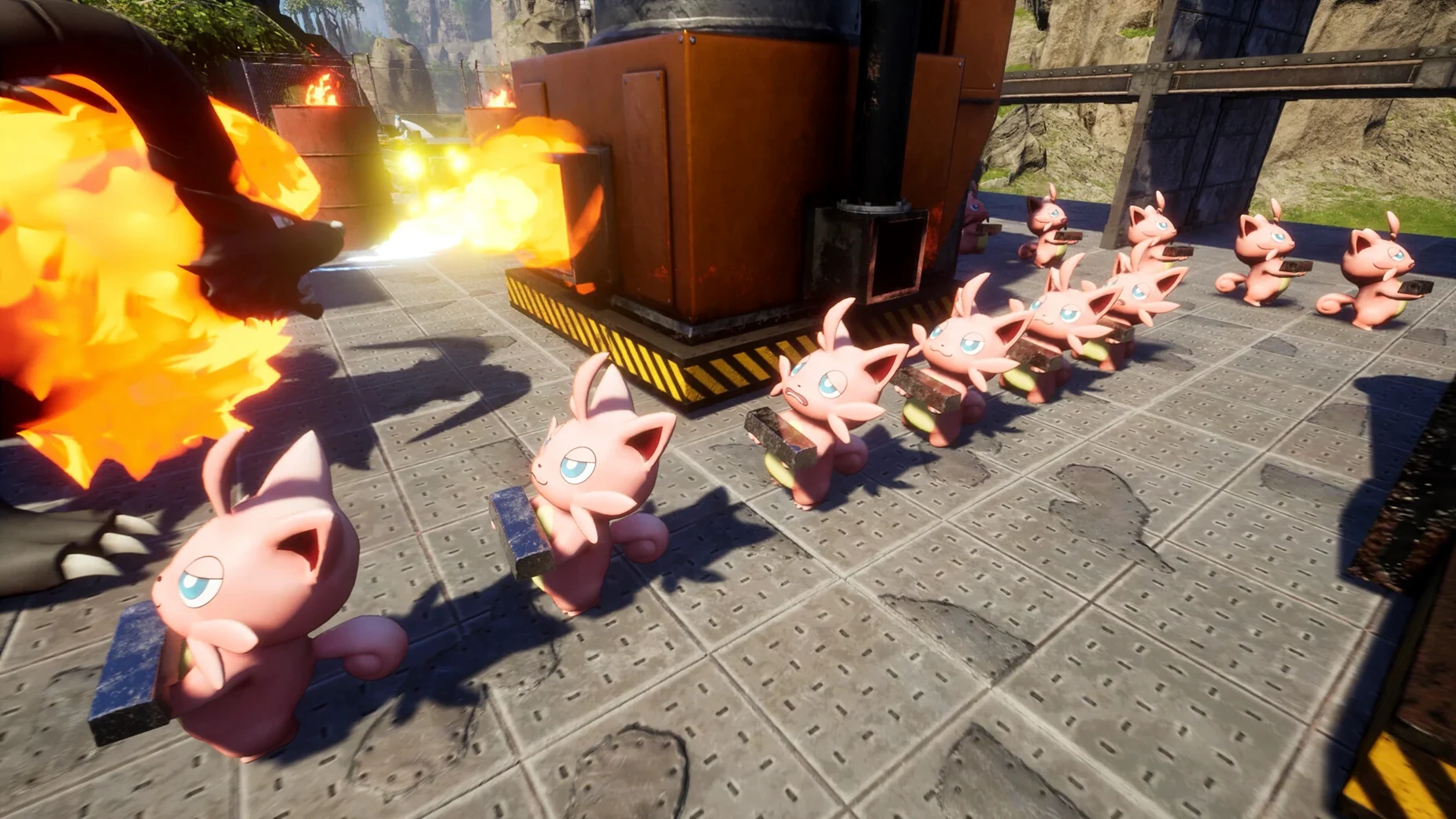


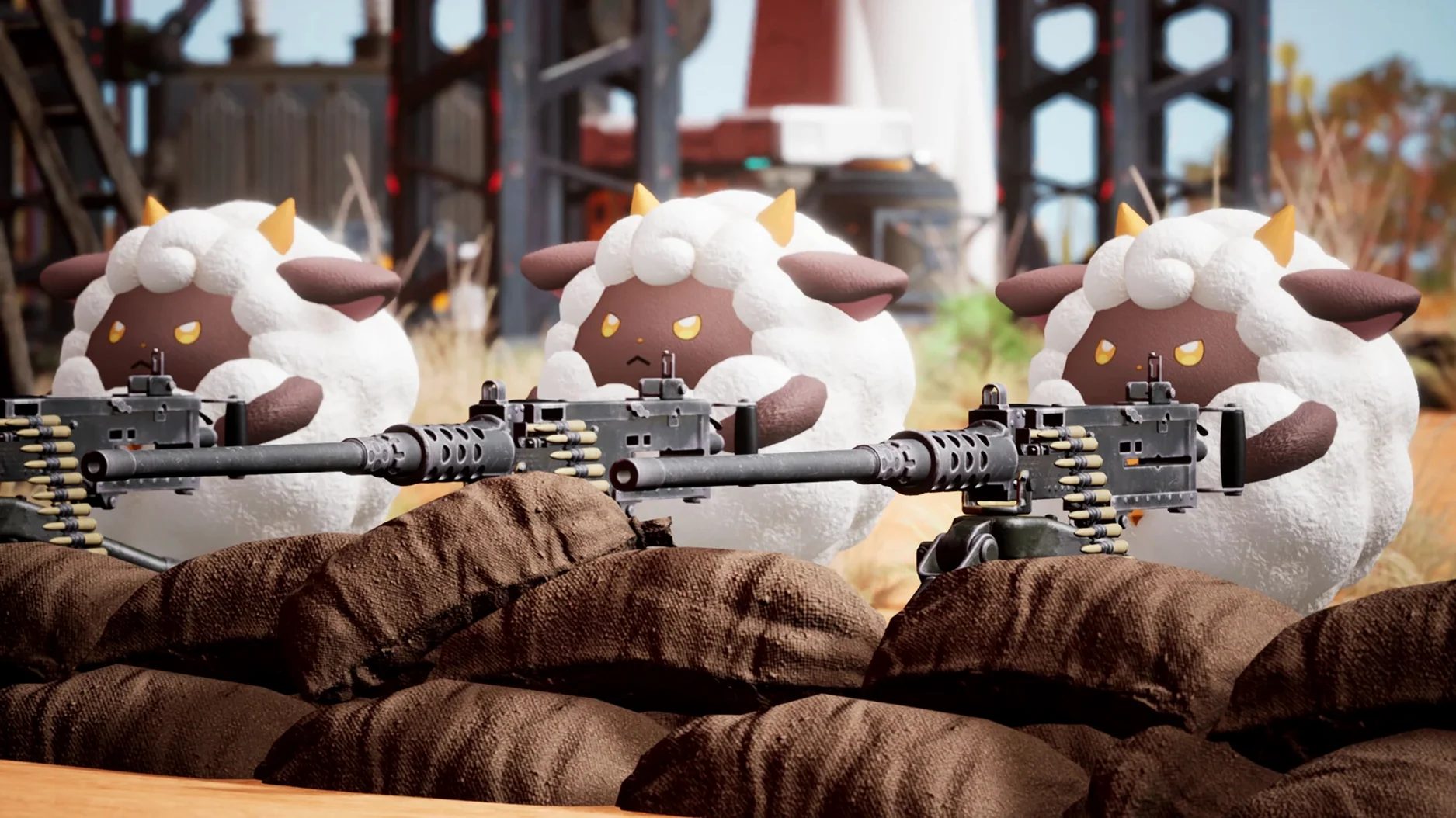
Over 100 different Pals fill the islands, each with its own work suitability, partner skill, and temperament. This isn't a creature collector bolted onto a survival shell — the two halves feed each other constantly. You'll need Chikipi for eggs, Lamball for wool, and a Foxparks to fire up the furnace, but that same Foxparks turns into a flamethrower when a raiding party crashes your base. Hunger drops, weather shifts, and the materials for your next weapon upgrade sit behind a dungeon boss that requires a full team to crack.
- Automated production chains — assign Pals to generate electricity, water crops, mine ore nodes, and haul finished goods to chests while you scout the map.
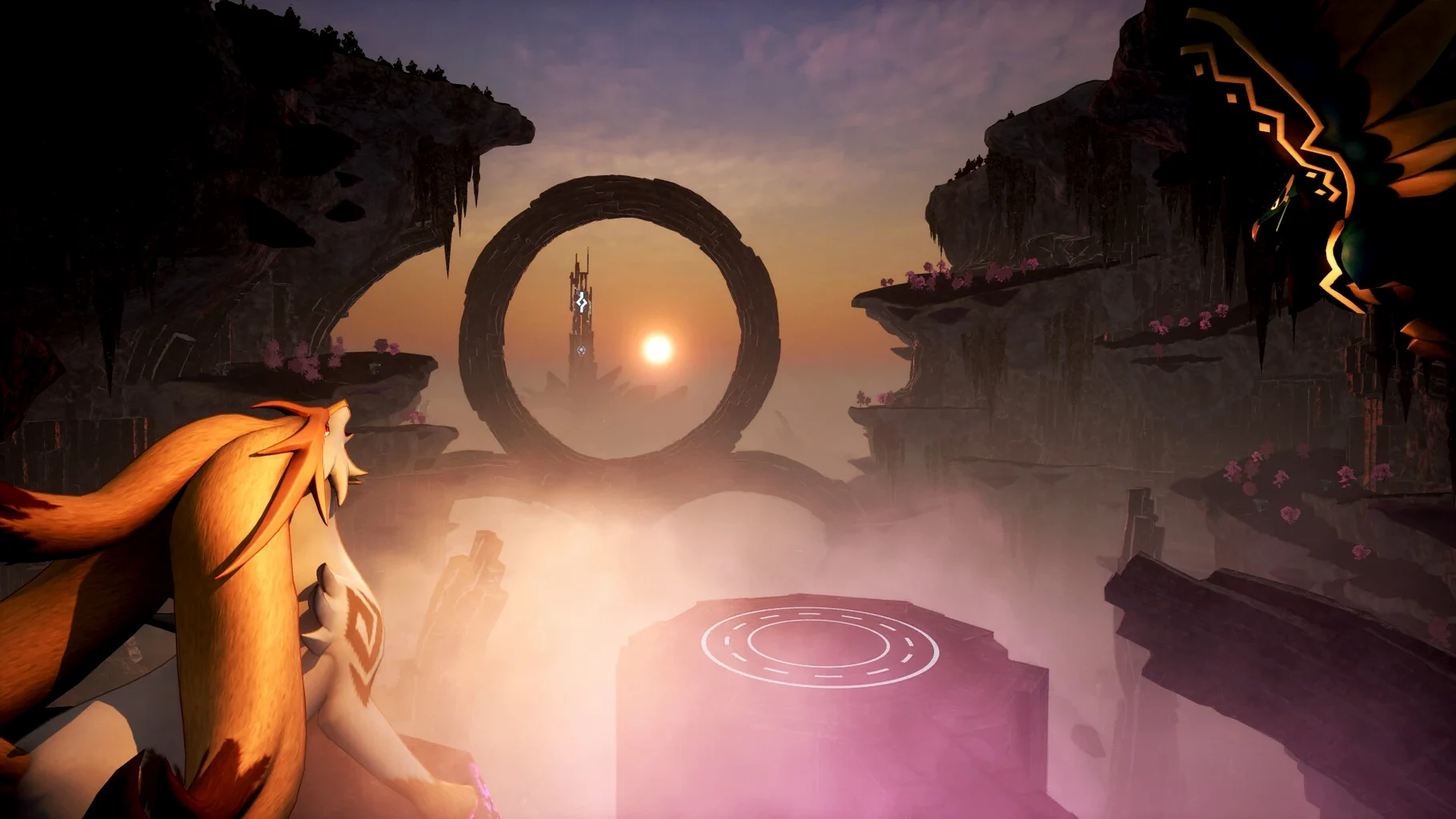
- Dungeon crawling — instanced caverns packed with higher-level Pals and rare schematics, balanced for solo runs or a squad.
- Multiplayer co-op — up to three friends can join your world to build, farm, and fight alongside you.
- Trait-based breeding — offspring inherit passive skills from parents, so stacking work speed or attack bonuses becomes a long-term genetics project.
- Full farming loop — sow seeds, water the plots, and harvest; certain Pals carry produce straight to the feed box so your team never starves.
- Real-time combat — swap between Pals mid-fight, dodge roll out of attacks, and cycle elemental types to exploit weaknesses.
The build runs natively on Apple Silicon, and the interface ships in eleven languages including English, Japanese, Russian, and Brazilian Portuguese. Whether you're laying conveyor belts for an ore-smelting empire or just trying not to get flattened by a wild Mammorest, the loop stays the same: catch, build, survive, repeat.
First Days That Don't Feel Like a Grind
Drop a bedroll near a cluster of Paldium fragments before you do anything else. The first night hits fast and cold, and nothing kills momentum like a respawn loop because you skipped the obvious. Second priority: catch a Cattiva the moment you have a sphere. Its hauling skill is mediocre, but the passive boost to your carrying capacity means fewer agonizing trips back to the chest while you're still building the starter shack.
Set up your first base on flat ground near both a fast-travel statue and a berry bush cluster. You'll thank yourself around hour six when the berry plantation comes online and half your Pals aren't stuck on geometry. The AI pathfinding gets confused by cliffs and tight spaces — a problem that hasn't disappeared in 1.0.5.102999 — so give your workers room to breathe. If a Pal suddenly stops eating, shove it into the Palbox and pull it back out. Works more often than it should.
Unlock the grappling hook early. It looks like a mobility toy, but paired with a flying mount it becomes a mining shuttle: grapple into an ore node, tap the mount, and you're already airborne toward the next cluster. The animation cancel shaves seconds off every stop, and over a three-hour resource loop that adds up.
Right-Click the Party Wheel for Instant Move Lists
RMB on a Pal in the party wheel brings up the move list without opening a menu. You can check breeding-compatible skills mid-fight if a dungeon boss suddenly shifts its elemental weakness. Shift-clicking a stack splits it — obvious to anyone who's played a survival game in the last decade, but the game never tells you, and manually dragging sliders in the food box screen is a special kind of tedious.
The sort button inside any container auto-fills gaps left by partial stack withdrawals. Hit it before you leave base and the next time you dump inventory, everything slots into place instead of scattering across rows. Small thing, but it keeps the workshop chests legible when three different people are throwing ore into them.
Assigning a Pal to the monitoring stand lets you toggle its work priorities without recalling it to the box. If your Verdash keeps wandering off to haul stone when you need lumber milled, check the stand — the toggle is right there, and it overrides the default job search radius. The stand itself is easy to miss because the build menu buries it under Infrastructure, not Pal Management.
Factory-Builder Refugees Find Their Cruder Playground
Three camps find their stride here faster than average. Automation-curious factory builders who sunk hundreds of hours into Satisfactory or Factorio will latch onto the conveyor-and-container plumbing the moment it unlocks. Palworld's version is cruder — no splitters, no logic gates — but the thrill of watching a Helzephyr fly refined ingots to a silo while you're three biomes away chasing a lucky encounter is the same core hit.
Co-op squads of two to four get the combat and base-building balance the developer clearly intended. One person handles breeding and farm upkeep while another scouts dungeons and a third builds out the defensive walls. The world stays persistent, so the morning-after debrief over what got raided and which Pal mysteriously vanished into a cliff becomes part of the routine.
Pokémon veterans who always wanted more friction find the creature systems they know, but survival mechanics keep the pressure on between battles. There's no Nurse Joy restoring your team for free — if your frontline faints and the feed box is empty, you're foraging berries by hand while a poacher camp respawns uphill. That tension makes catch-or-ignore decisions land differently than in a pure RPG.
Skip the Forty-Minute Punch-Trees Tutorial
Next to ARK: Survival Evolved, Palworld strips away the brutal early hours. ARK asks you to punch trees for fiber and pray a raptor doesn't notice you for the first forty minutes; Palworld hands you a sphere and a Foxparks within ten. The base automation layer also feels more immediate — breeding in ARK is a spreadsheet-endurance test, while Palworld compresses the mutation chase into something you can engage without a wiki open on a second screen. ARK still wins on pure creature variety and biome scope, but Palworld's onboarding doesn't punish curiosity the same way.
Next to Valheim, the combat pacing splits hard. Valheim wants you to learn attack patterns and manage stamina through every draugr encounter; Palworld lets you throw a Pal at the problem and dodge-roll while it tanks. Building in Valheim has more structural nuance — smoke ventilation, support integrity — but Palworld's factory automation gives your base a productive pulse that Valheim's crafting stations never quite reach. If Valheim is a Viking epic, Palworld is a Saturday morning cartoon that suddenly remembers it has a conveyor-belt simulator under the hood.
Next to Craftopia, Pocketpair's own earlier sandbox, the focus is sharper. Craftopia threw a hundred half-baked systems into a blender — dungeons, farming, factory lines, magic — and let the player sort it out. Palworld cuts the scope to creature management and survival, then polishes the loop until it actually holds. The automation tools that felt like a tech demo in Craftopia feed directly into Pal breeding and raid prep here, so the systems talk to each other instead of existing in parallel.
- macOS ?
- Apple Silicon architecture
Questions I actually get
Does Palworld support multiplayer on Mac?
Yes, the game includes co-op multiplayer so you can build bases and tackle dungeons with friends.
Notes from the edit bay · 0
Sign in or get an edit-bay pass to leave a note.
No notes from the edit bay yet. They go up after I read them.