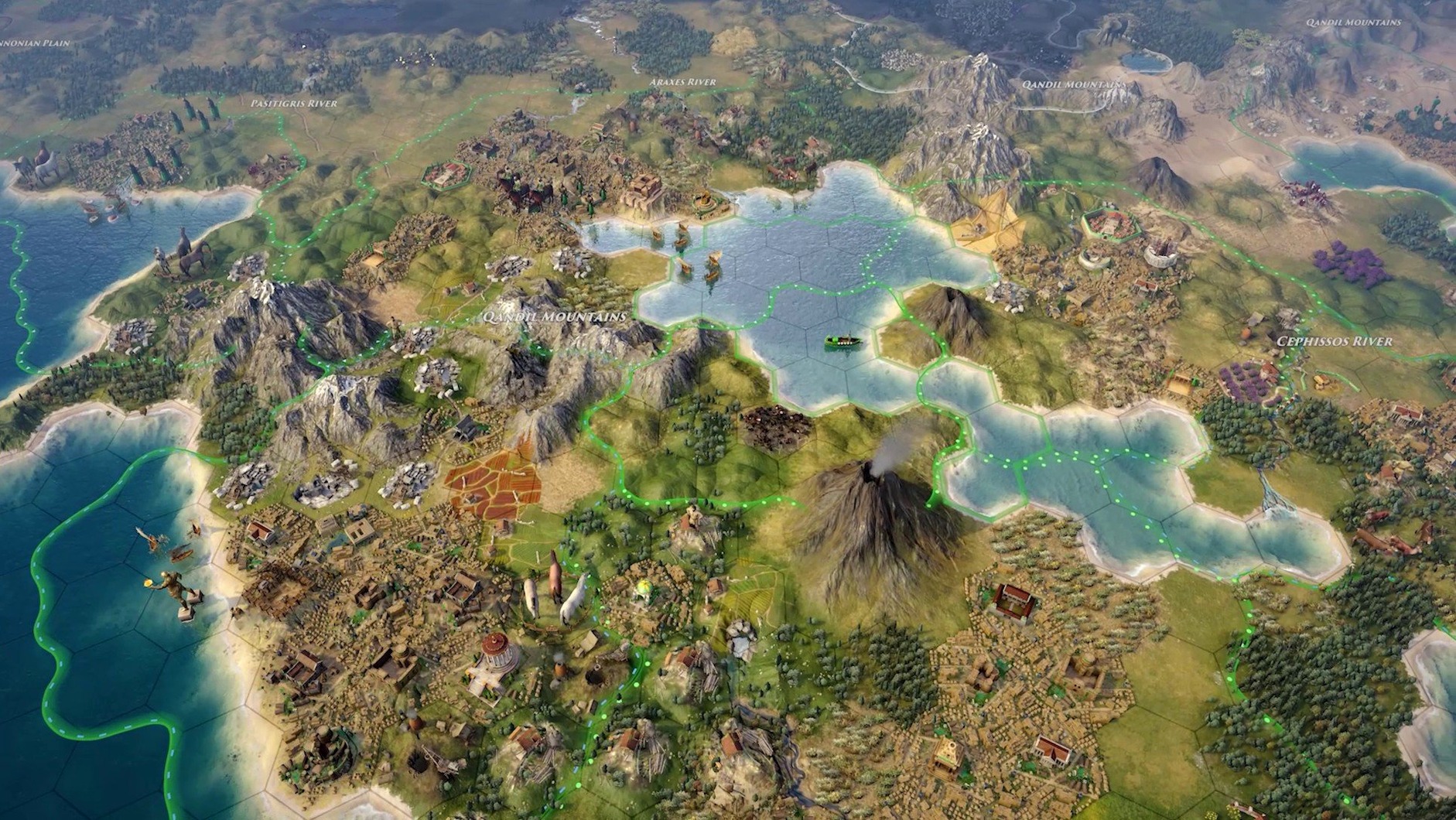
Your founding king just died in a hunting accident. His daughter, sharp but untested, takes the throne. Three noble families immediately start maneuvering for a marriage that gives them influence, while a rival kingdom sees your moment of weakness and masses troops on the border. This isn't a blip on a timeline. It's Tuesday in Old World.
Where Grudges Outweigh Armies
- Story junkies. Over 3,000 historical and mythological events pull you into the lives of your rulers, heirs, and rivals. Characters have personalities, ambitions, and grudges that shape your kingdom as much as your military does.
- Civ veterans craving depth. Designer Soren Johnson layers classic 4X expansion onto a foundation where orders limit your moves per turn. You can't do everything at once. Choices bite.
- Dynasty watchers. Marriages, succession crises, and the slow march of generations aren't flavor text. Rulers age and die. Managing seven kingdoms of four noble families each makes every playthrough a unique soap opera with siege engines.
The Turn Cap That Blocks Map Painters
- This is not a map painter. The order system caps how many units you move and buildings you construct each turn. If your joy comes from sweeping armies across a continent in one go, that friction will grate.
- Characters demand attention. You'll spend real time tutoring heirs, placating jealous cousins, and deciding which family to offend. Players who prefer to ignore internal politics and just optimize tile yields will feel nagged.
- Antiquity is the only sandbox. The game commits fully to its classical setting. There's no future era to race toward—just the long, messy arc of founding a legacy that might outlive you.
A Carthaginian Morning
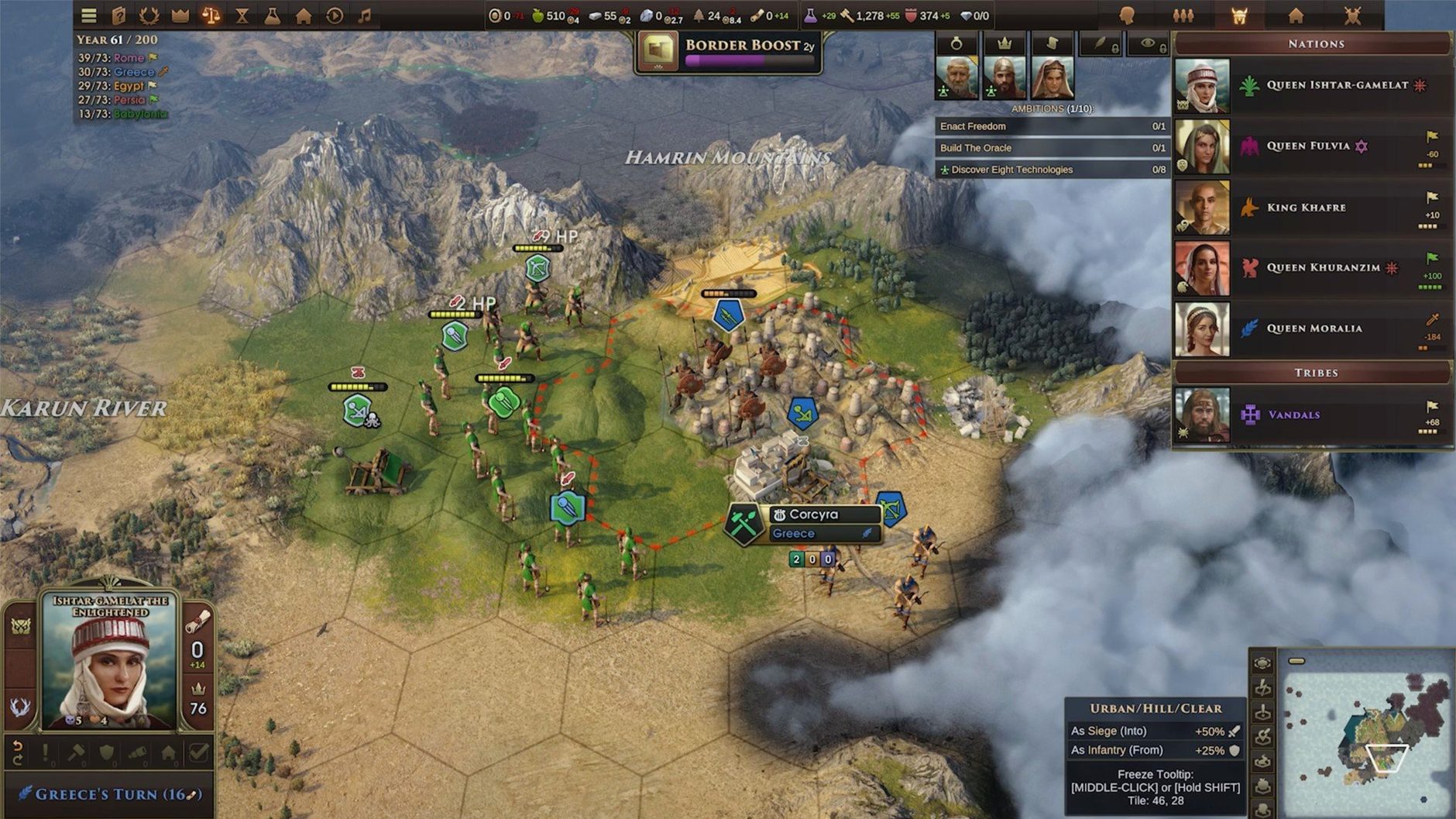
A competitive player fires up the weekly challenge. The map seed drops Carthage on a narrow coastal strip with Rome already eyeing the silver deposits to the south. Turn three, her leader—a charismatic diplomat with a weak heart—proposes marriage to a Numidian noble family to lock in a trade alliance. The Orders system means she can either scout the Roman border or rush a lumber mill this turn, not both. She sends the scout. By turn twelve, the king is dead of natural causes at 47, his blunt and unpopular son inherits a throne nobody trusts, and the Numidian in-laws are suddenly the only thing keeping the army fed. The challenge timer ticks on. She's not optimizing a tech tree. She's firefighting a family drama with war elephants.
What Changed In Build 84658
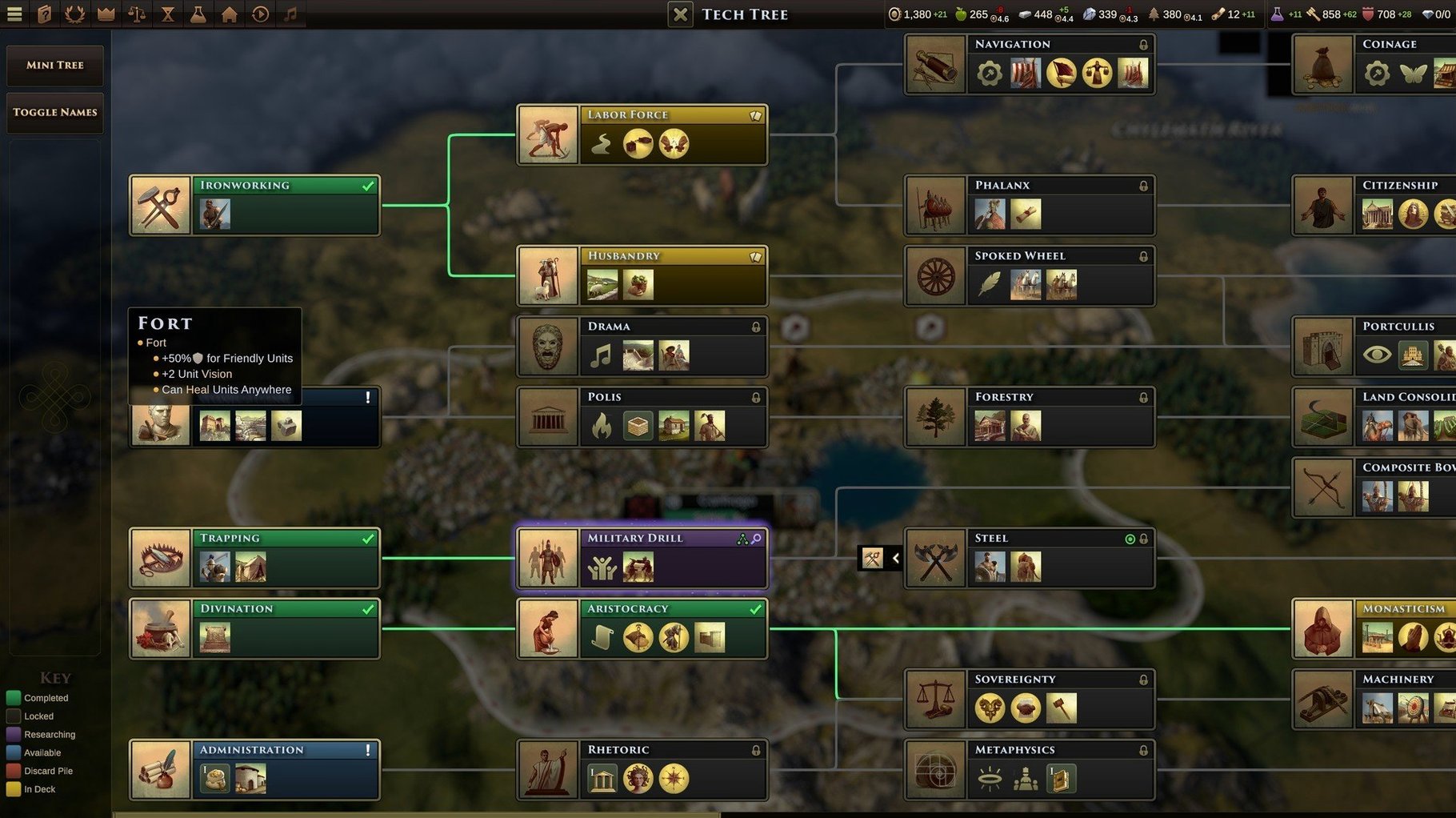
The latest release sharpens combat pacing in quiet but welcome ways. Polybolos—those ancient repeating ballistae—now pack +50% attack, which makes them a credible zone-control option instead of a unit you built once for flavor and never again. Fort placement got a long-overdue restriction: forts can no longer sit adjacent to other forts. No more ugly chains of fortifications turning a border into an impassable wall of chevrons. The AI also received a build-priority pass. It fields fewer Militia, Conscripts, and obsolete units, so mid-game wars feel less like mowing through antique cannon fodder and more like clashing against composed armies. Under the hood, a Mac crash debugging hook was added—nothing you see, but anyone who has watched the game wink out during a long cloud session will appreciate the attention.
Babylon, a Bookish King, and the Assyrian Border
You launch the game and pick a hand-made map—the Mediterranean coastline rendered in warm, earthy tiles. The scenario starts you as Babylon, hemmed in by Assyria to the north. Your first ruler is young, bookish, and unmarried. You spend the opening orders scouting the river valley with a single chariot and queuing a stone quarry near the capital. An event fires immediately: a visiting scholar offers to tutor your heir in rhetoric, but at the cost of offending the head of a powerful noble family. You accept. The noble's opinion drops ten points.
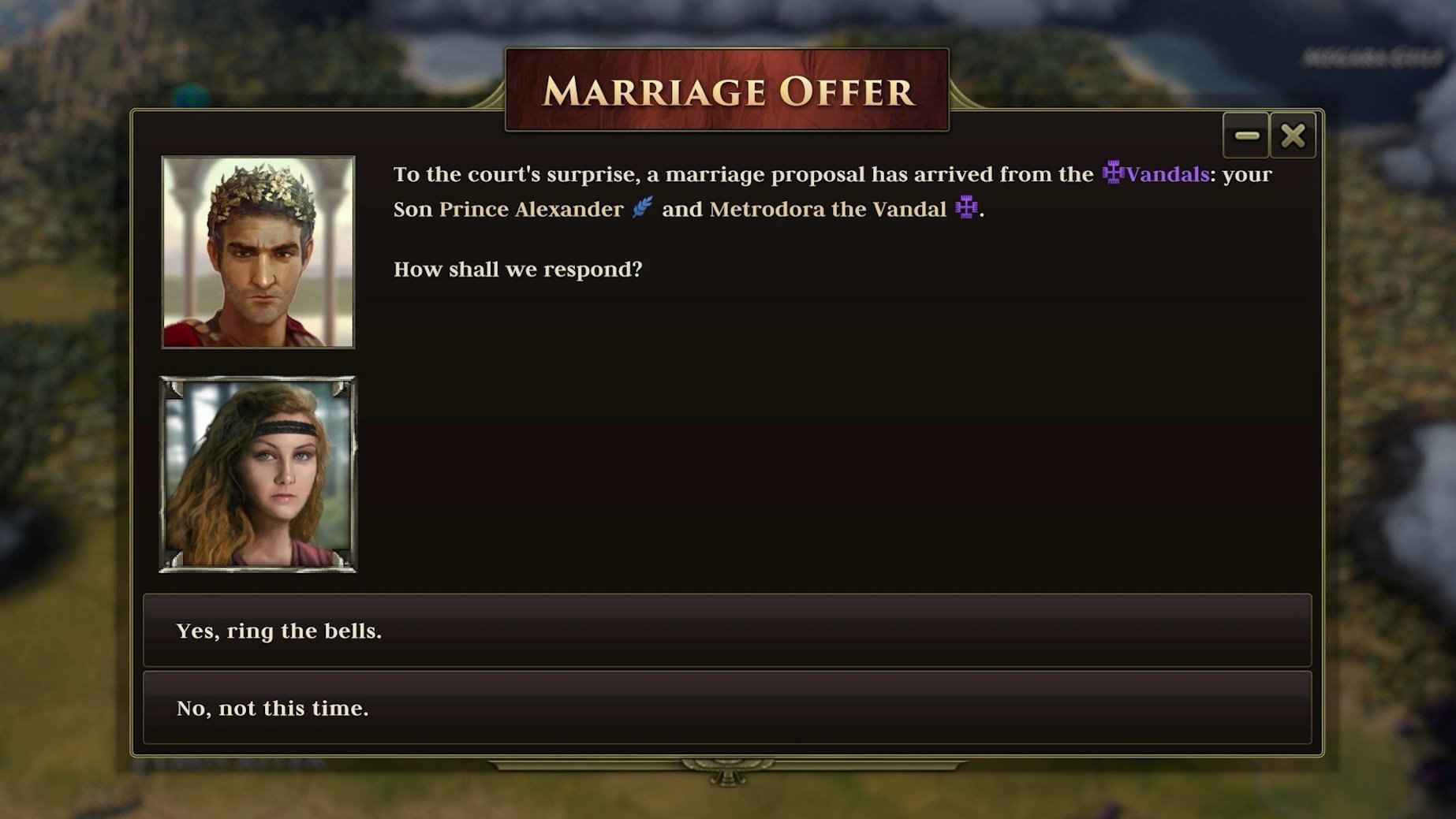
Ten turns later, a marriage proposal arrives from Persia. The bride brings a trade route and a defensive pact, but she also brings a trait your court despises: arrogant. You weigh the diplomatic shield against the inevitable opinion penalties and take the deal. By turn forty, your ruler dies in a skirmish you should have seen coming, his 19-year-old son inherits a kingdom already grumbling about Persian influence, and the noble family you snubbed earlier is now funding a rival claimant. You spend the next half-hour managing a succession crisis instead of expanding your borders. The session ends not with a victory screen but with a fragile truce and a toddler heir whose stats you're already fretting over. That's Old World.
Polybolos got a serious punch-up with a 50% attack increase. Fort placement now forces more strategic thinking—no stacking them next to each other. The AI has also cleaned up its act: fewer militia, conscripts, and outdated units cluttering the map. Mac crash debugging was slipped in for good measure.
- Runs on both Apple Silicon (ARM) and Intel (x86 64-bit) Macs
Notes from the edit bay · 0
Sign in or get an edit-bay pass to leave a note.
No notes from the edit bay yet. They go up after I read them.