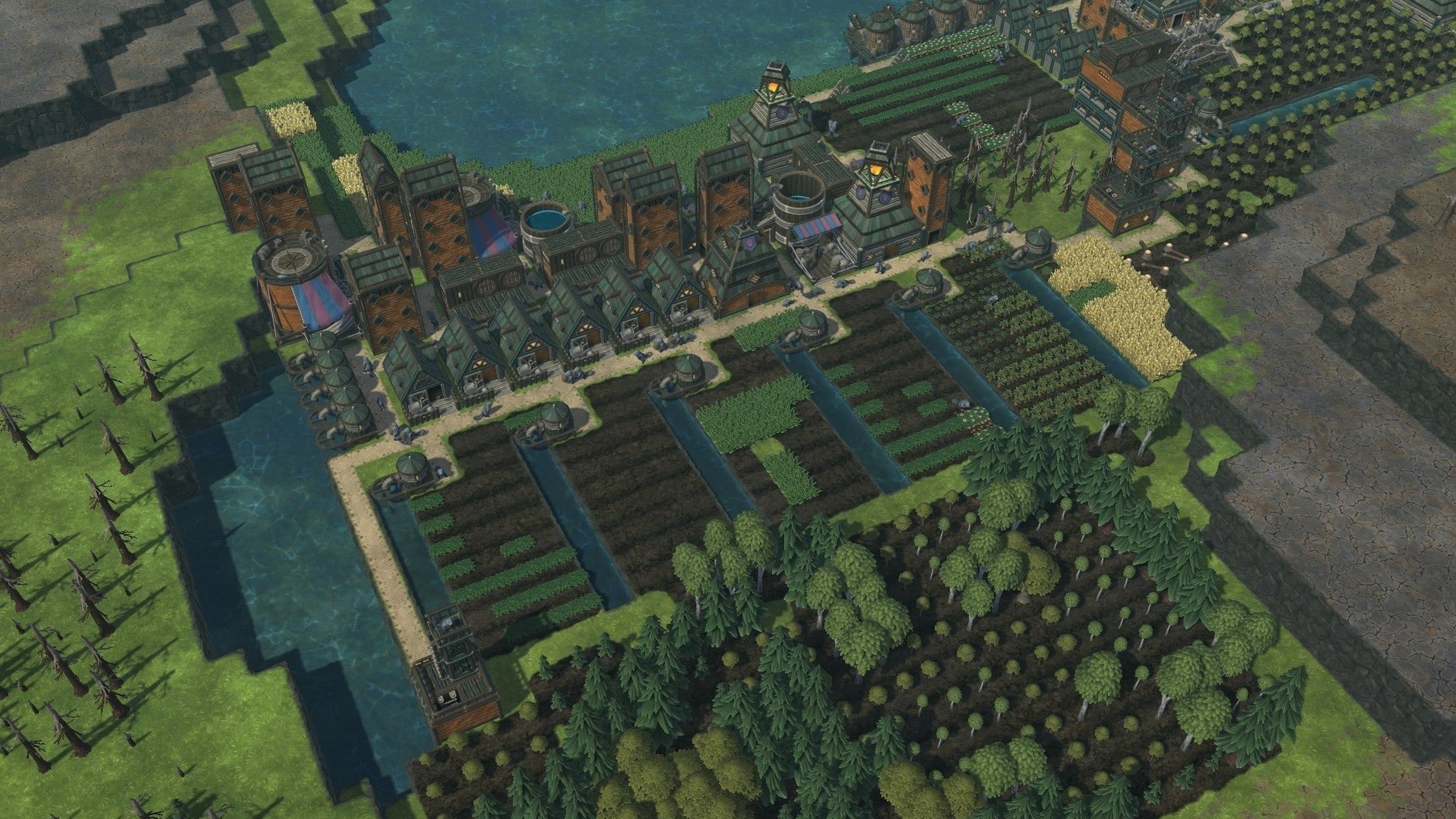
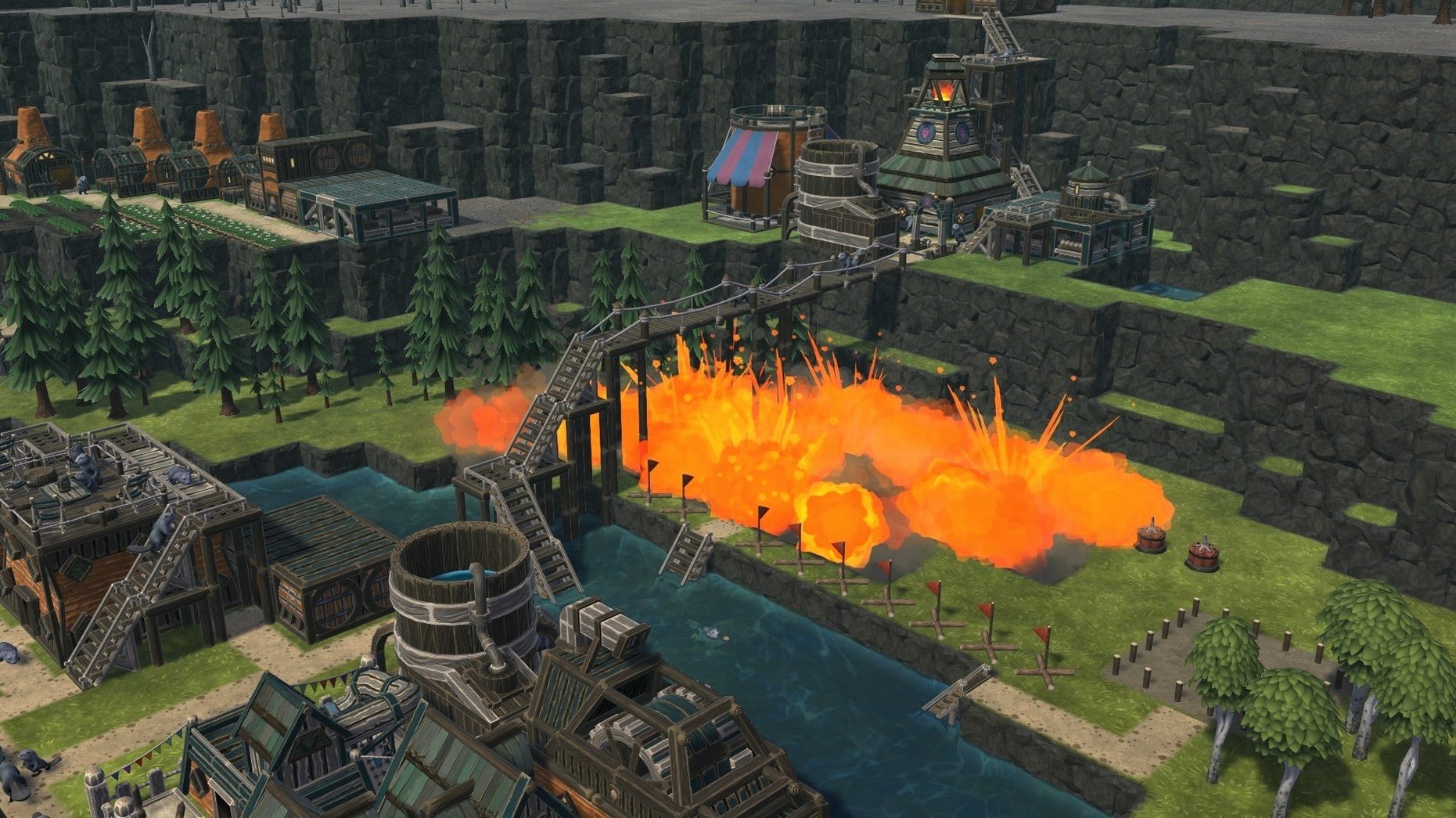
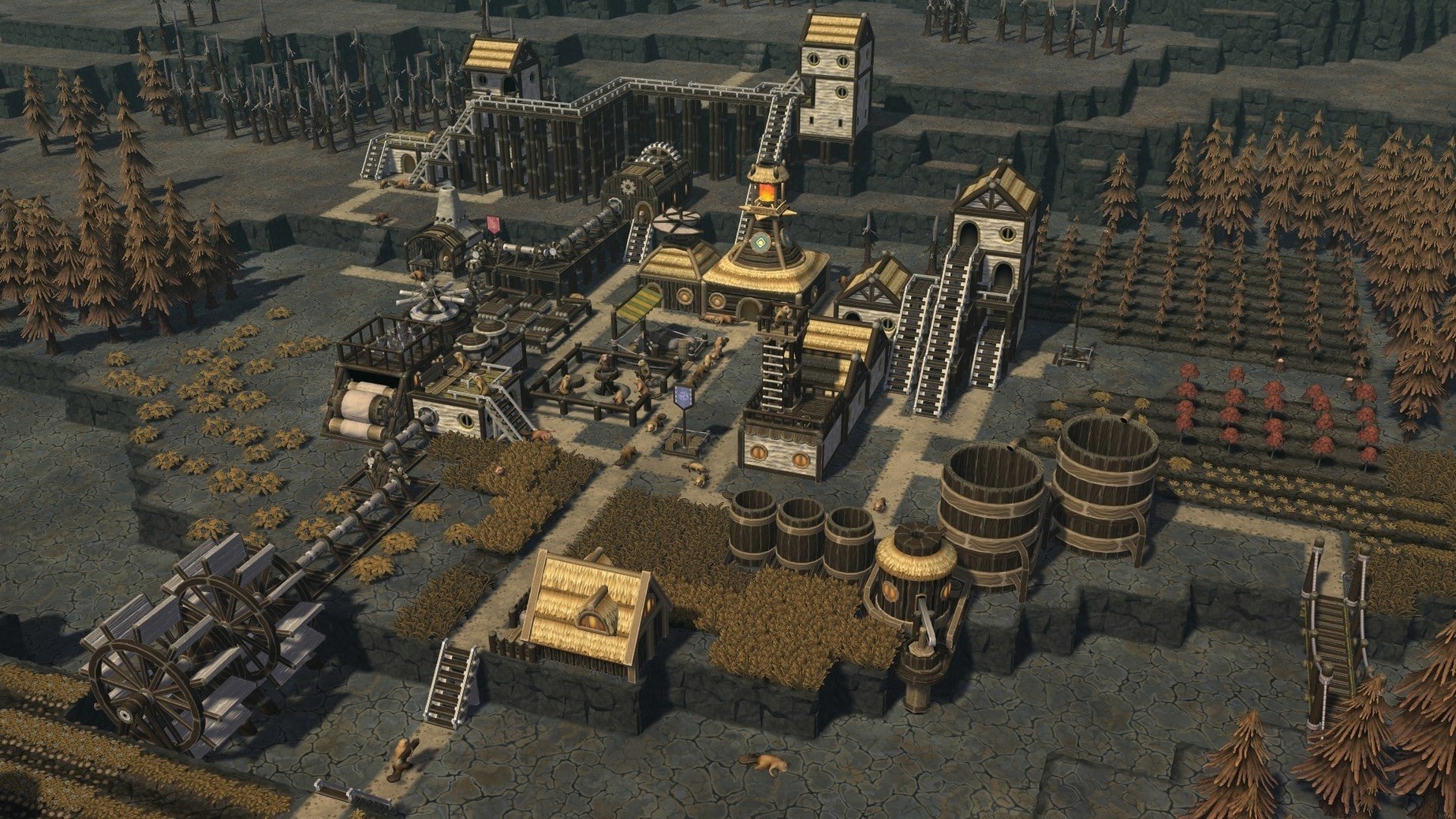
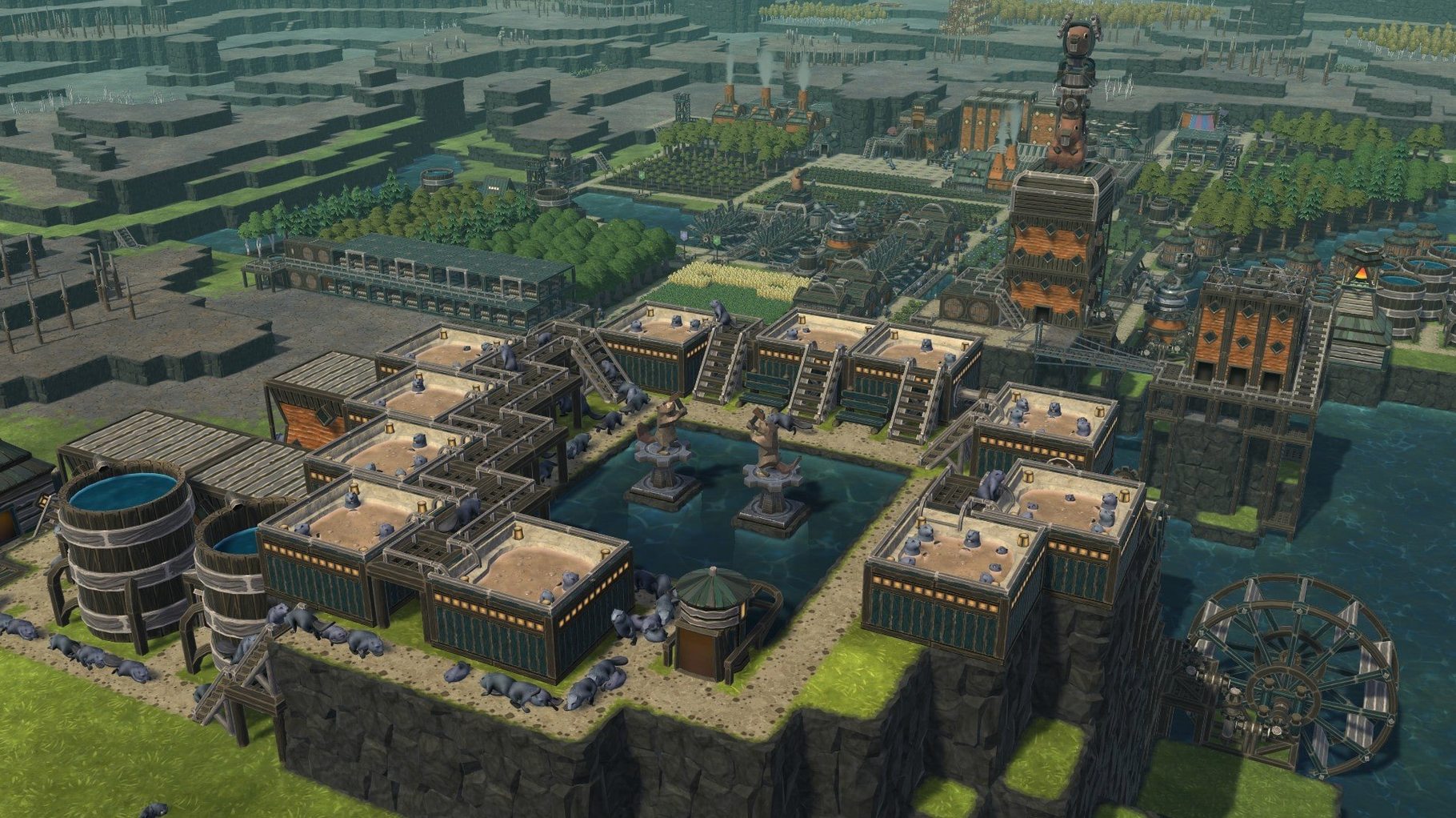
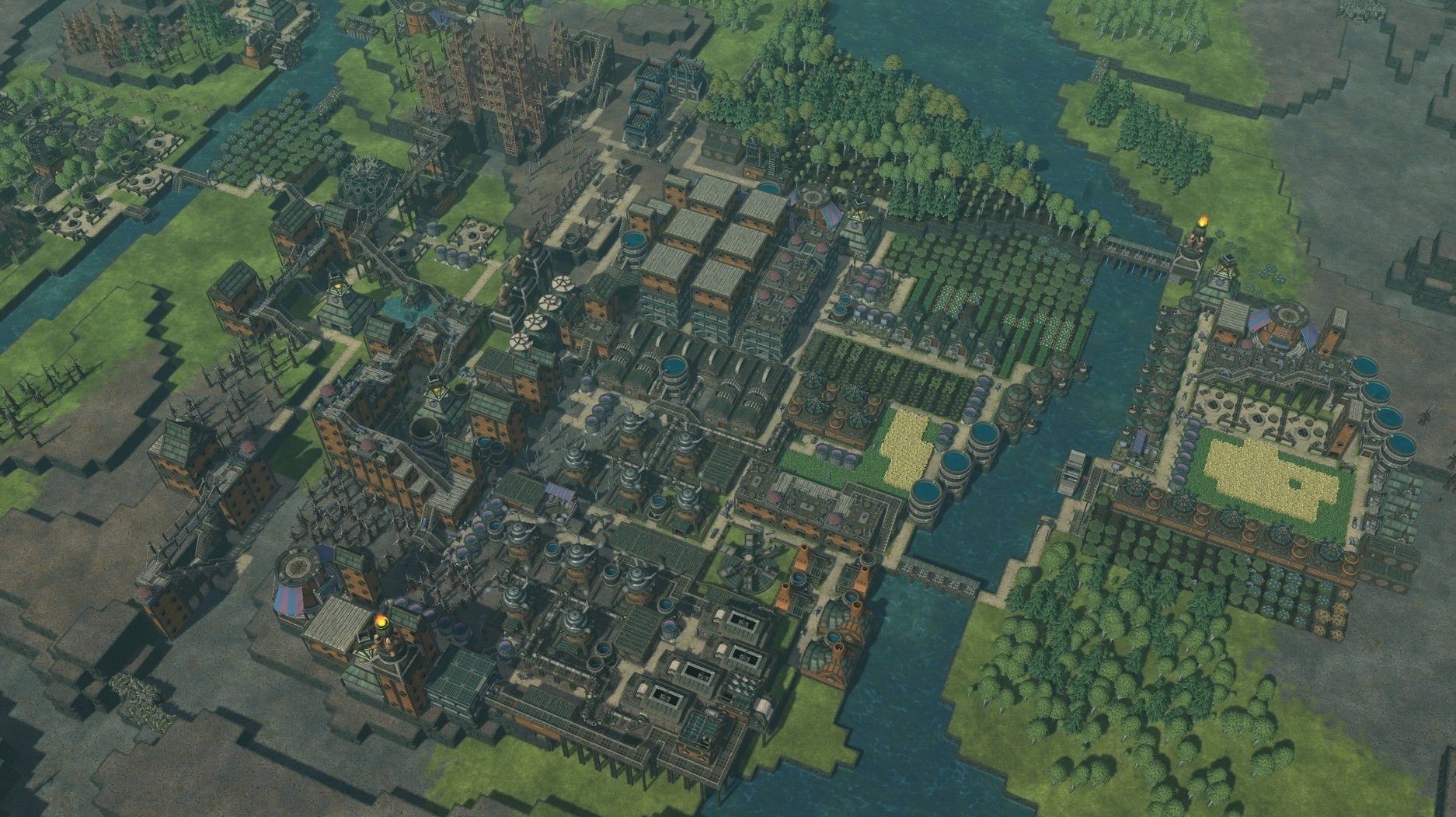
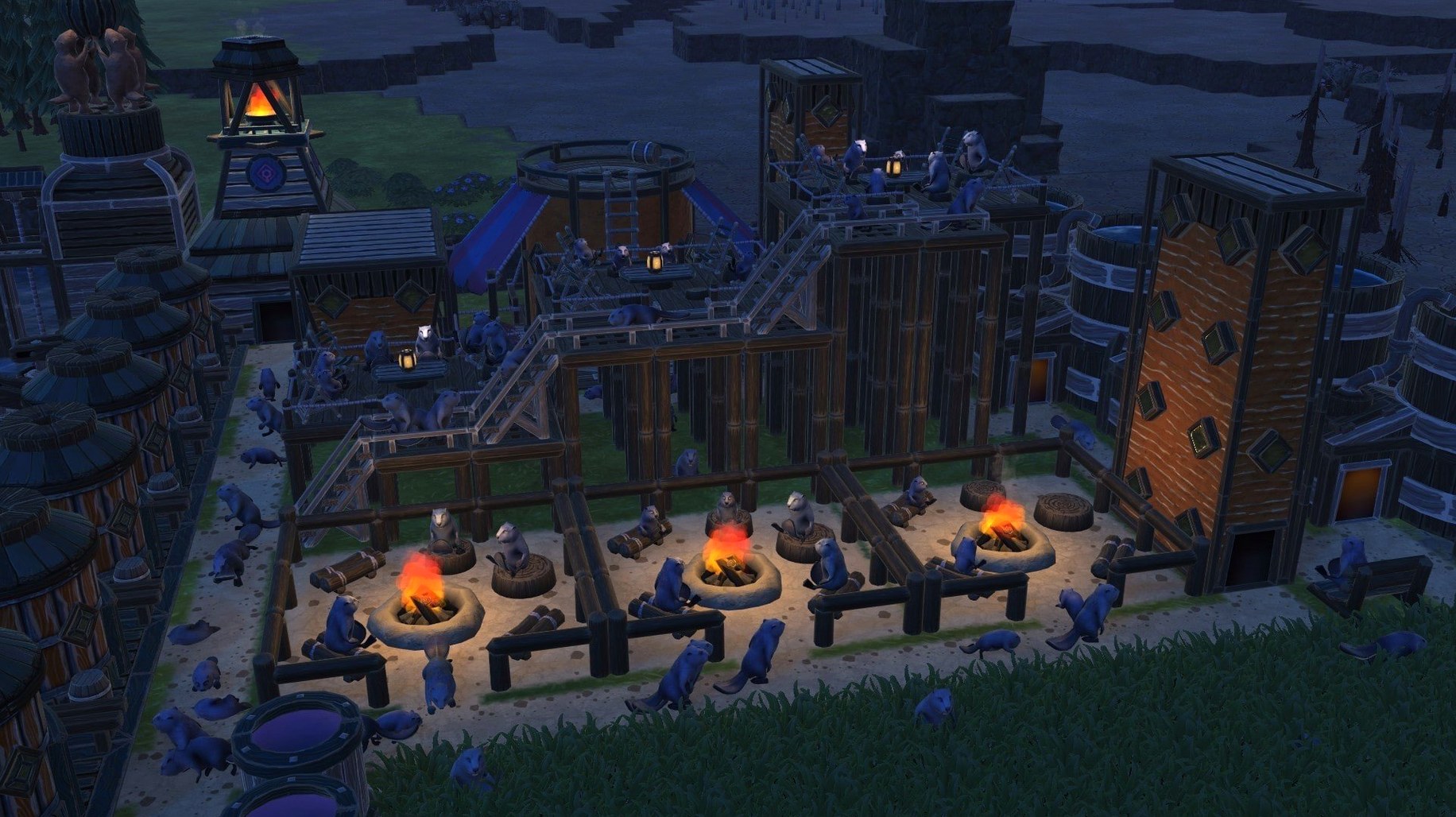
Timberborn grabs engineers and city-builder veterans who’ve drained every aquifer in Frostpunk and still want more. You’re not just placing huts; you’re fighting seasonal droughts with a network of dams, blast gates, and canals you carved yourself. A bad slope calculation during a dry summer means empty canteens and a ghost town by autumn. Get it right, and your beavers clock night shifts in stacked rowhouses linked by bridges, turning a parched canyon into a vertical, water-powered industrial hub.
When Terrain Is the Real Puzzle to Solve
- Players who treat terrain as a puzzle. The fun lives in the altimeter—damming a river without flooding your own crops, then channeling the overflow into reservoirs.
- People who like layered construction. Platforms let you pile lumber mills on top of warehouses, leaving ground space for farms and monuments.
- Tinkerers who enjoy district logistics. You split the colony into self-sufficient nodes, shipping water and planks between them as the map opens up.
- Those who want a dry-wet cycle, not constant attack waves. The enemy is the weather clock, and every structure bends toward surviving the next drought a little better.
Why Water Physics Can Make or Break Your Colony
- This is Mechanistry’s debut title, and it evolves in long, deliberate updates. The 1.1 release added new maps and statistics features.
- Water physics are the star and the bottleneck. If fluid simulation slows your Mac, the colony’s scale will hit that wall first.
- The interface is localized for English, Russian, German, Spanish, Italian, Simplified Chinese, Korean, Polish, Portuguese, Ukrainian, French, and Japanese.
A Dry Riverbed vs. Food Shortages: Failure Hits Differently Here
Stack Timberborn next to Banished and the differences hit you in the first drought. Banished leans on food variety, trade, and slow population collapse when you miscalculate firewood. Timberborn’s failure state is a dry riverbed and a district full of thirsty beavers staring at empty tanks. The water table becomes your health bar, and that single mechanic reshapes every decision—where you plant, when you expand, how many pumps you run overnight.
Against the Storm plays faster and resets constantly, trading permanent colony attachment for roguelike pacing. You’ll finish a settlement there in an hour. A Timberborn map can run for days if you’re sculpting a canyon-spanning reservoir system. Where Against the Storm asks “can you adapt this run?”, Timberborn asks “how far can you push this terrain before it pushes back?”
Compared to Frostpunk, Timberborn strips out the moral weight and replaces it with genuine engineering. No policy dilemmas, no child labor laws—just the physics of a 200-block levee that either holds or doesn’t. The relief is that failure stings without feeling grim. A dried-out colony looks sad, not traumatic, and the undo button is a new dam blueprint.
A Workflow: Surviving the First Dry Season
You drop into a recommended map—say, Plains—with the Folktails faction. The river cuts diagonally through green flats. Day one, pause. Scout the altimeter. That low bank on the east side will spill first when water drops. That’s your dam site.
- District zero placement. Drop the district center within six tiles of berries and mature oaks. You need lumber flowing by sundown and gatherers working immediately.
- First dam, fast. Queue a five-block dam across the narrowest section upstream. Folktails build slower than Iron Teeth, so don’t wait. The goal isn’t a reservoir yet—it’s raising the water level just enough that your pumps don’t suck mud on day four.
- Water storage before housing. Two small tanks next to the pump. Dump a hauling post nearby with priority set to water. Beavers can sleep under the stars for three nights; they can’t skip drinking.
- Science before aesthetics. Drop an inventor and queue the forester unlock. You’ll want replanting online before the first cutting zone runs dry. Rush stairs next—verticality lets you stack lodges above the floodplain.
- Drought response. When the gauge hits, the river stops flowing. Pause immediately. Check tank levels. If a district drops below ten units, disable all non-water jobs and reassign haulers. Open floodgates on your dam only if downstream pools are empty—carpet-bombing the riverbed with pumps rarely saves a colony, but a trickle release keeps crops alive.
By the end of cycle one, you’ve got a dam holding a shallow reservoir, a forester planting oaks, and a second district blueprint on high ground across the river. The drought passed with zero casualties and you’ve banked enough logs to start a lumber mill platform stack. That’s the loop: survive, survey, stack upward, widen the water buffer.
How the Map Editor Turns Terrain into a Shared Workshop
Timberborn sits in the same dock folder as your map editors and reference tools. The built-in map editor exports files you can share through community channels, and I’ve dropped custom heightmaps into the game folder while running a reference image on a second desktop. On Apple Silicon machines, Mission Control swiping between Timberborn and a browser full of levee placement guides is smooth—the game handles fullscreen-to-desktop transitions without a stutter.
It also plays nicely with Notes. I keep a running checklist for each colony: “D9 needs a new hauling post before cycle 12,” “floodgate 3 timing is two ticks early.” Stage Manager on a wide display gives me a sliver of desktop for those notes while the colony churns. If you’re recording gameplay, OBS picks up the window without display-capture gymnastics, and the DRM-free build means no launcher conflicts when you’re switching between recording sessions and casual play.
120 Beavers on M4: Fluid Simulation Without the Chug
On Apple Silicon, Timberborn runs like a desktop app, not a port. The build tested here—version 1.1.2.4.52e959e.gm on a 2024 Mac mini with M4—held a steady frame rate through 120-beaver colonies with water simulation cranked to full. The bottleneck surfaces predictably: fluid physics spike when you detonate a levee or open four floodgates at once during a drought recovery. The engine recalculates the entire downstream flow path in one tick, and you’ll feel a half-second hitch. Not a crash risk, just a reminder that you’re asking the CPU to redo a river.
Memory pressure stays low. A 256x256 map with three districts and stacked platforms sat around 3.2 GB of RAM in my observations, leaving breathing room for a browser, Discord, and a lightweight DAW session in the background. The DRM-free packaging helps here too—no always-online service polling for license checks, no launcher backgrounding itself after quit. What you launch is what runs.
Intel Macs get the same 64-bit binary, and while the simulation scales fine, the graphics side leans harder on the GPU. Turn down shadow resolution and water reflections before touching draw distance if you’re pushing past 200 beavers on an older Intel machine. The game remains responsive even when the frame buffer gets choppy—click targeting never lagged behind the render, even during a dam-breach cascade that sent half a river into a new canal network. That stability matters when you’re queuing emergency levees at 3x speed during a drought you underestimated.
The 1.1 update rolled out fresh maps to terraform and a proper statistics panel for tracking production chains across districts.
Also fixed: a handful of pathfinding quirks and balance tweaks that make the mid-game drought scaling feel tighter.
- Architecture: Apple Silicon and 64-bit Intel Macs.
Questions I actually get
How does Timberborn's district system work?
Districts let you divide the colony into separate production zones with their own populations, supply routes, and night work shifts, so remote dams can operate without beavers commuting across the entire map.
Notes from the edit bay · 0
Sign in or get an edit-bay pass to leave a note.
No notes from the edit bay yet. They go up after I read them.