Mercy isn't just a button — it's half the combat system.
DELTARUNE — A story that echoes UNDERTALE, but walks its own path.
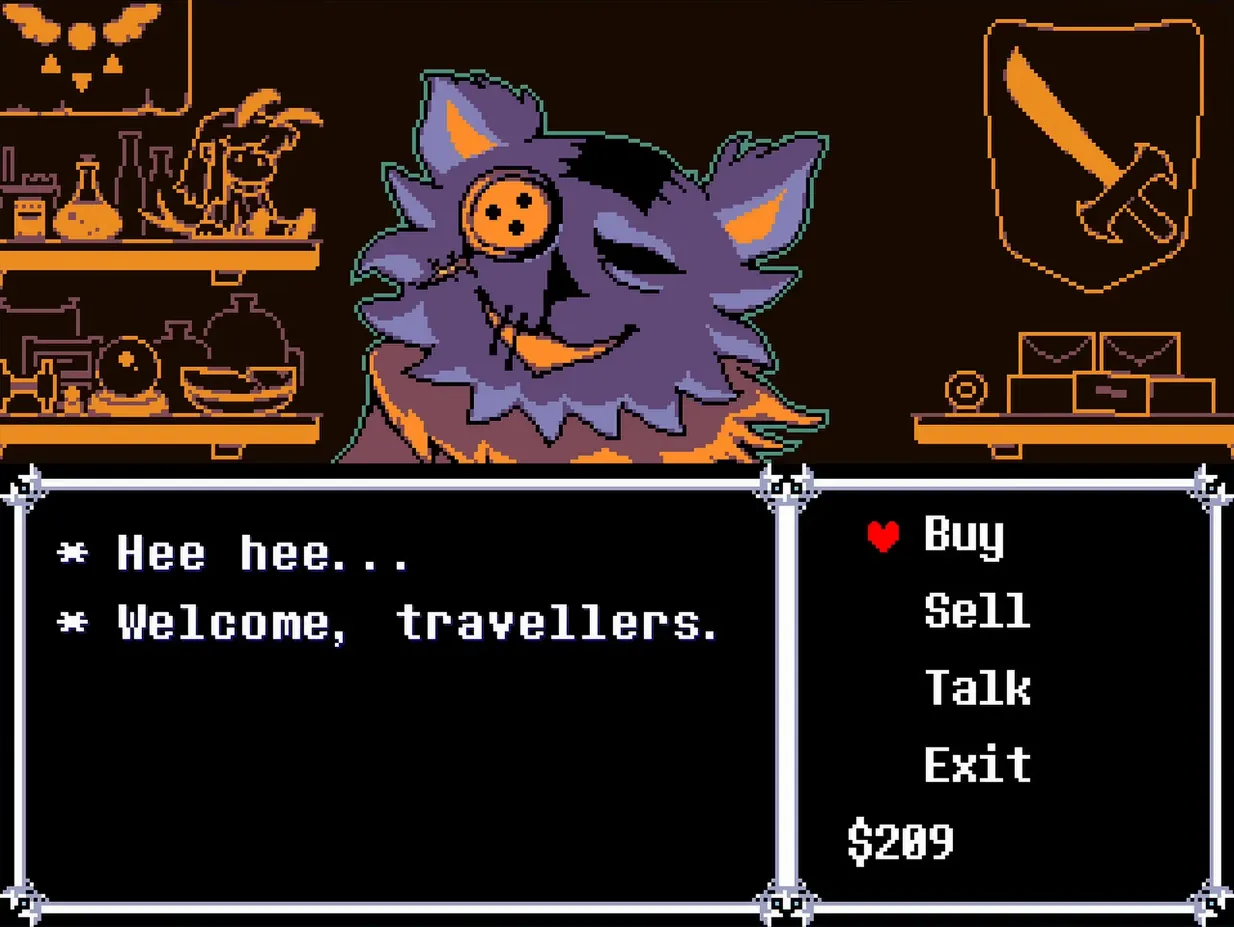
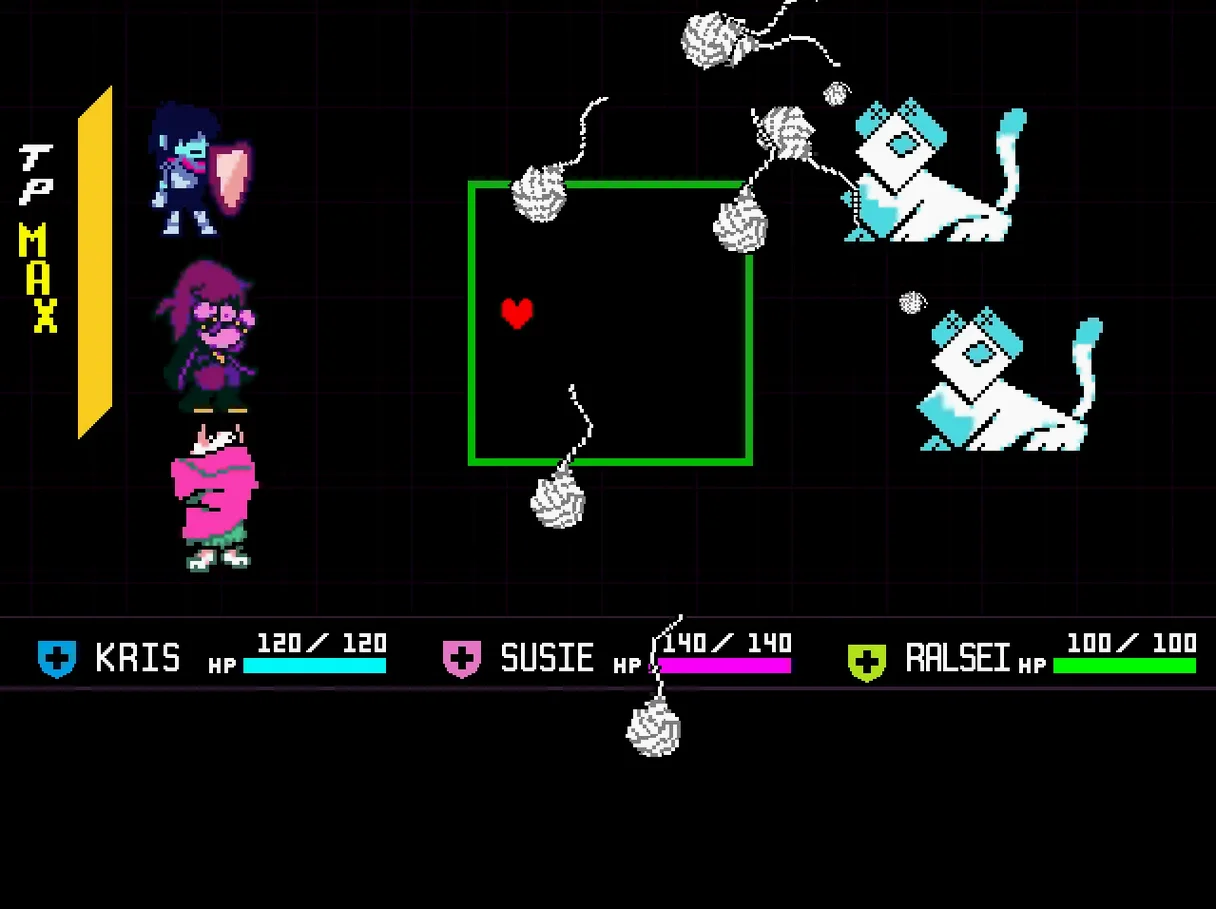
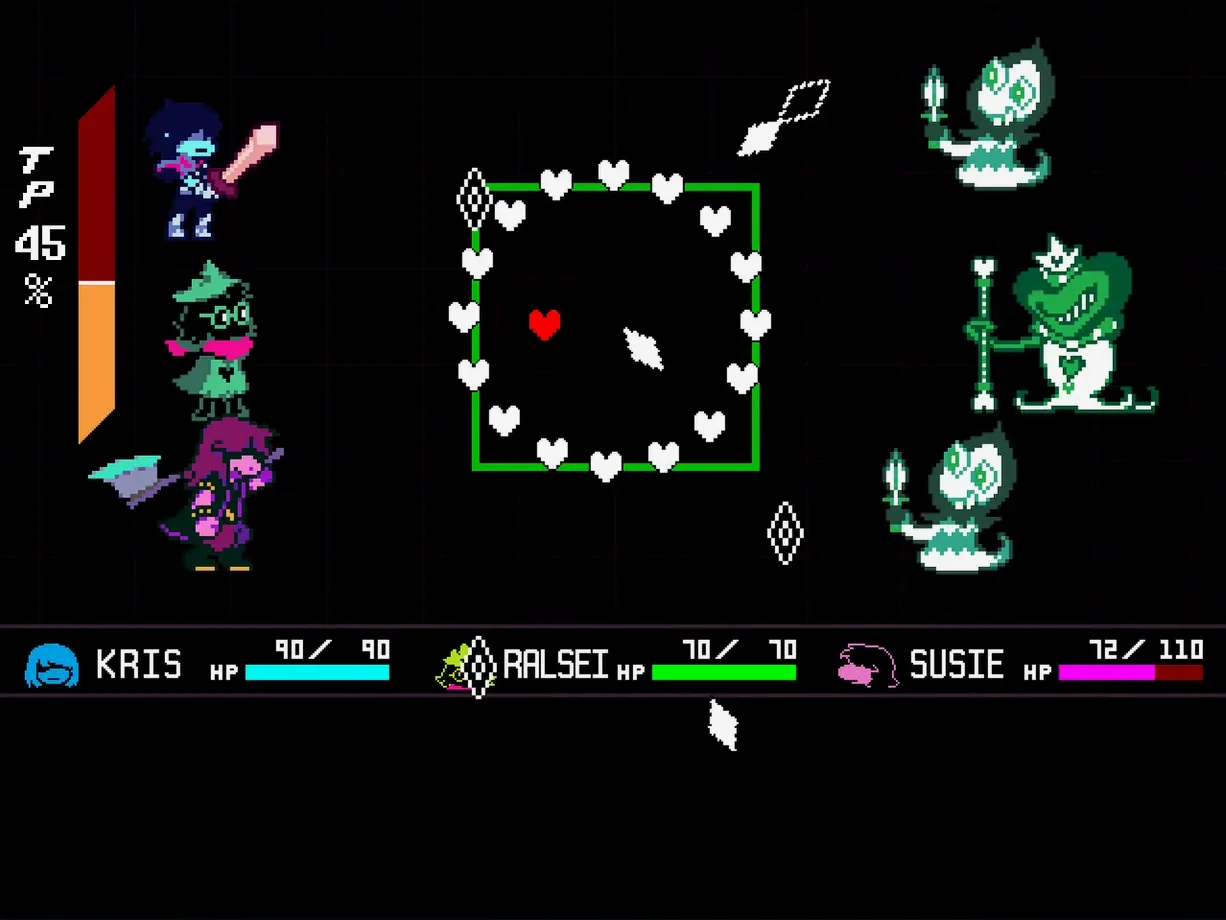
Action-based battles — Time your dodges inside a small box, then pick Fight, Act, or Spare. The rhythm of bullet-hell defense never lets you zone out.
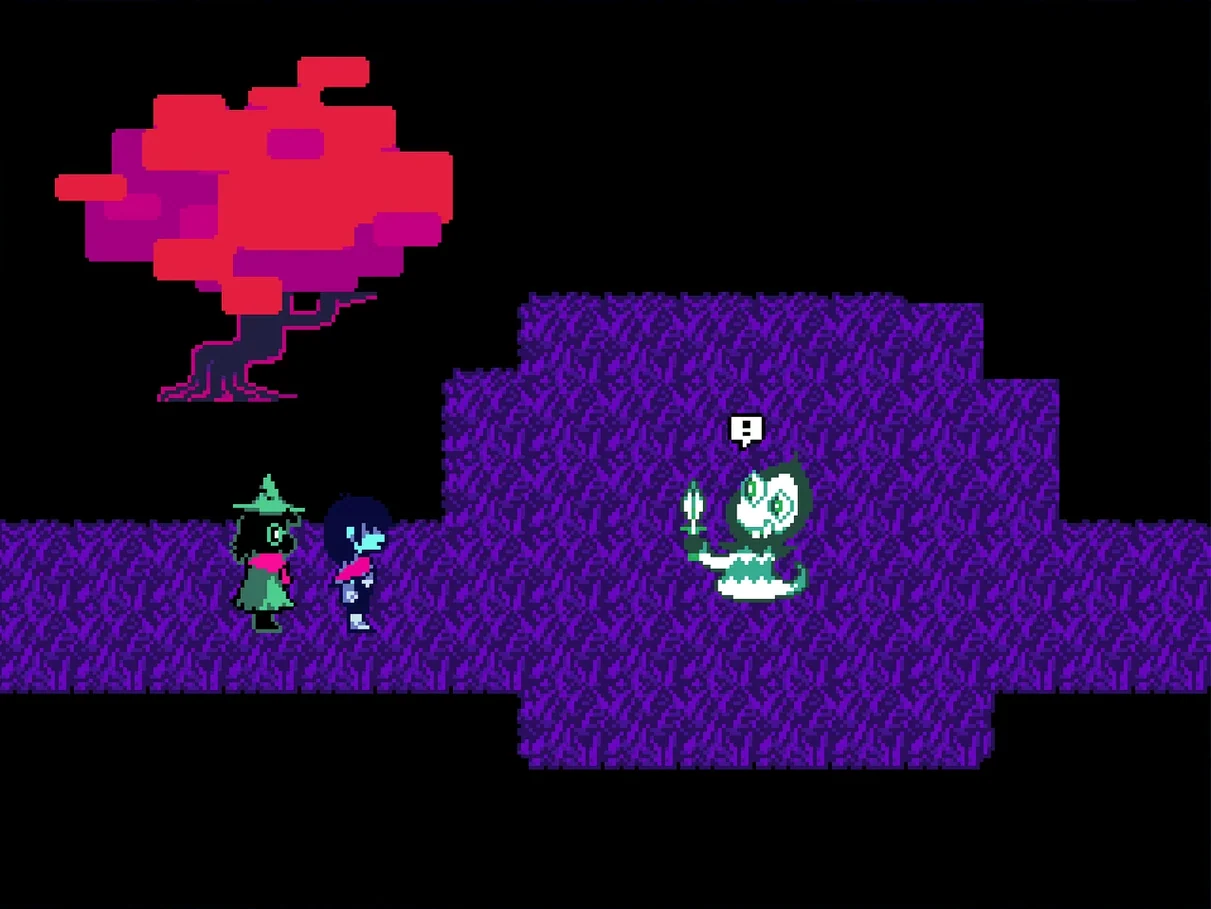
Party banter — Kris, Susie, and Ralsei talk constantly. Walking around the Dark World triggers dialogue that fleshes out the weirdness instead of waiting for cutscenes.
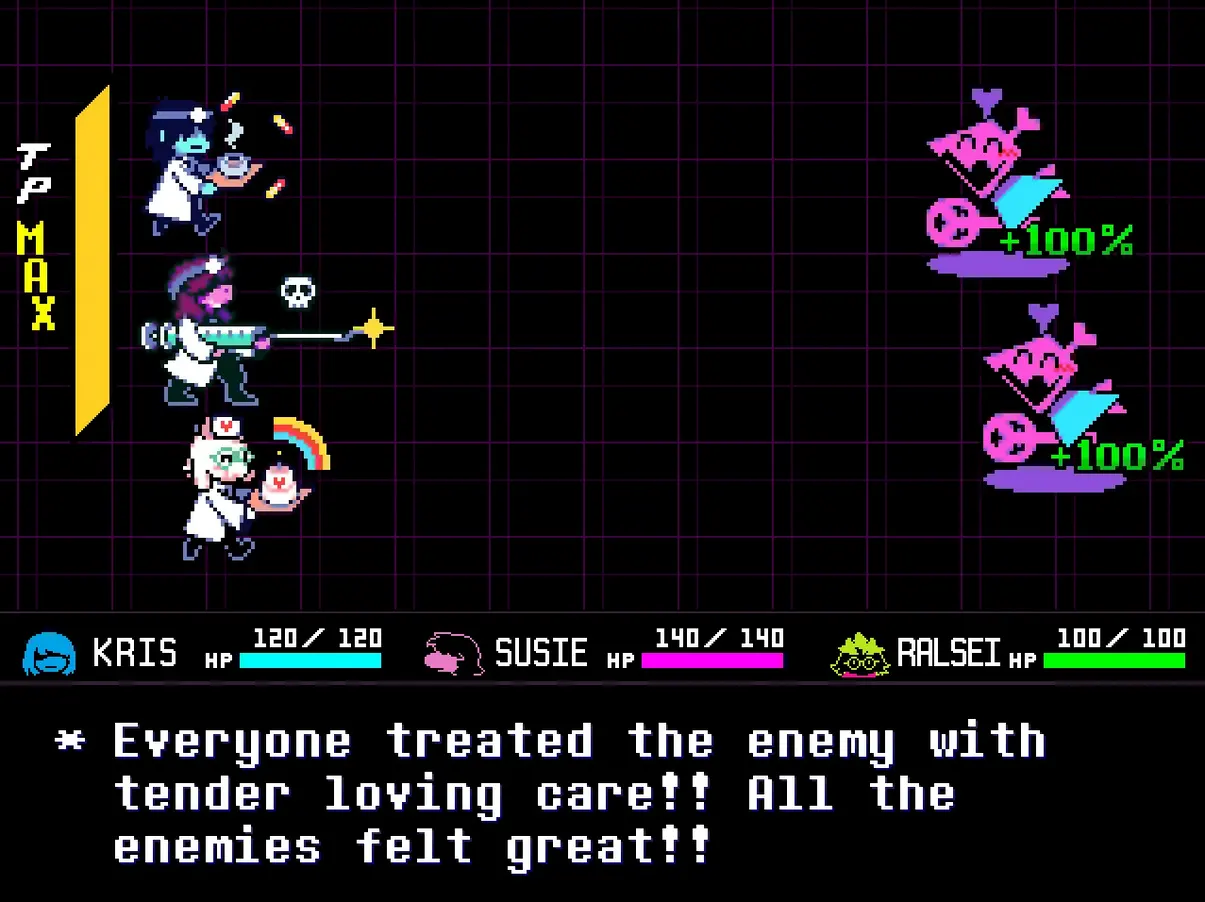
Encounter design — Every enemy can be beaten down or talked into leaving. The choice affects nothing grand yet changes everything about how a room feels.
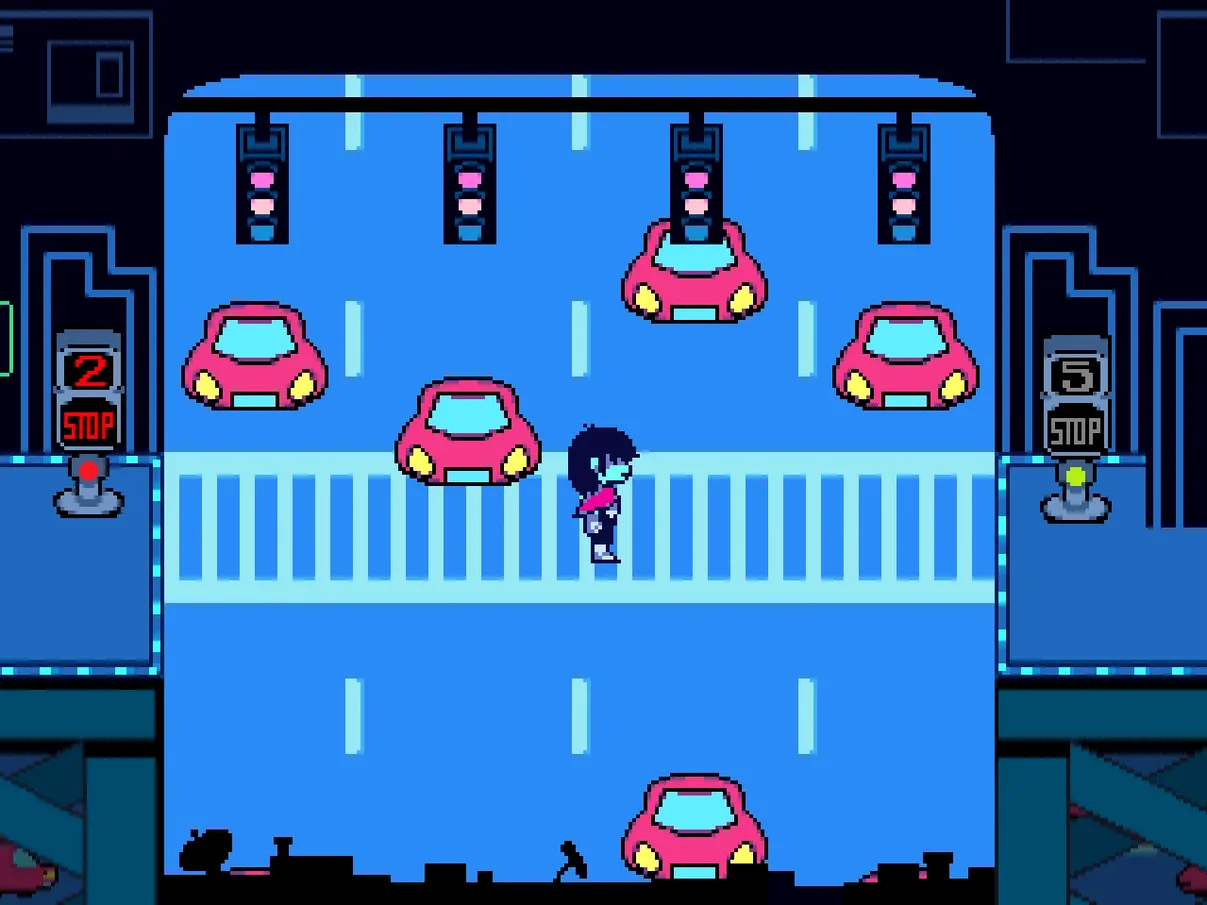
Overworld puzzles — Cards, keys, and switches break up the walking. Nothing obtuse, just enough friction to make the map feel like a place rather than a corridor.
Forty Minutes to Unwind Without a Crash
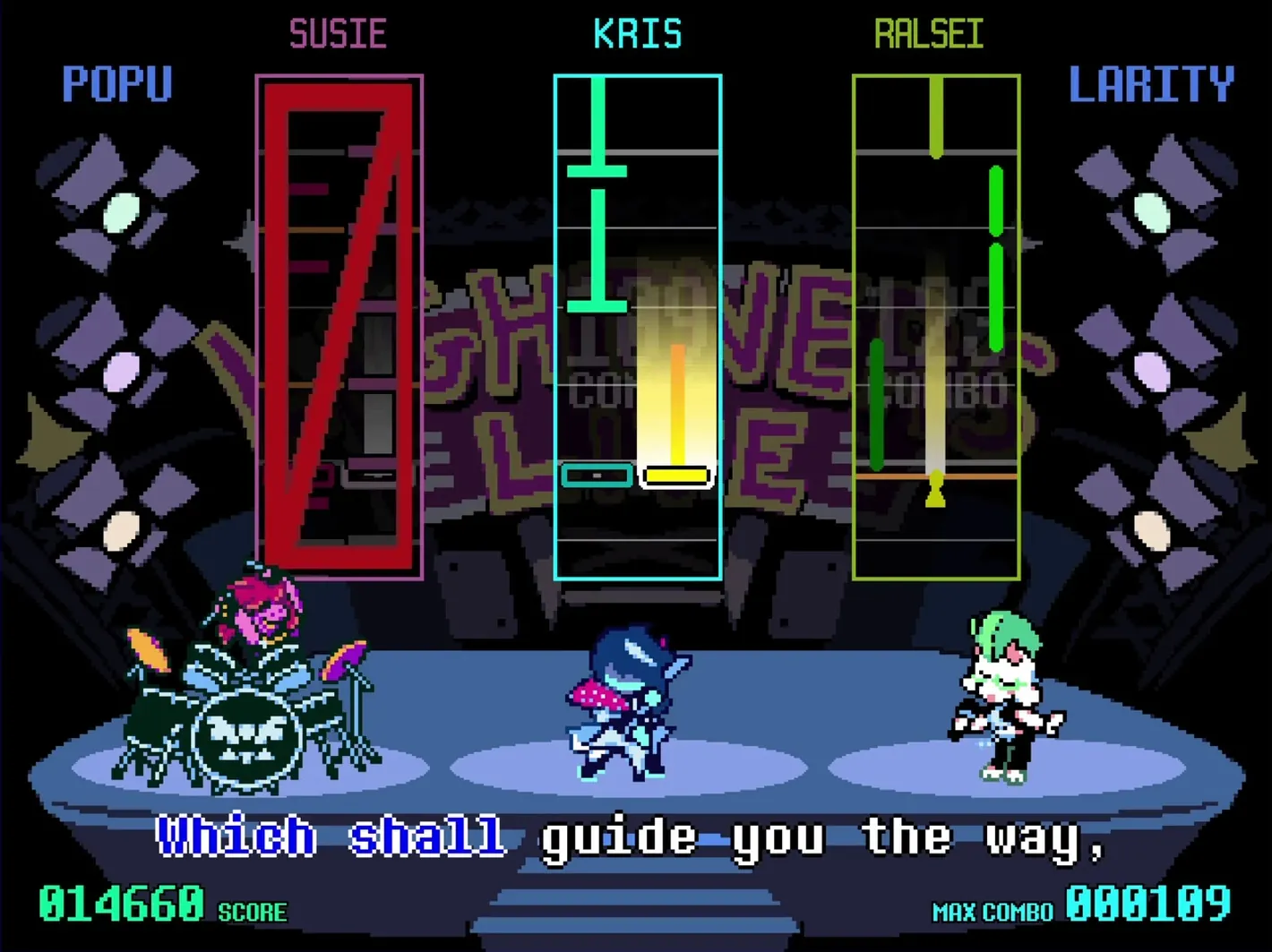
I don't mean rendering — I mean the feeling when you've got forty minutes to unwind and a crash would poison the whole evening. On a Mac mini M4 running Sequoia, the game sits light. Memory hovers around 600 MB, CPU barely registers a spike outside of the bullet-hell patterns, and in three hours I didn't catch a single frame drop or audio pop. The chiptune-meets-orchestra score stays crisp even through the densest encounter effects. That matters when a boss track is half the tension.
Load transitions between rooms are essentially instant on Apple Silicon. On older Intel Macs, you'll feel a half-second hitch entering the Dark World's bigger zones — nothing that breaks flow, but noticeable if you're used to the ARM side. The window defaults to borderless and plays nice with multiple monitors; I alt-tabbed to a timeline in DaVinci Resolve and came back without the cursor locking up or the audio glitching. Small stuff, but small stuff is what makes a port feel native versus just "running."
Let the Prologue’s Pauses Breathe
Don't rush the prologue. The opening half-hour is a tutorial that's also lore scaffolding, and if you sprint through it, Chapter 2's emotional beats land softer. Let the dialogue breathe — Toby Fox writes pauses into the text boxes intentionally.
Bind the movement to arrow keys if you grew up on emulators. The default WASD setup works, but dodging bullet patterns on a keyboard already asks a lot of your left hand, and arrow keys spread the load to a hand that isn't also reaching for Enter during act commands. In the sound settings, drop the master volume to about 80% before you hit the first major boss. The dynamic range is wider than you'd expect, and one track in Chapter 3 pushed my headphones past comfortable without warning.
Also: the game auto-saves at every screen transition, but there's no manual save slot. If you're the type who wants a fallback before a narrative fork, copy the save folder out of ~/Library/Application Support/DELTARUNE manually. Takes ten seconds and costs nothing.
A Parallel Story, Not Undertale 2
Is this Undertale 2? Not exactly — it's a parallel story with overlapping DNA. Characters from the first game appear, but their histories differ. You don't need to have played UNDERTALE to understand DELTARUNE, though the callbacks reward you if you did. Think of it like a familiar chord progression played in a new key.
How much content is actually here? Chapters 1 through 5 are fully playable now, which translates to roughly 15–20 hours if you're talking to every NPC and exploring side paths. The combat system evolves noticeably across chapters — Chapter 1 teaches you the basics, but by Chapter 4 you're juggling party synergies that feel closer to a tactical RPG than the simple dodge-and-spare loop it starts as.
Will my Mac run it smoothly? If you're on any Apple Silicon machine, yes — the ARM build was tested clean on an M4 and runs identically on M1 and M2 systems. Intel Macs from 2015 onward with integrated graphics handle the overworld at 60 fps, though the more chaotic bullet patterns in Chapters 4 and 5 may dip briefly on older HD Graphics chips. Adjusting the window size smaller fixes that instantly. The deltarune mac full version installs as a single drag-and-drop app with no dependencies to chase down, no Gatekeeper workarounds, and no activation hoops — launch and play.
Chapters 1 through 5 are now playable in a single download.
- macOS tested on Sequoia
- Apple Silicon and Intel (64-bit)
Questions I actually get
Does this run natively on Apple Silicon?
Yes, the build includes ARM support and was tested on a 2024 M4 Mac mini running Sequoia.
Notes from the edit bay · 0
Sign in or get an edit-bay pass to leave a note.
No notes from the edit bay yet. They go up after I read them.