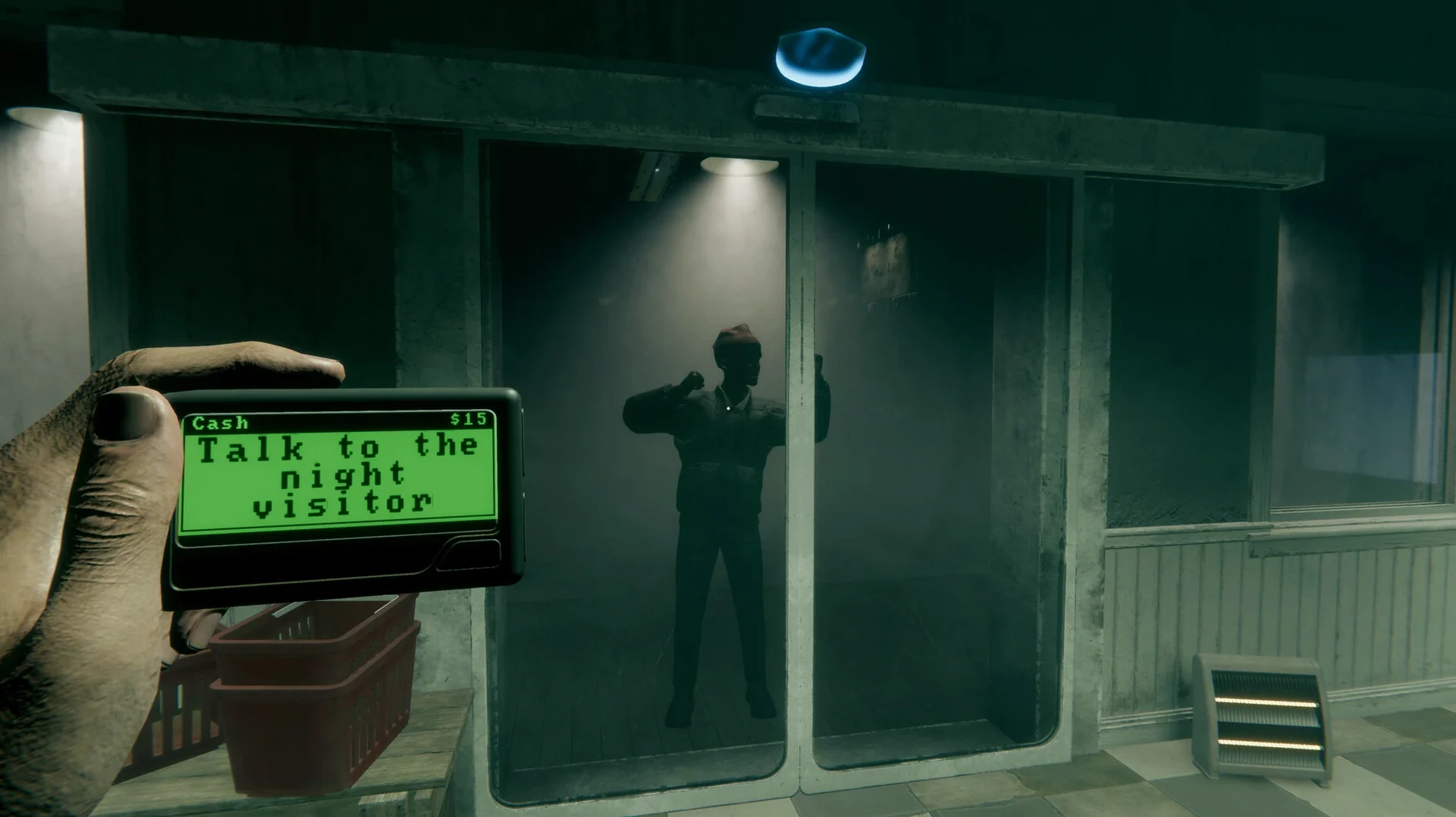
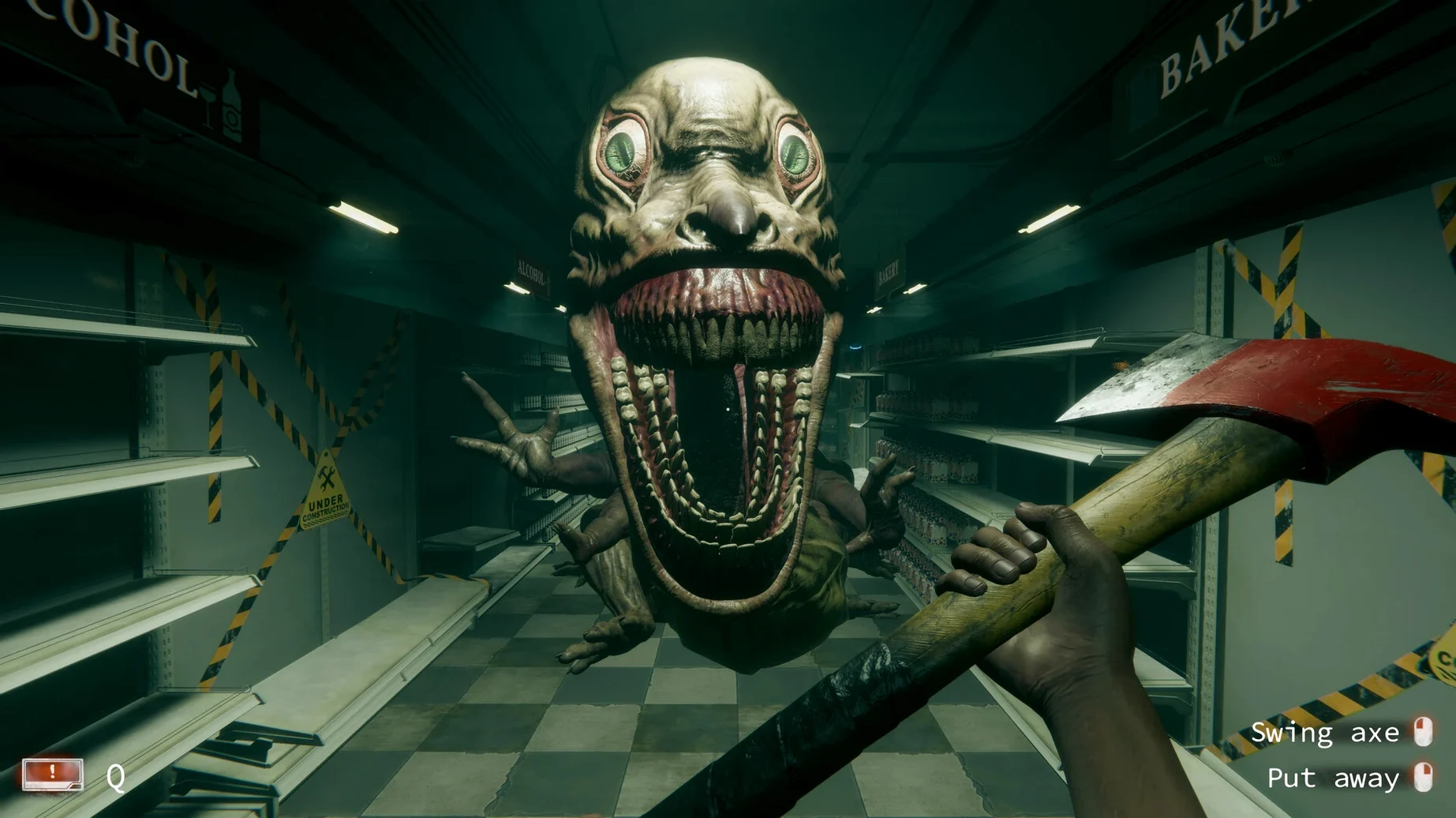
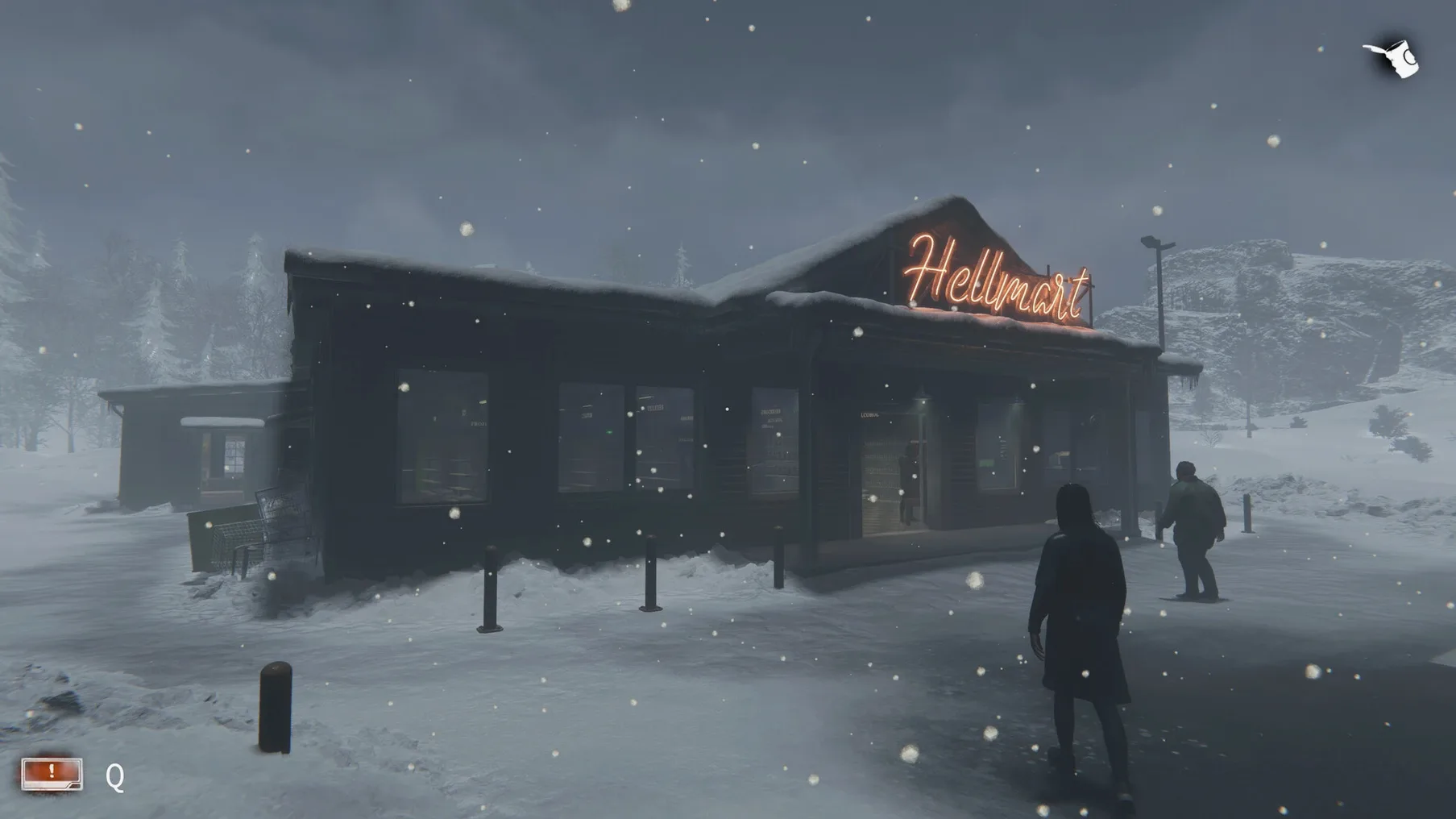
The January 2026 build lands on macOS Tahoe via Wineskin, tested clean on an M4 Mac mini. If you've been waiting for a native-feeling wrapper that actually launches, this revision delivers.
Stock Shelves, Ring Up Customers, Feel the Dread Creep In
- Players who like mundane tasks with a slow drip of dread. You aren't just hiding in a locker. You stock shelves, work a register, and decide which upgrades keep the lights on another night.
- People who enjoy consequence-driven endings. How you handle the evening prep—barricades, camera checks, what you bought and what you ignored—shapes the outcome.
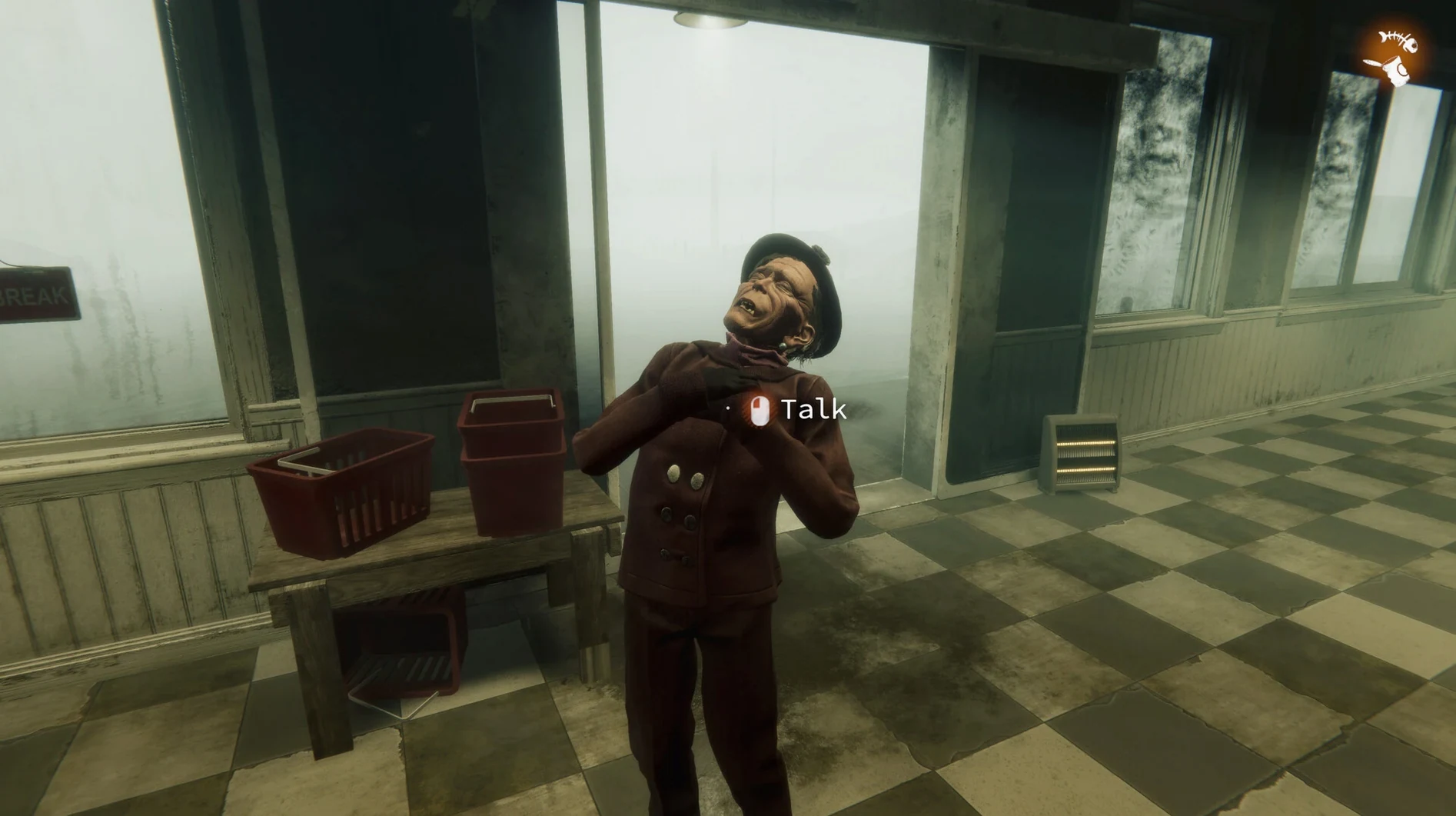
- Anyone curious about a real retail loop turned hostile. The 24-hour convenience store in the Far North isn't a backdrop. It's a machine you maintain while something watches.
The Horror Is in the Slow Shift, Not Sudden Scares
- The tension comes from routine, not jump scares. A shift drags. You serve customers on time, restock consumables, then prep for danger. If you need constant action, this rhythm might grate.
- English voice support only. Interface text covers plenty of languages, but spoken lines stay in English.
- It runs through a compatibility layer. Performance on Apple Silicon is solid, but it's not a native port. The included fix script handles launch errors quickly.
Where Things Go Sideways (And How To Fix Them)
The Wineskin wrapper is tidy, but every wrapper has its quirks. The first launch after dragging the app to Applications can throw a silent crash or a generic error dialog. Don't panic. Pop open the disk image again, run the Fix file, and the permissions knot untangles itself. That's usually all it takes.
After waking a Mac from sleep, the game occasionally loses track of the display resolution and opens in a tiny window. Switching from fullscreen to windowed mode and back—there's a toggle in the pre-launch settings panel—snaps it right again. If the mouse cursor drifts during register sequences, locking the frame rate to 60 fps inside that same panel keeps input tight.
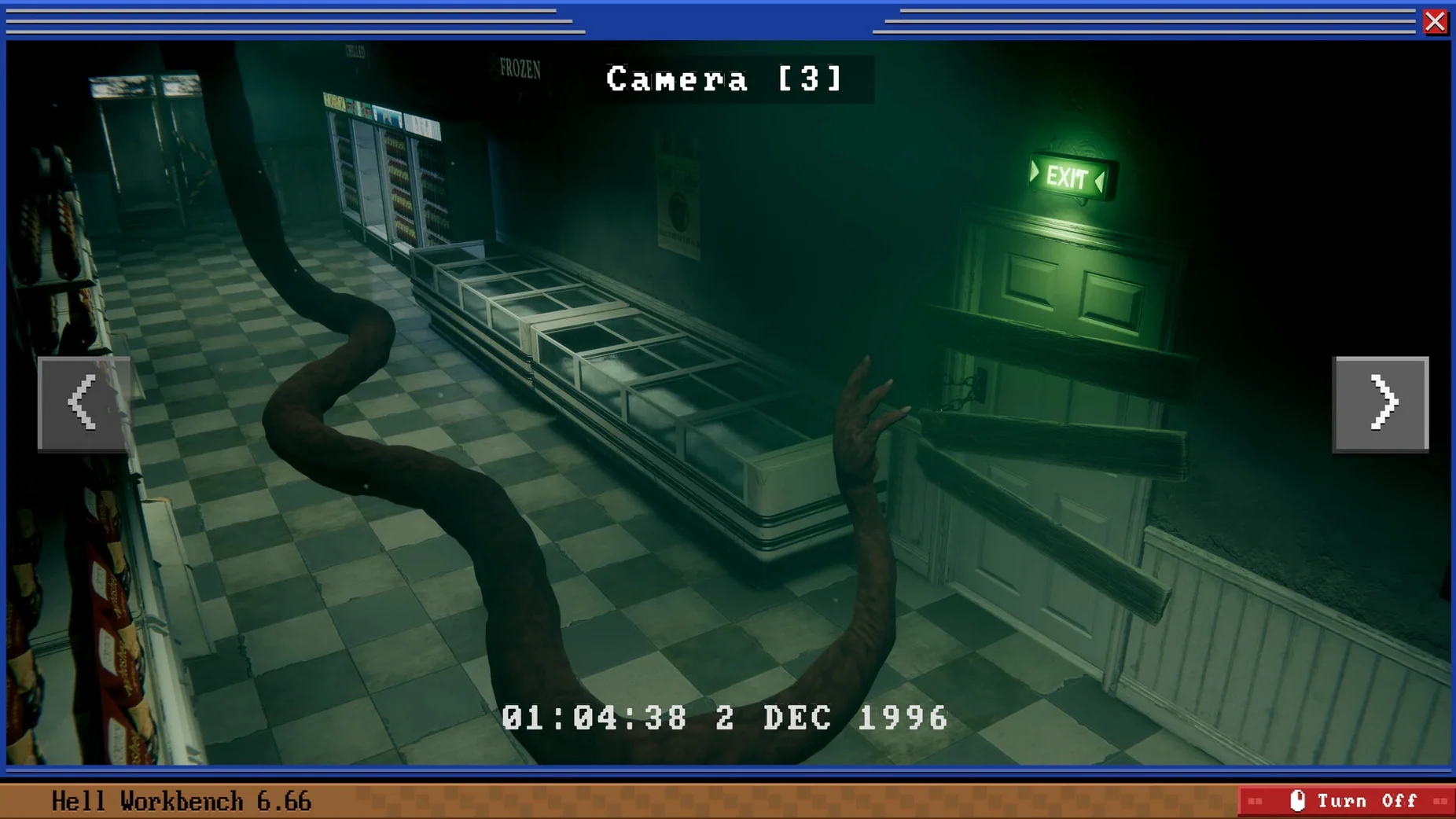
The generator monitoring screen can hitch on integrated graphics. Drop shadows to medium, leave textures at high, and the stutter vanishes without the store looking like a PS2 memory.
Full-Shift Systems vs. a Single-Room Demon Clock
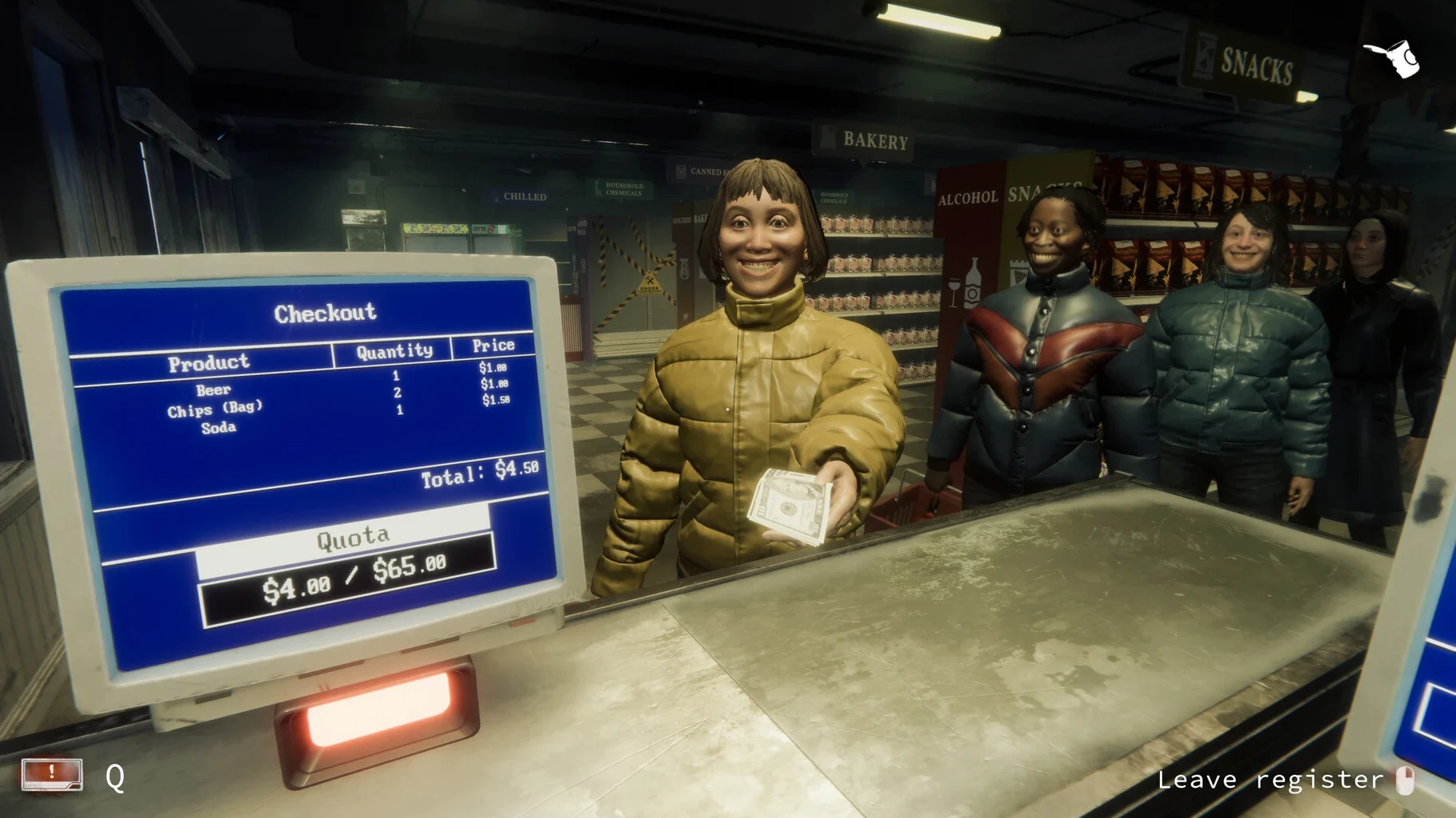
Next to The Mortuary Assistant, HELLMART leans harder on systems than scares. Mortuary Assistant is a tight, single-room horror loop with embalming tasks and a demon clock. HELLMART spreads the tension across a full shift: customer patience meters, shelf stock, cash register accuracy, and then the barricade ritual. Where Mortuary Assistant wants you to feel trapped, HELLMART wants you to feel responsible—for the store, for the revenue goal, for whoever's knocking after dark. That administrative weight is its own kind of horror.
Compared to Voices of the Void, the signal-tracking sim with cosmic dread, HELLMART is more immediate and less ambiguous. Voices of the Void rewards patience and pattern recognition across days of isolation. HELLMART gives you a register, a floor mop, and a clear checklist each shift, then slowly corrupts the checklist. It's horror through attrition rather than mystery.
And against a pure retail sim like Supermarket Simulator? HELLMART starts in the same aisle—stocking, cleaning, hitting daily revenue targets—but Supermarket Simulator never asks you to barricade the door or decide which stranger bleeds on the linoleum. The shared DNA makes the pivot hit harder.
Barely-Documented Conveniences
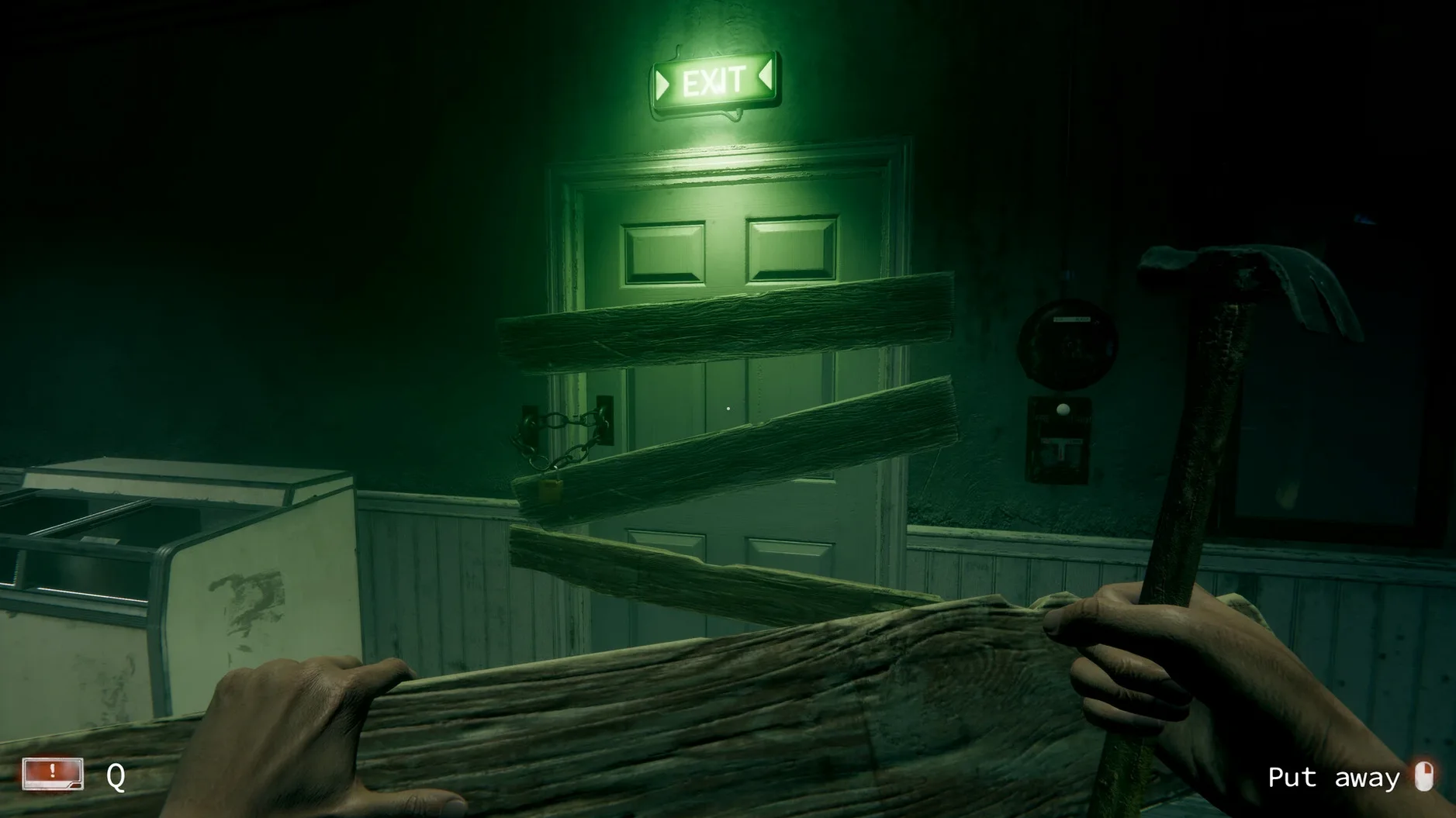
The evening barricade mini-game lets you stack objects in a specific order to save time later. Heavy crates against the door first, then lighter debris wedged into the gaps. Do it fast and the camera feed stays clear longer—less switching between screens when things get loud.
During the day shift, a quiet double-tap on a shelf section auto-faces the products. It's a tiny polish detail that shaves seconds off restocking when three customers are queueing. The tutorial never mentions it.
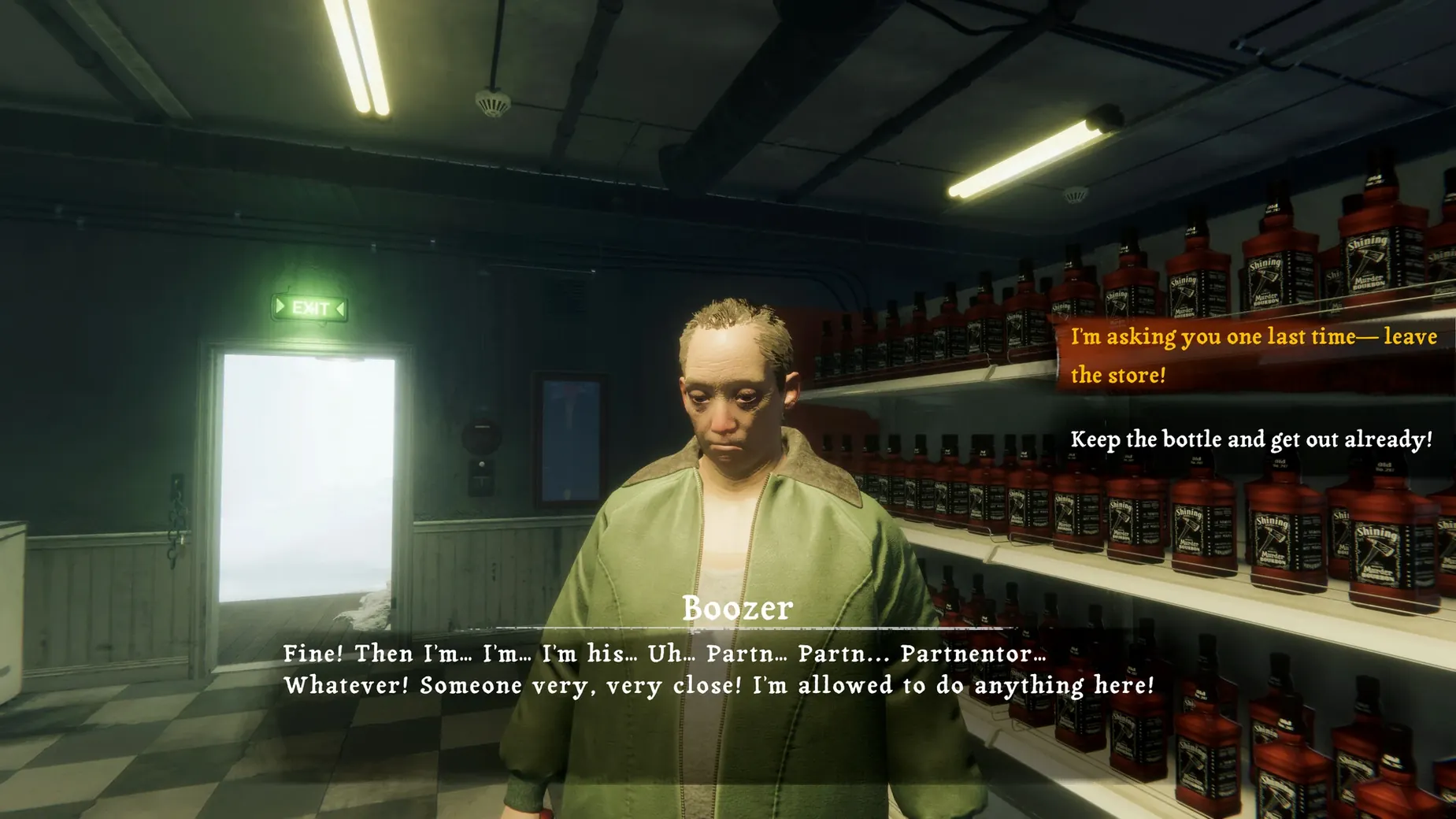
Night conversations have a hidden cadence system. Letting a pause hang before answering changes the NPC's tone more than the dialogue choice itself. It won't flip an ending outright, but it shifts the trust thresholds that branch toward the three outcomes. Worth experimenting on a second run.
Build 21718399 Rev 1 wraps the January 28, 2026 release in a refreshed Wineskin that's confirmed working on macOS Tahoe with M4 hardware. If you hit a launch error, the included fix script patches it right from the disk image.
- Architecture: Apple Silicon
- Tested on macOS Tahoe
- Tested on Mac mini 2024 M4
Questions I actually get
Does the game run on Apple Silicon Macs?
Yes, the ARM architecture is listed, and this build was tested on a 2024 M4 Mac mini running macOS Tahoe.
Notes from the edit bay · 0
Sign in or get an edit-bay pass to leave a note.
No notes from the edit bay yet. They go up after I read them.